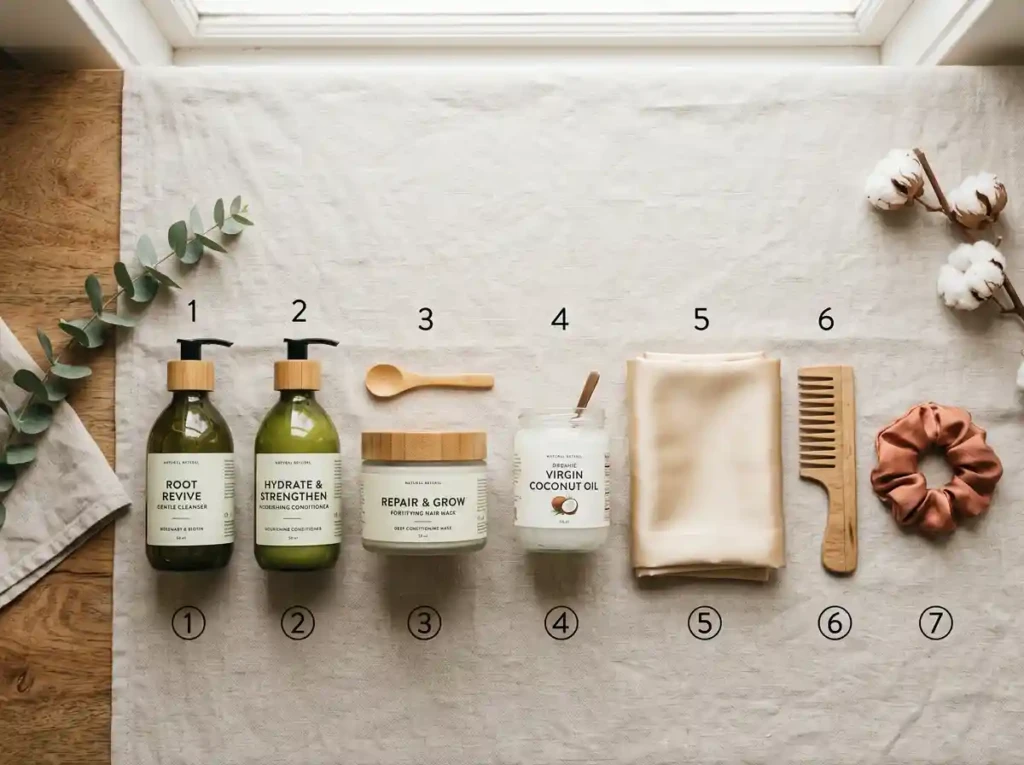
Spoiler: it is growing. You’re just breaking it off faster than it can get anywhere.
For about three years I was convinced my hair just didn’t grow. I’d measure it, wait six months, measure again. Same length. It felt like a personal failing, which sounds dramatic but honestly that’s how it felt.
Turns out I was washing it every single day with something that stripped it dry, rubbing it aggressively with a towel, brushing it soaking wet, and sleeping with a tight elastic in. My hair was growing fine. I was just snapping it off at roughly the same rate. The minute I stopped doing all of that, my hair was suddenly “growing” again. It wasn’t. I just stopped destroying it.
That’s what this is really about. Not magic oils or supplements. Mostly just getting out of your own way.
Hair grows about half an inch a month for most people. You can’t change that. What you can change is how much you’re breaking off.
Start here
1. Your scalp is the whole foundation
I ignored my scalp for years and focused entirely on my lengths, which was completely backwards. The follicle is where everything starts. If your scalp is dry, irritated, or clogged with product buildup, growth slows down. When you shampoo, use your fingertips to actually massage the scalp for a few minutes. Not scratching, not rubbing hard, just slow circular pressure that moves the skin. It increases blood flow to the follicles. I started doing this and noticed my hair feeling thicker at the roots within a couple of months. Could be coincidence. Probably isn’t.

2. Stop washing it every day
I know. If you have oily hair this sounds impossible. But here’s the thing: daily shampooing is usually why your hair is so oily in the first place. You strip the natural oils every morning, your scalp panics and overproduces to compensate, so by afternoon you’re greasy again and you wash it again. It’s a cycle you created. Stretch your washes out gradually. Every other day, then every two days. The first week is annoying. By week three your scalp adjusts and you genuinely won’t need to wash as often. Those oils your hair produces exist to protect it. Let them.
3. Conditioner only on your lengths, not your roots
This sounds obvious until you realise most people slap conditioner on their whole head. Your roots don’t need it and it weighs your hair down and blocks follicles. Mid-length to ends only. Then actually leave it on for two minutes before rinsing. Not thirty seconds. Two full minutes. I started setting a timer when I shower because I genuinely thought I was waiting long enough and I really wasn’t. The difference in how your ends feel when you actually let conditioner sit is kind of embarrassing, like why was I rinsing it out immediately before.
4. One deep treatment a week, no exceptions
This is the habit I dragged my feet on the longest because it felt fussy and time-consuming. I was wrong. A hair mask or coconut oil on your lengths once a week, left on for 20-30 minutes, changes the texture of your hair over a few months in a way that daily conditioner just doesn’t. You don’t need anything expensive. I use plain coconut oil half the time. The other half I use whatever drugstore mask was on sale. The ingredient list matters less than the consistency of actually doing it.
5. Wet hair breaks. Handle it like it knows that.
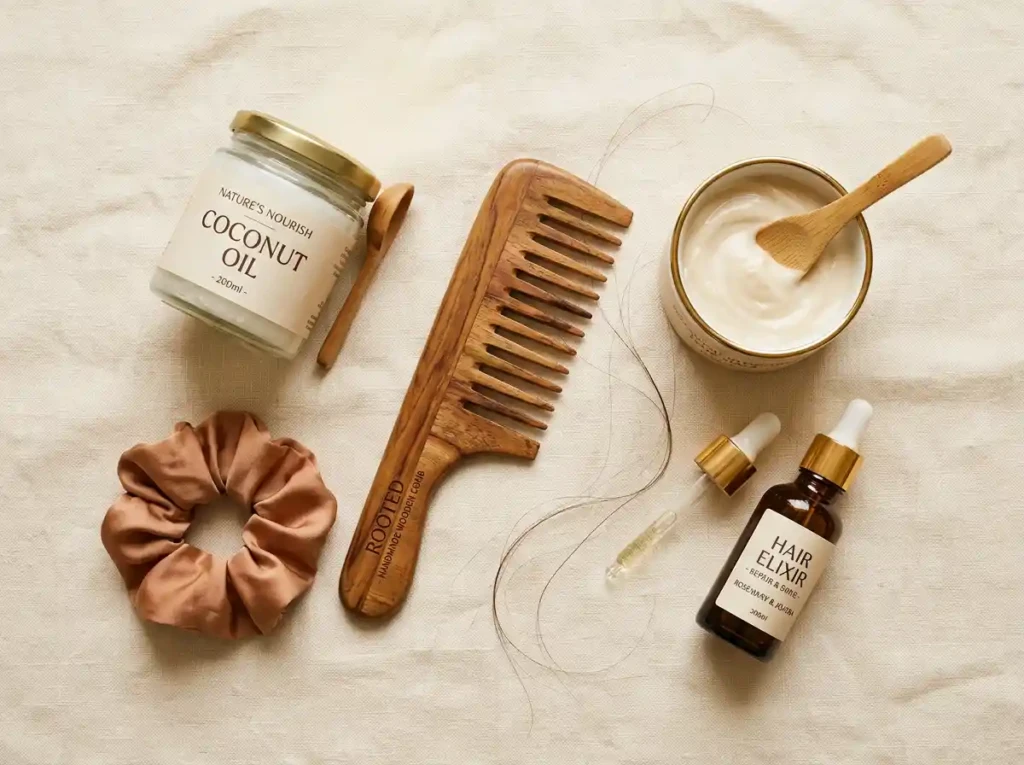
Wet hair can stretch up to 30% before snapping. When you rub a towel over it you’re essentially wringing and breaking wet strands at random. Stop. Squeeze gently with an old t-shirt or a microfibre towel instead. And please don’t brush your hair wet with a normal brush. Use a wide-tooth comb or a detangling brush made for wet hair, and start from the ends, working upward. Starting from the roots and dragging down tears through knots instead of releasing them. I broke so much hair doing it the wrong way for so long.
6. Heat is doing more damage than you think
Not just in the moment. Repeated heat degrades the protein structure of your hair over time so it gets progressively weaker, finer, and more prone to snapping. If you’re using a flat iron or curling wand daily at 220 degrees, that’s not just occasional damage — it’s slow long-term deterioration. I’m not going to tell you to never use heat because that’s not realistic. But a heat protectant is non-negotiable, and anything above 180 degrees is almost never necessary. High heat doesn’t work faster. It just burns more.
7. Trim it before it looks bad, not after
Every ten to twelve weeks. I know cutting hair feels like going backwards when you’re trying to grow it. But split ends don’t stay at the ends. They travel up the shaft and cause breakage higher up, which means you end up cutting more off later than if you’d just maintained the ends along the way. Small trims keep more length over time. It took me genuinely years to understand this and stop skipping trims to ‘save’ length.
8. What you sleep on matters more than expected
Cotton pillowcases create friction against hair all night. That friction roughens the cuticle, causes tangles, and over months causes real breakage. A silk or satin pillowcase fixes this. So does a satin bonnet if you move around a lot. Loosely braid your hair before bed or put it in a low bun with a soft scrunchie. Never sleep in a tight elastic. The crease it leaves is a breakage point that shows up as those short weird pieces around your face.
9. Food is not optional
Hair is protein. If you’re not eating enough of it, your body deprioritises hair growth to keep more important things running. You don’t need protein shakes or a supplement stack. You need actual food: eggs, fish, chicken, beans, lentils, whatever fits your diet. Iron deficiency is also a huge and commonly missed cause of hair thinning and shedding, especially in women. If your hair is shedding a lot or coming out thinner than it used to, get a blood panel before spending money on anything else.

The honest truth about timing
The first month you’ll notice your hair feels different. Stronger, less frizzy, less breakage on the brush. That’s the first sign things are working.
Actual visible length takes longer. Six months of consistent effort is the minimum before you can judge whether something is working. I know that’s frustrating to hear. It was frustrating to live through. But hair is slow and there’s no shortcut to that part.
The shift, when it happens, is quiet. You just realise one day that your hair is noticeably longer and you haven’t had a split end in ages. It’s not dramatic. It’s just your hair finally getting somewhere because you stopped getting in the way.
What trips people up
- Doing too many things at once. You’ll have no idea what’s working. Change two or three things and give it eight weeks before adding more.
- Tight hairstyles every single day. Ponytails and buns are fine occasionally. Daily tight elastics at the same spot cause traction breakage and a gradually receding hairline. Vary your styles and keep things loose.
- Giving up at six weeks. Almost nothing in hair care shows results that fast. Two to three months is the realistic window for most changes.
- Spending money before fixing habits. No serum or treatment will outwork daily heat damage or rough towel drying. Get the basics right first.
If you’re losing a lot of hair or it’s coming in noticeably thinner, see a doctor. Thyroid issues, iron deficiency, and hormonal changes are common causes that no hair mask will touch.