If you’ve been scrolling wedding content lately, you’ve probably noticed something: the perfectly polished, every-hair-in-place updos that dominated for years are losing ground. 2026 brides are going softer, looser, and in a lot of cases, just… down. That’s not a complaint. It’s actually a good development.
This guide covers the styles that are genuinely trending right now, based on what bridal stylists are booking out and what’s coming down real runways — not recycled Pinterest boards. Some of these looks are easy to DIY. Some need a professional who actually knows what they’re doing. I’ll tell you which is which.
1. The ‘Undone’ Updo
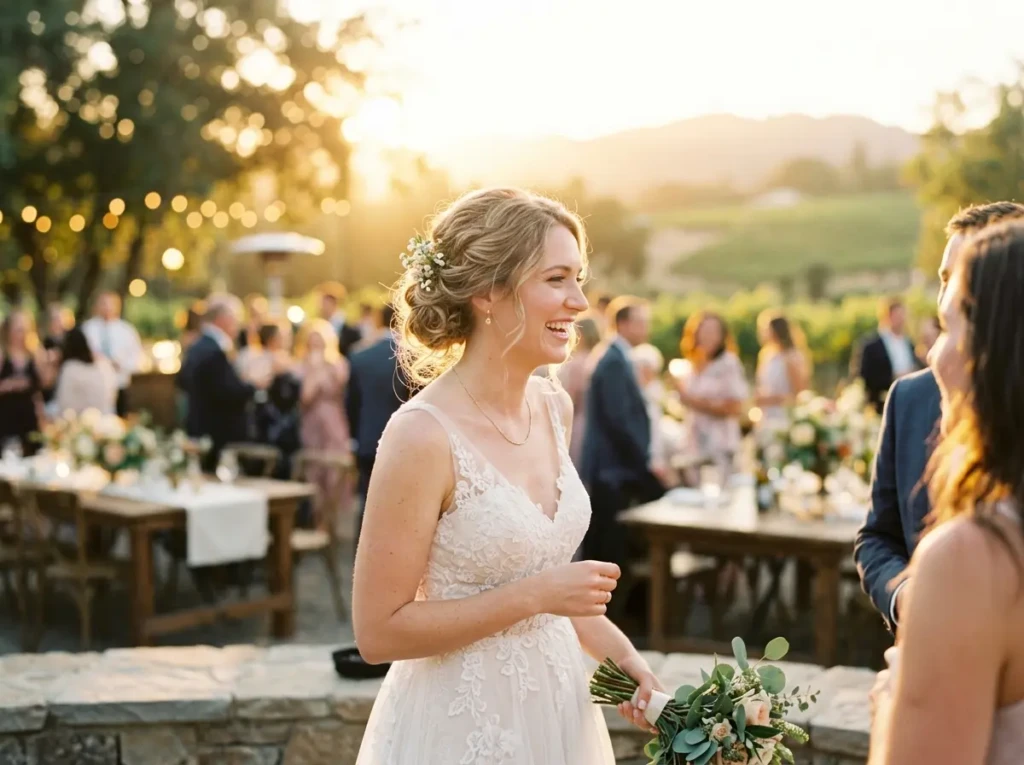
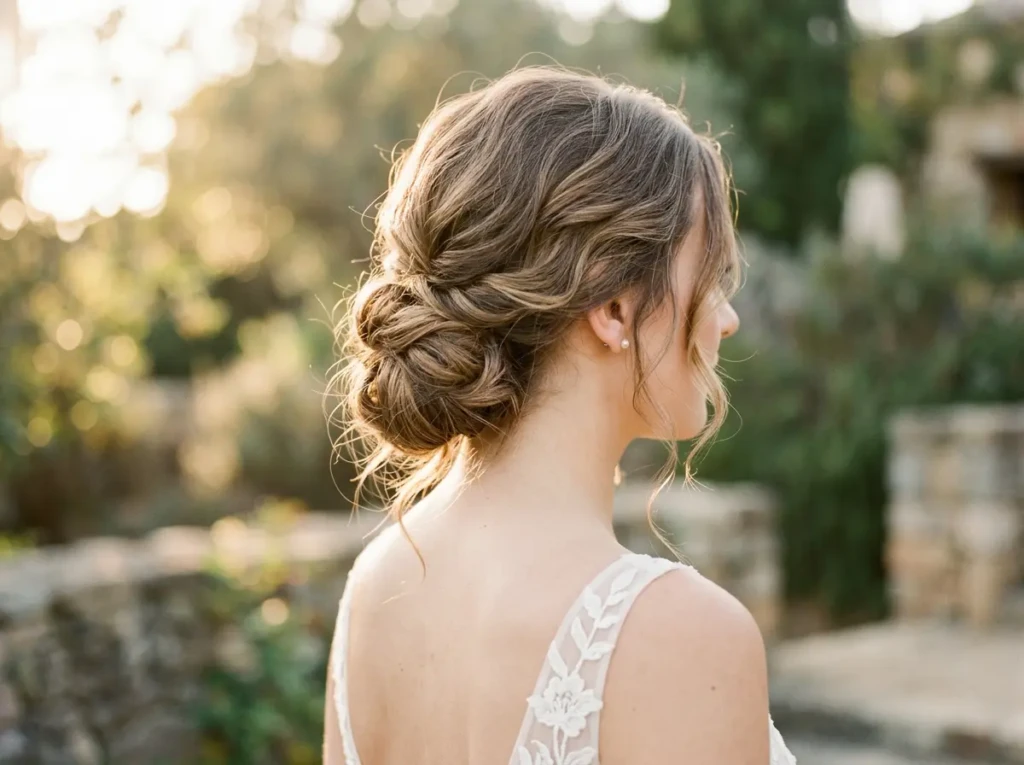
This is the style getting the most bookings in bridal salons right now, and it’s not hard to see why. It looks effortless, which takes a lot of effort. The idea is a loosely gathered bun or twist — somewhere between a chignon and a messy updo — with face-framing pieces that aren’t quite curled and aren’t quite straight. Wispy. Soft. Like you’ve been at an outdoor wedding since noon.
The difference between this looking bridal and looking like you gave up is in the placement. The bun sits lower than you’d expect — nape of the neck or just above it — and the pieces framing the face are styled intentionally, not just left out. A good stylist will spend more time on those two inches of hair near your temples than on the whole updo.
Works best on: medium to long hair, wavy or straight textures. Works on fine hair if your stylist uses texture spray liberally and isn’t shy about backcombing.
2. Loose Waves: Still Going, But Changed
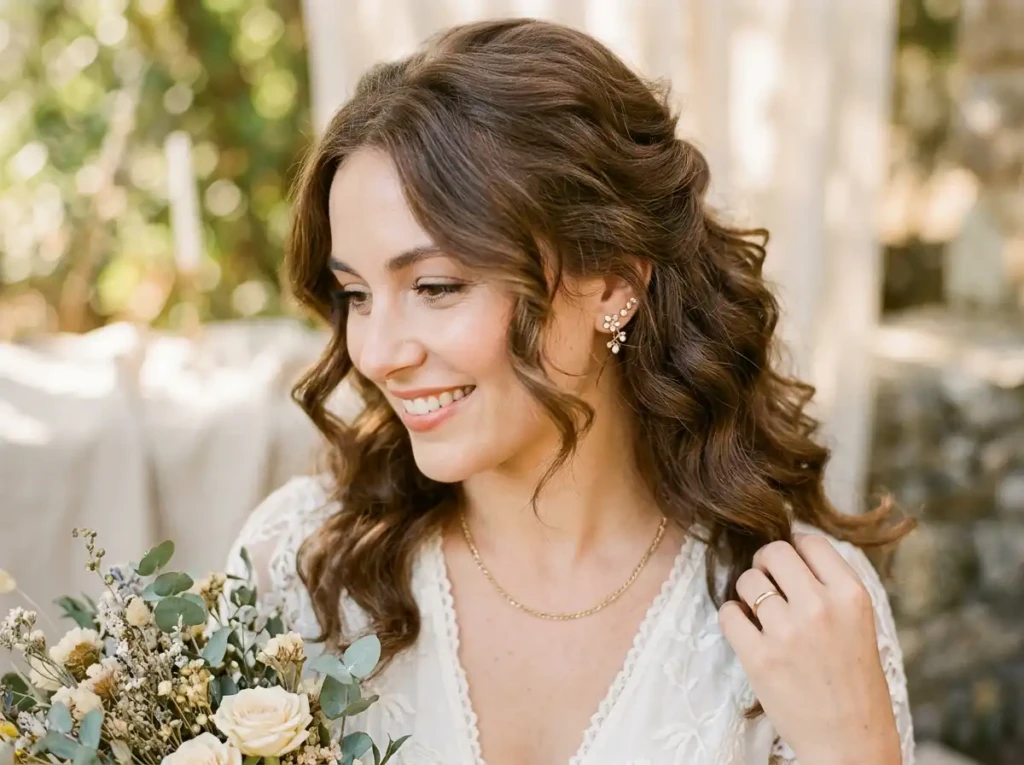
Loose bridal waves have been around for a while, but the version doing well in 2026 isn’t the bouncy, big-barrel blowout style from five years ago. The wave is deeper. Slower. More like a vintage set that’s been brushed out than a fresh curl. Think 1970s rather than 2010s.
The technique behind this matters: stylists are using larger wands (32mm or more), wrapping the hair away from the face rather than toward it, and finger-combing the results before they cool. That last part is what makes it look natural instead of styled. You can replicate this yourself if you’re patient, but it takes practice. Do a full trial run at least two weeks before the wedding.
One honest caveat: waves at weddings are humidity-dependent. If you’re getting married outdoors in August in a coastal city, talk to your stylist about setting spray options. Waves can go flat or frizzy in two hours under the wrong conditions.
3. Hair Down, With Something
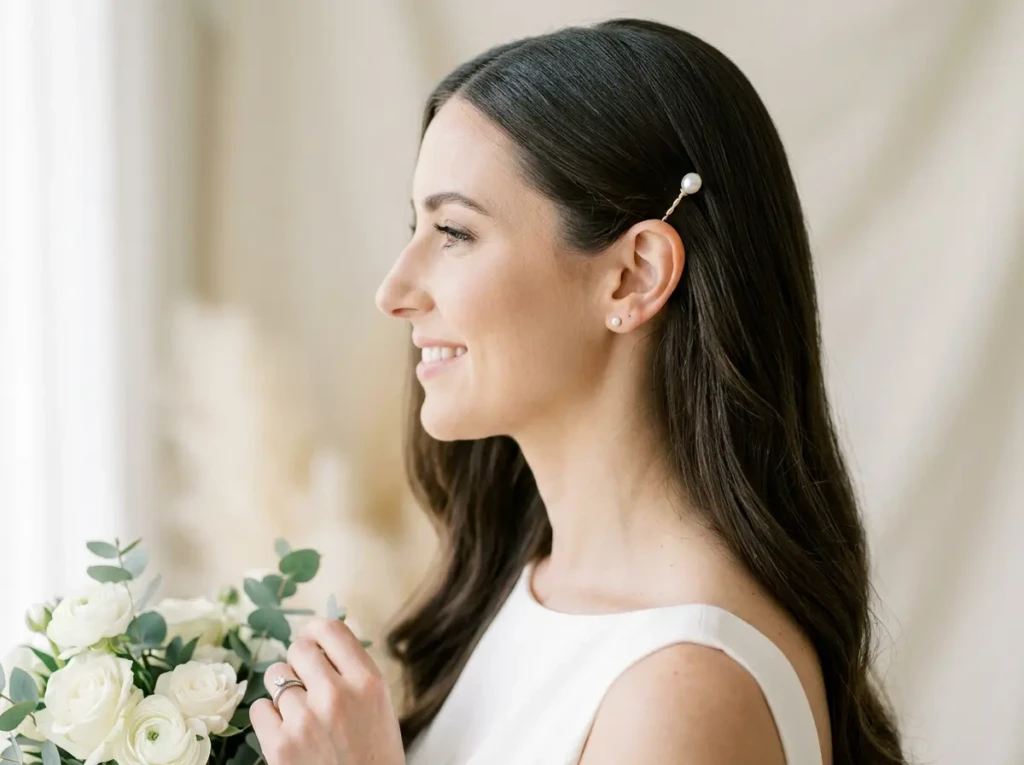
Fully down hair at weddings used to be the choice when nothing else was working. Now it’s a deliberate style statement, and the “something” is usually what makes it bridal: a single pearl pin tucked above the ear, a skinny ribbon tied loosely at the back, a floral cluster on one side. Small, specific details that say “I thought about this” without yelling it.
The hair itself is usually straight or has a gentle bend, not a dramatic curl. It’s been prepped well — blow-dried smooth, maybe a serum for shine — without being stiff. The goal is healthy and clean, not sculpted.
This approach suits brides who generally wear their hair down and would feel unlike themselves in an updo. It’s also a practical choice for second weddings and smaller, more casual ceremonies. The styling time is shorter, which matters if you’re getting ready in a small venue with one stylist.
4. The Return of the Half-Up
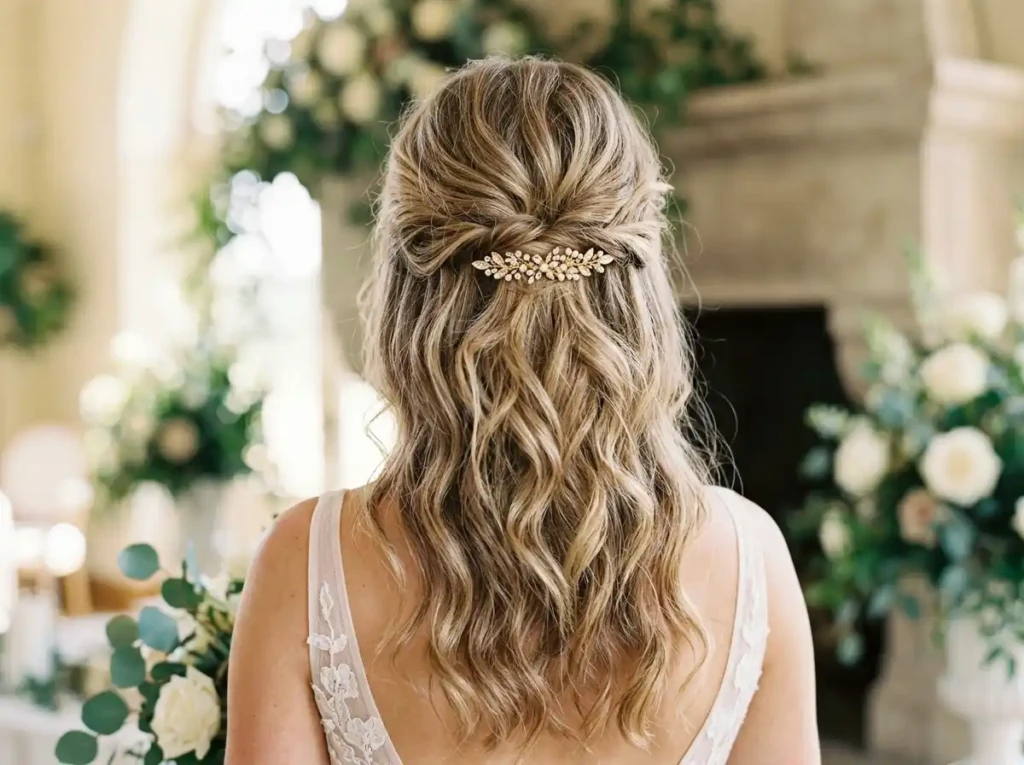
Half-up styles faded for a few years — they had a reputation for looking a bit prom-adjacent, depending on execution. The 2026 version addresses that. The gathered section sits higher on the head, the texture is relaxed rather than polished, and the bottom half is styled in waves or left naturally straight rather than being tightly curled.
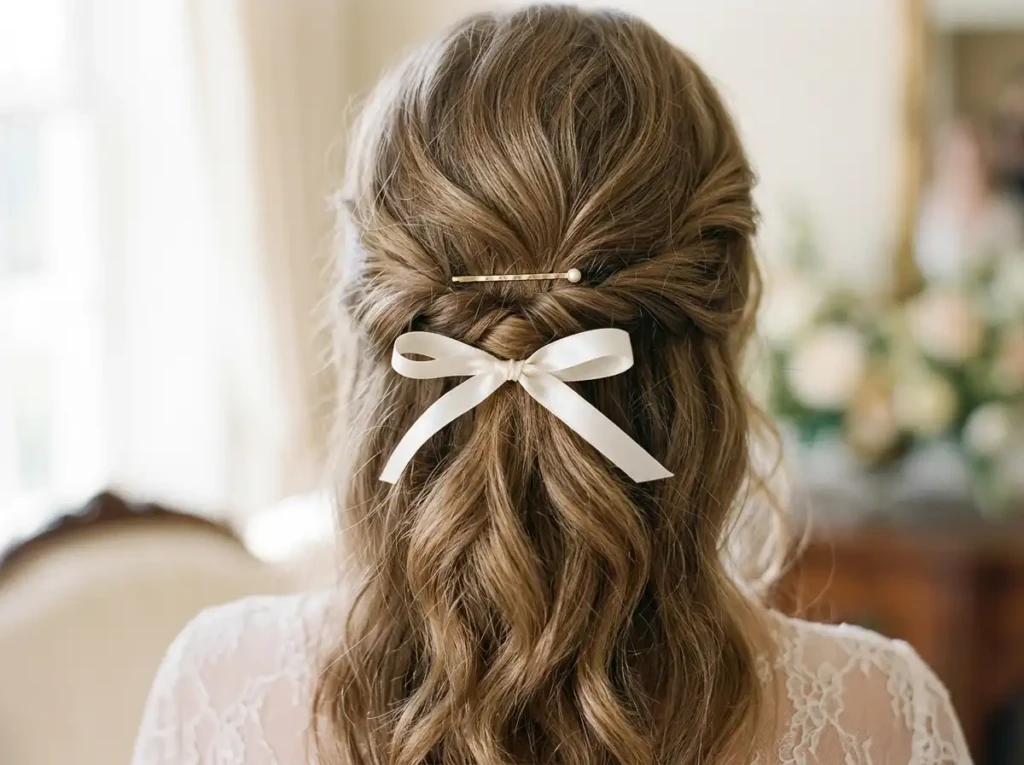
The specific detail that’s doing well right now: a small clip or barrette at the gathered point instead of a covered elastic. An embellished barrette — pearls, small crystals, even a simple gold clasp — reads as intentional jewelry rather than a functional hair tie. It’s a small swap that makes a real difference in how finished the look feels.
Works best on: shoulder-length to long hair. Short hair can do a version of this but the proportions get tricky — worth a consultation before committing.
5. Braids, But Not the Pinterest Kind
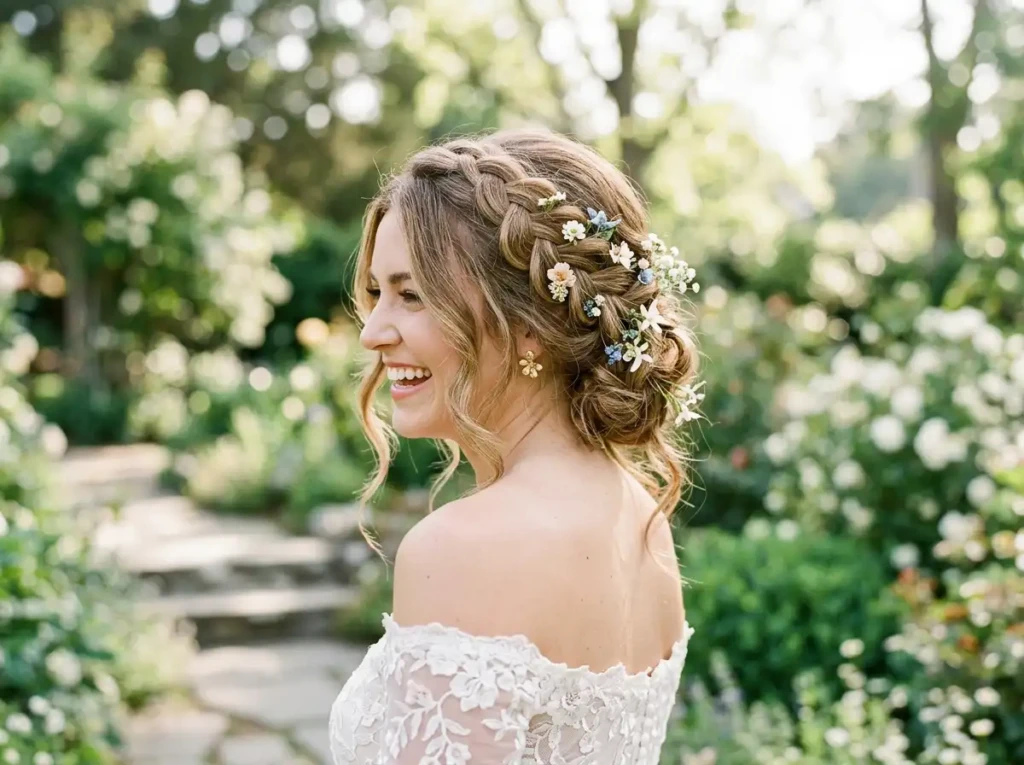
There was a period where bridal braids meant elaborate, Instagram-ready creations: fishtail crown braids, Dutch braid halos, waterfall braids disappearing into long waves. Some of that is still around, but what’s growing in 2026 is smaller and quieter. A single loose braid incorporated into an updo. A small three-strand braid framing the face, starting just behind the ear. Braids as detail rather than centerpiece.
The key technique here is “paneling” — gently pulling the braid loops apart after the initial plait to widen and soften them. A tight, neat braid looks athletic. A slightly loosened one looks romantic. Same braid, completely different effect. It takes about thirty seconds to do and makes a noticeable difference.
Braids also hold well in humidity, which is worth knowing if your venue is warm or outdoor.
6. Accessories: Less Hardware, More Texture
The heavy, structured headpieces that were everywhere a few years ago — wide bands, tiara-like combs, elaborate floral crowns — have quieted down considerably. What’s replacing them isn’t minimal exactly; it’s more like considered. Single pins with a pearl tip. A cluster of dried flowers pinned low. A simple gold chain laid across the top of the head.
Ribbon is having a genuine moment. Thin satin ribbon — ivory, cream, or champagne — tied in a small bow at the back of a half-up style, or woven loosely through a braid. It photographs well and costs almost nothing. Several stylists I’ve come across have started including it as a default option rather than an add-on.
One thing that’s clearly fading: matching your hair accessory to your jewelry. The cleaner current approach is to let the hair accessory stand alone, or to let it share a metal (gold, silver) with your earrings without trying to be a precise match.
7. Curly and Natural Textures: Getting the Attention They Deserve
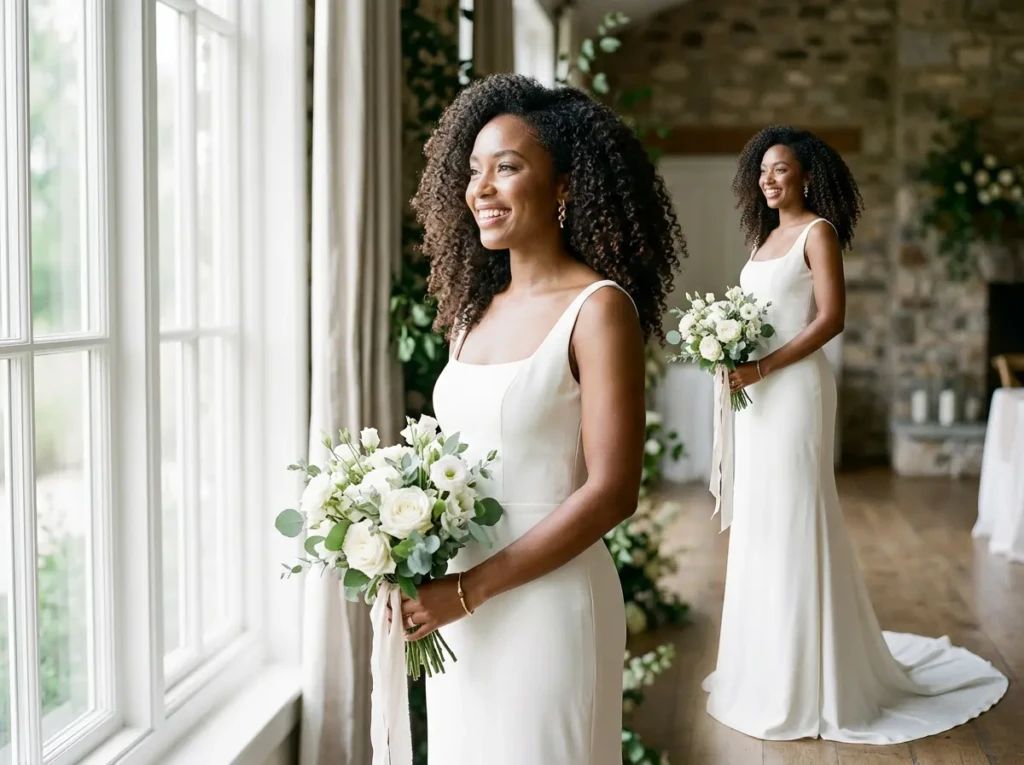
For a long time, the default bridal hair conversation assumed straight or loosely wavy hair as the baseline. That’s been changing, and 2026 reflects it more than previous years. Bridal styling for curly and coily textures is getting more nuanced coverage, and more brides are choosing to wear their natural texture rather than pressing it out.
The practical advice if you’re in this category: find a stylist who specifically has experience with your curl type. Not just “curly hair,” but your actual texture — there’s a real difference between styling 3A waves and 4C coils, and a stylist who hasn’t worked extensively with your type will struggle with timing and product selection on the day.
For defined curls worn down, the product layering matters more than the styling technique. Start with a leave-in, then a gel or cream, and seal with an oil if your hair needs it. Skip the hairspray — it crunches curls in a way that doesn’t recover well by the reception. A light hold spray formulated for curls is different and worth using.
8. Practical Things Nobody Tells You
Your hair’s condition three weeks before the wedding matters more than what you do the morning of. Start using a protein treatment monthly if you’re not already, and stop heat-styling more than necessary in the month before. Hair that’s in good condition holds styles better, takes product better, and photographs better.
Don’t wash your hair the morning of the wedding. Freshly washed hair is too slippery for most updos and doesn’t hold pins well. Wash it the night before, or two days before if your hair is particularly fine. Your stylist will thank you.
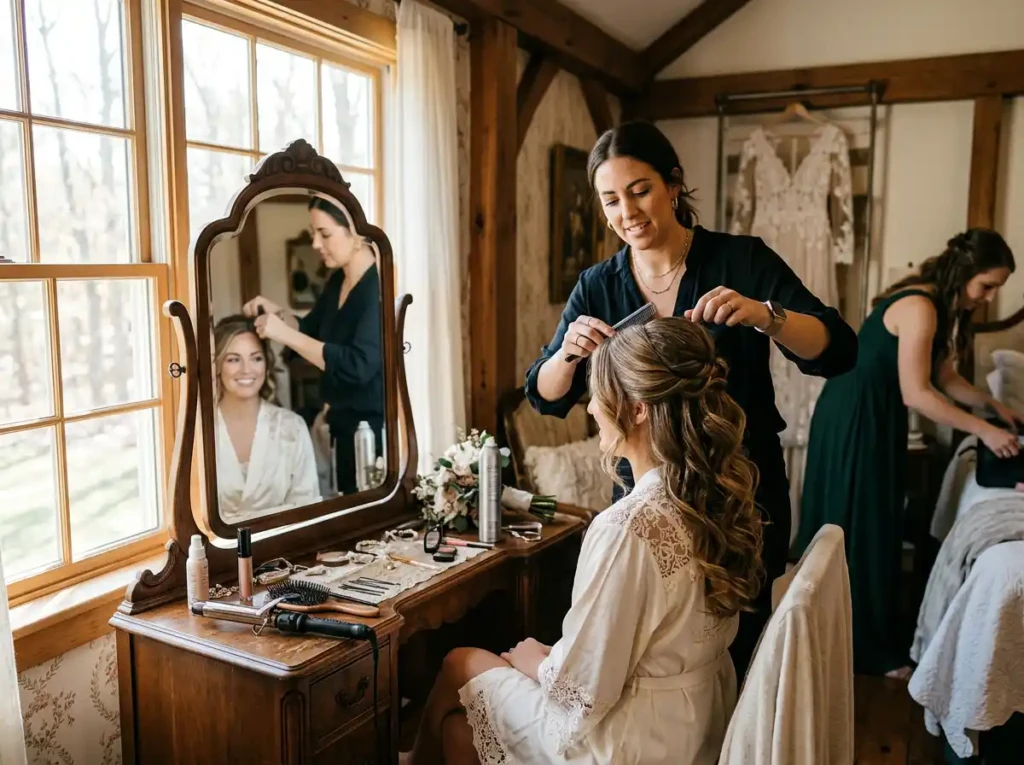
Do a full trial, not just a consultation. Bring photos, wear a similar neckline to your dress, and sit in natural light for at least part of it. Some styles look completely different in photos versus in person — a trial lets you see that before the day when there’s no time to adjust.
Finally: the style that suits your face shape and hair texture will look better than any trend. These 2026 directions are worth knowing, but they’re starting points. The goal isn’t to replicate a runway look — it’s to look like yourself, just more deliberately so.
A Note on Longevity
Whatever style you choose, the biggest factor in how it holds is the preparation underneath: clean sections, good base products, and a stylist who doesn’t rush. A well-prepped updo that’s slightly simpler than your first choice will look better at 9pm than an elaborate style done carelessly.
The hair styles getting traction in 2026 are, broadly speaking, more relaxed than what came before. That’s not a trend built around laziness — it’s a shift toward styles that hold their character throughout a long day, that survive dancing and humidity and the kinds of things that happen at weddings. That seems like the right direction.