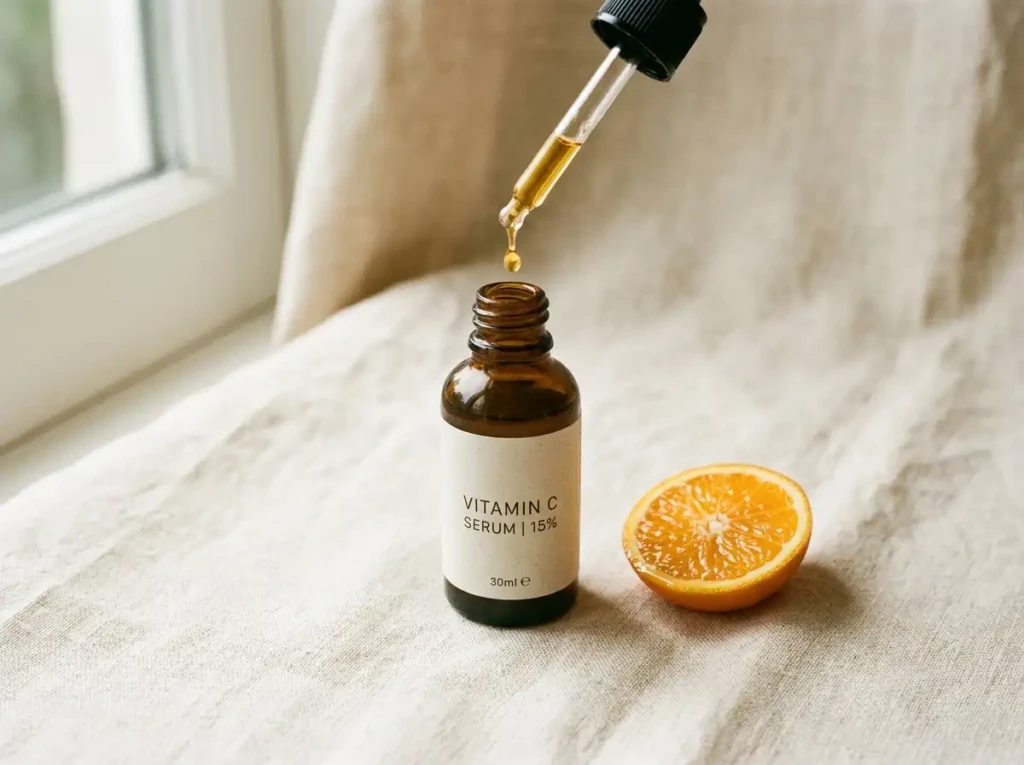
Not a trend. Not a gimmick. The one ingredient that actually earns its place in your routine.
I resisted vitamin C for longer than I want to admit. It felt like one of those ingredients that everyone was suddenly obsessed with, which in skincare usually means it’s either overhyped or about to be replaced by something else in six months. So I ignored it. Kept using my basic routine, kept wondering why my skin looked a little dull and uneven, kept buying concealers to cover the dark spots that weren’t going anywhere.
Then a friend — who has the kind of skin that makes you want to ask inappropriate questions about her routine — told me she’d been using a vitamin C serum every morning for two years. I finally tried it. And look, I’m not saying it changed my life. But it changed my skin. Noticeably. Within about six weeks I stopped reaching for the concealer as often.
Here’s everything I wish someone had told me before I wasted those years being skeptical.
What Vitamin C Actually Does
Vitamin C is an antioxidant. That word gets thrown around a lot without anyone explaining what it means in practice. Here’s the short version: your skin is constantly under attack from free radicals. UV radiation, pollution, cigarette smoke, even just the oxygen in the air — all of it creates unstable molecules that damage your skin cells and break down collagen. Free radicals are why skin ages, why it dulls, why it loses its bounce.
Antioxidants neutralize free radicals before they can cause damage. Vitamin C is particularly good at this. It essentially intercepts the damage before it happens. But it doesn’t stop there.
Vitamin C also inhibits an enzyme called tyrosinase. That enzyme is responsible for producing melanin — the pigment that forms dark spots when your skin is triggered by sun exposure, inflammation, or hormonal changes. Less tyrosinase activity means less pigment production means existing dark spots fade and new ones form more slowly. This is why vitamin C is the ingredient dermatologists actually recommend for hyperpigmentation, not the twenty-dollar brightening creams making vague claims on the packaging.
And then there’s collagen. Vitamin C is essential for collagen synthesis — your body literally cannot make collagen without it. As we age, collagen production slows down naturally. Applying vitamin C topically supports the process and helps maintain the structure that keeps skin firm and plump.
So to be clear about what it’s doing: fighting daily damage, fading dark spots, and supporting collagen. That’s not one thing. That’s three significant things happening simultaneously every morning.
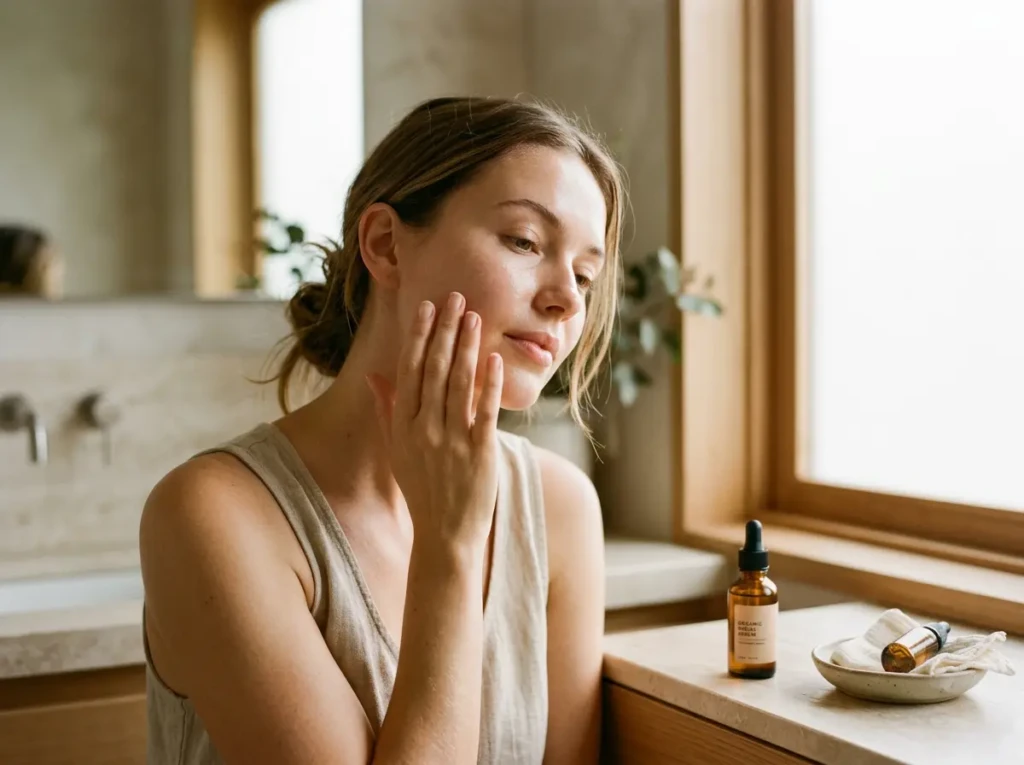
The Form Matters More Than the Brand
This is where vitamin C gets complicated and where most people give up or buy the wrong thing.
The most researched, most effective form is L-ascorbic acid. It’s also the most unstable, the most irritating, and the pickiest about pH levels. Effective L-ascorbic acid serums need to sit at a pH below 3.5 to actually absorb into the skin. That’s quite acidic, which is why some people experience tingling or redness, especially when starting out.
If you’ve ever bought a vitamin C serum and watched it turn orange in the bottle within a few weeks, that’s oxidation. Oxidized vitamin C is not just ineffective — it can actually cause the kind of discoloration you were trying to get rid of in the first place. That brown-orange color is a sign the product has degraded. Throw it out.
Stable alternatives worth knowing
If L-ascorbic acid irritates your skin or you keep having oxidation problems, there are stable derivatives that work more gently. Ascorbyl glucoside, sodium ascorbyl phosphate, and ascorbyl tetraisopalmitate are all converted to active vitamin C in the skin. They’re slower to show results but much kinder to sensitive skin and they last longer once opened.
Magnesium ascorbyl phosphate is another one worth knowing. It’s the most stable derivative available and works well at a higher pH, which means less irritation. It doesn’t fade dark spots as aggressively as L-ascorbic acid but it’s a genuinely good option if your skin is reactive.
What percentage should you use?
For L-ascorbic acid, effective concentrations sit between 10% and 20%. Below 10% and you’re not getting much. Above 20% and you’re mostly increasing the chances of irritation without meaningful extra benefit. 15% is a solid starting point for most people.
For derivatives, percentages are less standardized and harder to compare directly. Look for products that list the vitamin C derivative in the first half of the ingredient list — that’s a rough signal that the concentration is meaningful.
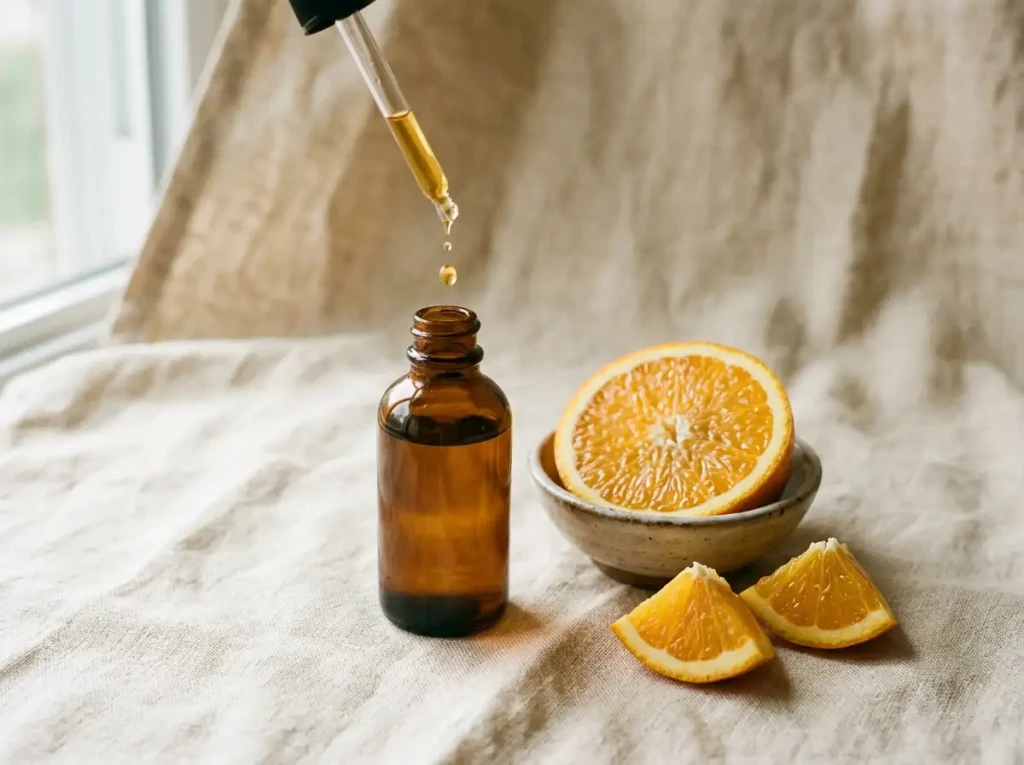
How to Use It Without Wasting It
Vitamin C goes on in the morning. Not at night. There’s a reason for this.
During the day your skin is defending itself against UV radiation and environmental pollution. That’s exactly when you want an antioxidant working. Applying vitamin C in the morning means it’s present and active during peak damage hours. At night your skin shifts into repair mode and vitamin C isn’t doing its best work in that context. Save the night serum slot for something else.
The order
Apply vitamin C after cleansing, before moisturizer, before SPF. You want it on clean skin with nothing blocking absorption. A few drops is enough — vitamin C serums are concentrated and you don’t need to use a lot. Spread it evenly, give it about sixty seconds to absorb, then layer your moisturizer on top.
Then SPF. Always. Vitamin C and SPF together are genuinely one of the best combinations in skincare. The antioxidant protection from vitamin C enhances the UV protection from sunscreen in a way that neither does alone. They’re not redundant — they work on different mechanisms and compound each other.
Storage
Keep it somewhere cool and dark. Not in a sunny bathroom windowsill. Not near a radiator. Some people store their vitamin C serum in the fridge, which sounds intense but genuinely extends the life of the product significantly. At minimum, keep the lid closed tightly and away from light. If it turns yellow — fine, mild oxidation, still usable. If it turns orange or brown — done, get a new one.
What to Actually Expect and When
I want to be honest here because the before-and-after photos online set completely unrealistic expectations.
Vitamin C is not going to erase deep pigmentation in two weeks. It is not going to firm severely sagging skin. It’s not a substitute for SPF and it won’t undo years of unprotected sun exposure overnight. Anyone telling you otherwise is selling something.
What you will likely notice, if you’re consistent:
- Skin looks brighter and more even within four to six weeks — not dramatically, but noticeably
- Existing dark spots begin to fade slowly over two to three months of daily use
- Skin texture improves gradually as collagen support builds up over time
- New dark spots from sun exposure or inflammation form less quickly
The key word in all of that is consistent. Using it three times a week when you remember isn’t going to give you the results. Every morning, same spot in the routine, same product. That’s what builds the cumulative effect.
Give it twelve weeks before you decide whether it’s working. I know that sounds like a long time. It is. Skin doesn’t move fast. But twelve weeks of daily vitamin C is long enough to see real change and make an informed decision about whether to keep going.

Is It for Everyone?
Mostly yes, but with a few caveats.
If you have very sensitive or reactive skin, start with a derivative rather than L-ascorbic acid. Start at a low percentage and use it every other day before building up to daily. Your skin needs time to adjust to anything acidic.
If you’re using retinol, don’t layer them in the same routine. Vitamin C in the morning, retinol at night. They’re both effective, they’re both a bit demanding, and using them together at the same time can cause irritation without any added benefit.
If you’re pregnant or nursing, check with your doctor before adding any active ingredient to your routine. Most topical vitamin C is considered fine, but it’s worth the conversation.
If you have darker skin tones, vitamin C is particularly relevant for you. Hyperpigmentation — post-inflammatory marks from breakouts, melasma, sun damage — tends to be more pronounced and more persistent in deeper skin tones. Vitamin C’s ability to slow melanin production makes it one of the most useful tools available for this, especially used consistently alongside SPF.
The Bottom Line
I spent years walking past vitamin C serums in the skincare aisle because they felt like a trend. They’re not. The research behind L-ascorbic acid goes back decades. The mechanism is understood. The results, when you use it correctly and consistently, are real.
It’s not going to fix everything. Nothing does. But if you’re already cleansing, moisturizing, and wearing SPF every day, vitamin C is the most logical next step. It works on the same problems SPF works on — sun damage and pigmentation — but from a different angle. They stack.
Find a stable formula, use it every morning, store it properly, and give it three months. Then look at photos from when you started.
You’ll keep using it.The best ingredient is the one you actually use every single day