The biggest shift this season isn’t a new eyeshadow color or a lip trend. It’s the whole philosophy. Brides want to look like themselves — just the version with eight hours of sleep and a really good skincare routine.
After years of heavy contour and the barely-there nude lip, 2026 bridal makeup is landing somewhere more considered. Not minimal for its own sake. Not full glam for the photos. The ask, consistently, is this: make my skin look genuinely good. Not a mask. Not a filtered version. Not a layer of foundation sitting on top of the face.
Sophia LeJeune, director of operations at LeJeune Hair & Makeup Artistry in Orlando, put it plainly: brides are leaning into looks that feel personal and true to themselves. There is a real focus on radiant skin preparation and enhancing natural features rather than transforming them. That tracks with what artists across the US and UK are actually booking for 2026 weddings.
Achieving that result is technically harder than it looks. It requires skincare prep in the months before the wedding, correct primer selection, and often a longer appointment. Brides who come in with a strong skincare routine get there more easily. It is not a shortcut look — it is a prepared one. And that preparation is now the starting point of every conversation a good bridal artist is having.
“Not a mask. Not a filter. Not a layer of foundation that sits on top of the face. Skin that looks genuinely good.”
The six looks defining 2026
Across trials and bookings this year, six distinct looks are coming up again and again. They are not mutually exclusive — many brides are mixing the skin-first base with defined lips, or keeping the ceremony soft and shifting to something bolder for the evening. Here is what each one actually involves.
1. Skin-first base
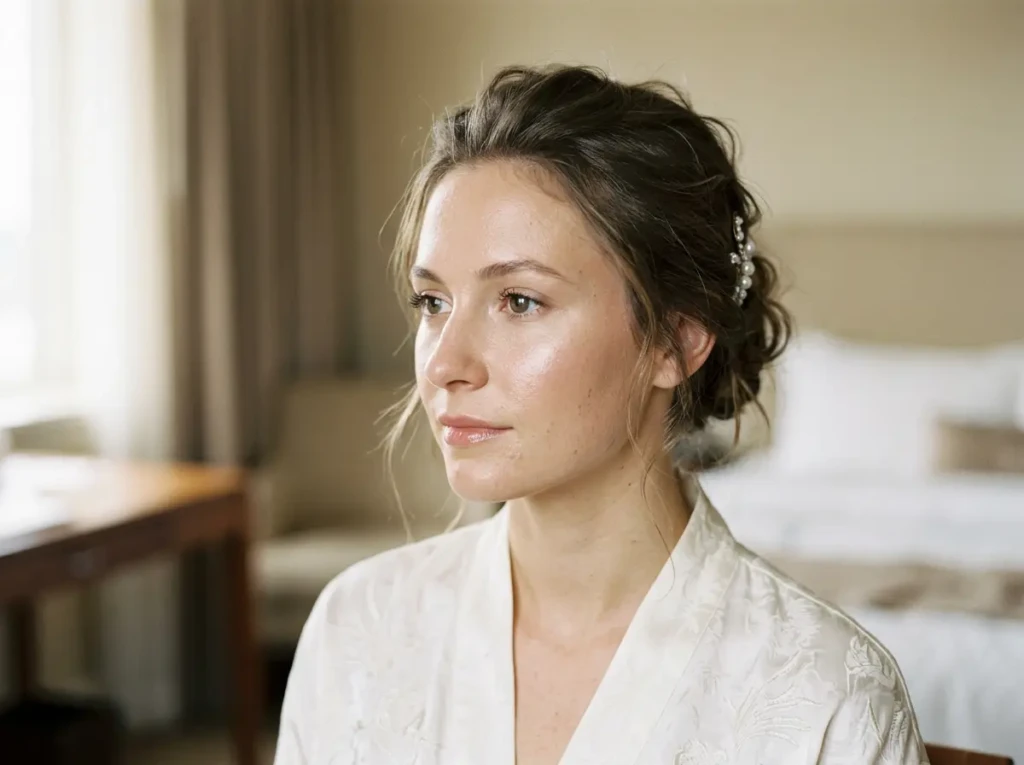
Luminous, even, real-looking. Lightweight coverage that lets the skin breathe rather than concealing it entirely. The goal is texture and quality, not opacity. The technical ask is a serum-weight foundation or skin tint layered with precise concealing where needed, set with a minimal amount of translucent powder only where the skin actually needs it. No all-over matte setting. No baking. The finish should look like skin, not makeup.
This is the look that photographs best outdoors and in natural window light, which is where most documentary-style wedding photography happens now. It also ages better in photos. A matte full-coverage base from 2019 looks like 2019. Luminous skin just looks like a good day.
2. Defined lips are back
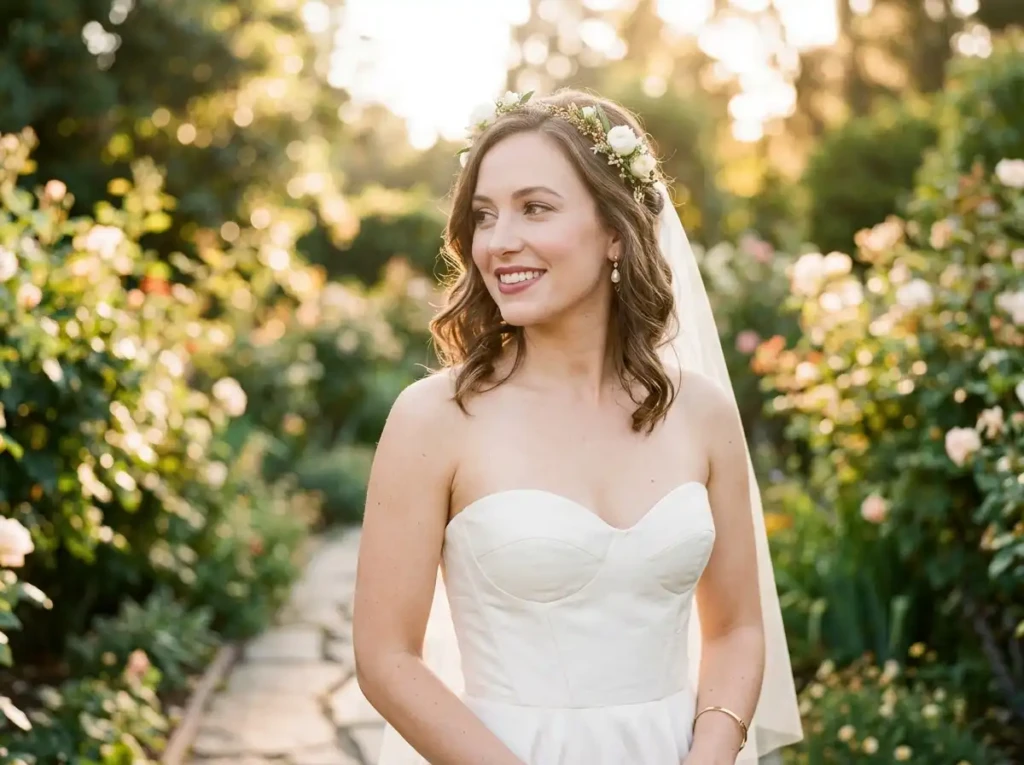
After years of the barely-there nude gloss, lips are getting their shape back. The palette is neutral rose tones, soft berry, and warm peachy pinks. Lip liner is making a return — blended, not harsh, used to define and slightly overdraw rather than draw a hard border. The result reads as “your natural lip tone, enhanced,” which is exactly the brief most brides are giving.
Statement red is not the dominant ask, though it is showing up for evening receptions. The more consistent trend is lips that have color and definition without competing with the eyes. The balance point — confident lip, soft eye — is where most brides are landing for the ceremony itself.
3. Eye definition (quiet, not graphic)
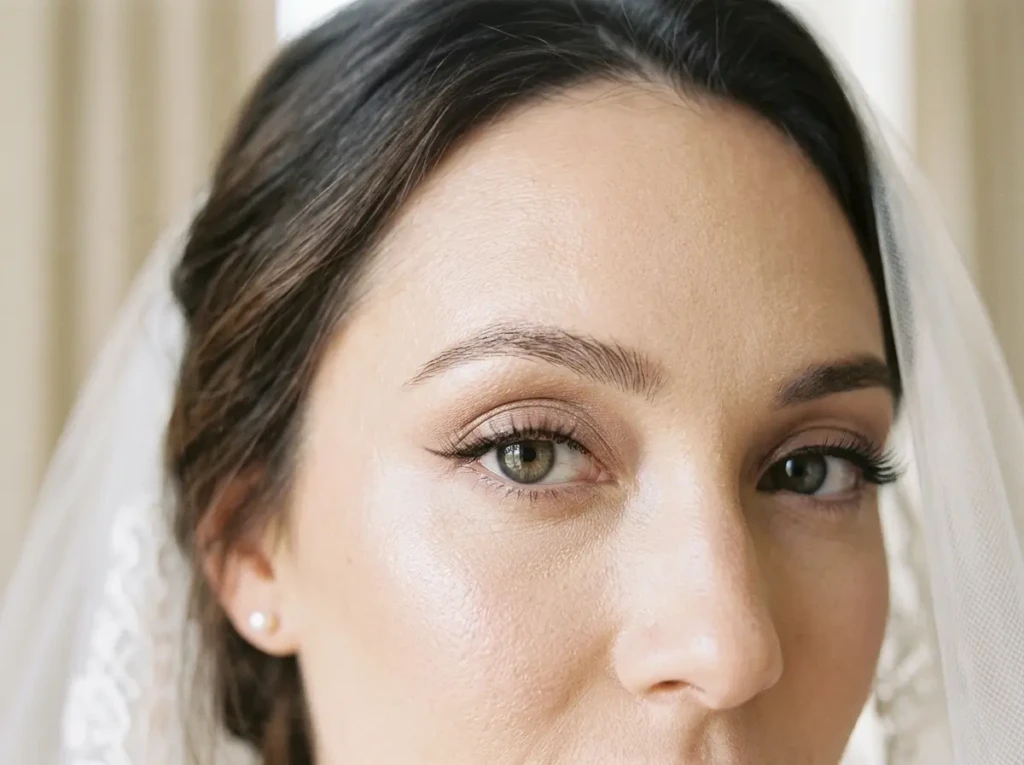
The heavy smoky eye is fading. What is replacing it is more precise: a clean liner wing, or a soft smoked-out liner that sits close to the lash line without climbing the lid. Soft browns and warm taupes are the most requested shadow tones. Pastel eyeshadow — muted dusty rose, sage, lavender — is appearing more on editorial shoots and is starting to migrate into bridal trials for brides who want something ethereal without a full dramatic eye.
Individual lashes or half-lashes are preferred over full-strip. The goal is to make the lashes look longer and thicker without the stiffness or obvious band of a strip lash. On a dewy skin base, a heavy full-strip lash looks out of place. The proportion does not work.
4. Monochrome dressing
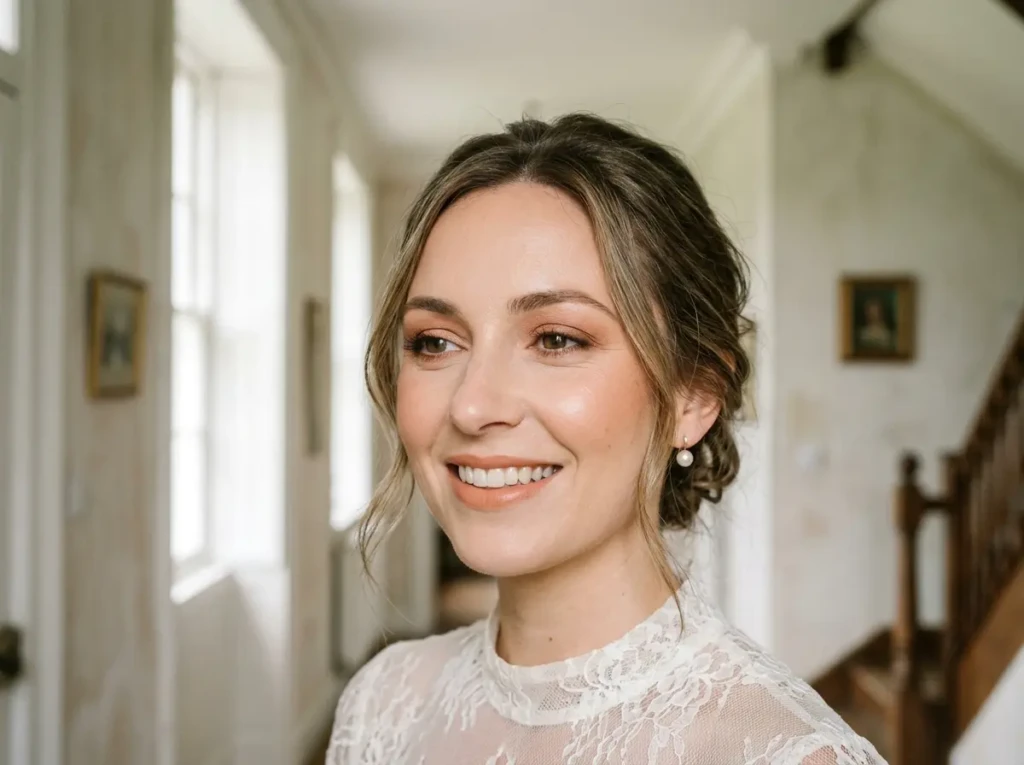
Eyes, cheeks, and lips in a single cohesive palette. Peach across all three — a peachy-brown shadow, cream peach blush, and a warm peach-nude lip — is the most requested version. It reads polished without requiring a lot of decisions, and it photographs cleanly across different lighting. Dusty rose and warm terracotta are running close behind.
The appeal is coherence. There is no single dramatic feature pulling attention; the whole face reads as a considered unit. It works particularly well with minimal jewelry and a clean-line dress, where the makeup is doing quiet work rather than competing with anything.
5. After-party boldness
The ceremony and reception look stays soft. The after-party is where more color is coming in. Blue eyeshadow at the evening reception is appearing on social media and starting to show up in trials. Deep reds and rich berry lips are requested for evening weddings or festive receptions. The logic is sensible: you have been in photos all day looking polished and timeless; the evening is where you can have some fun.
This separation between ceremony look and reception look is becoming a normal part of the bridal brief. Some brides are now booking two distinct looks intentionally. If your venue has both a daytime ceremony and an evening party, it is worth discussing the transition with your artist at the trial.
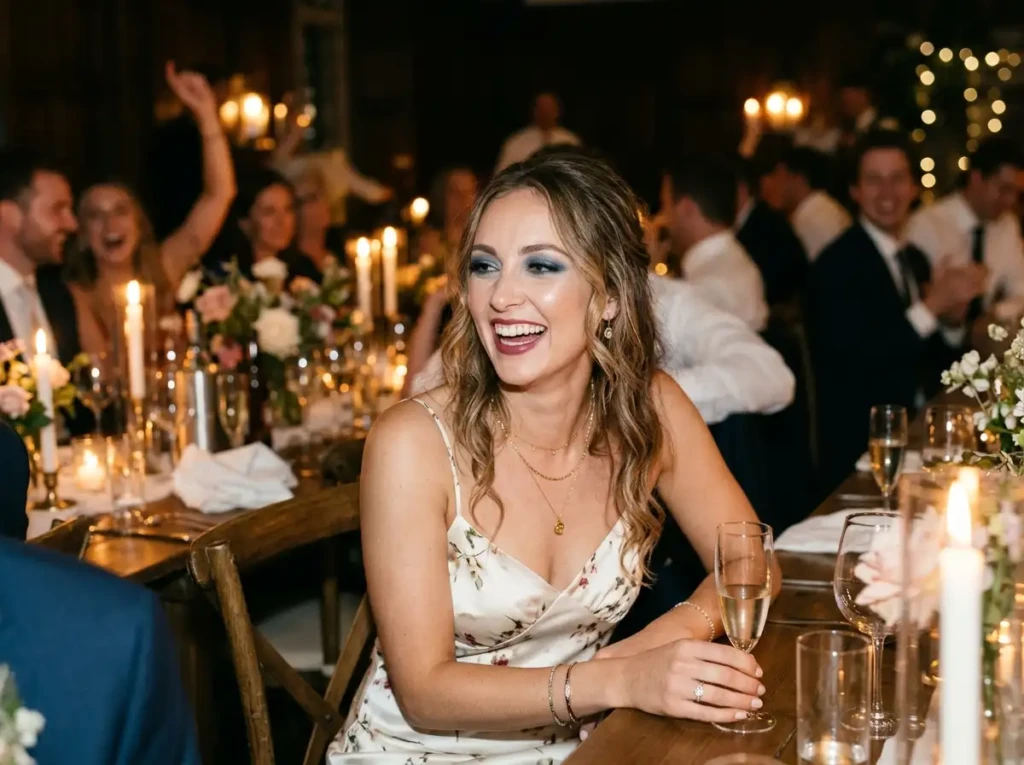
6. Cream blush and rosy cheeks
Applied high on the cheekbone rather than hollowed underneath, cream blush is now the default for outdoor and country house weddings. It sits better than powder in heat and humidity, moves with the skin rather than sitting on top of it, and pairs naturally with a dewy base. Warm rosy tones are the most requested shade family. The effect is flushed and healthy rather than sculpted.
Graphic blush — the pigmented, high-cheekbone-only placement that circulated on TikTok in 2023 and 2024 — is not the ask for 2026 weddings. It photographs interestingly but reads as trend-specific in a way most brides are now conscious of.
What your venue actually changes
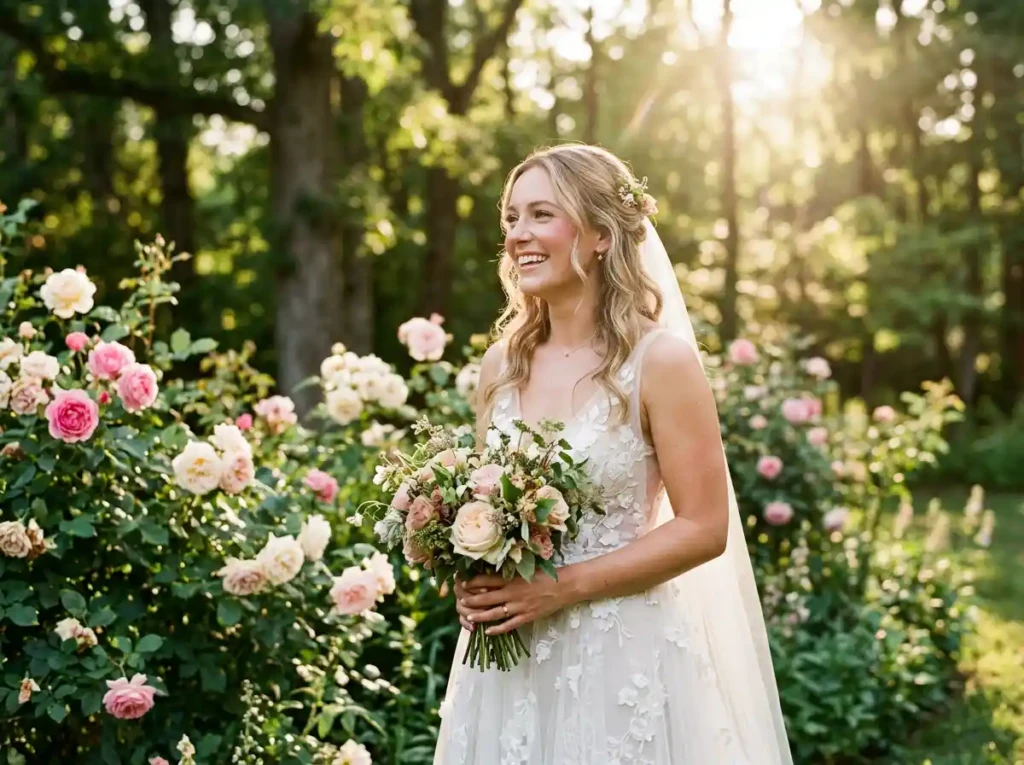
Venue matters more than most brides expect. The same face reads completely differently in a city ballroom versus a Cotswolds barn versus a summer garden. Artists who work multiple settings think about this from the first conversation. These are the practical differences:
- City or ballroom: polished soft glam, subtle contour, clean liner. Indoor photography picks up more detail, so precision matters.
- Country house or barn: rosy cream blush, soft waves, glowing skin. Natural light through windows does most of the heavy lifting.
- Outdoor summer: waterproof mascara, cream formulas throughout, satin base. Anything powder-heavy risks sliding by hour two in heat.
- Winter or evening: slightly deeper lips, luminous highlight, warm-toned eyes. Candlelight rewards warmth and depth.
The best bridal artists in 2026 are thinking holistically about lighting, photography style, dress silhouette, and setting before committing to a look. Bring photos of your venue to your trial. If your photographer shoots in a particular style — bright and airy versus dark and moody — that affects what your makeup should do.
What’s fading out
A few trends from the early 2020s are dating quickly. None of these are wrong — you might love them — but if you want a look that still feels current in ten years of photos, these are the ones to question at your trial:
- Heavy matte contour with strong nose sculpting. It photographs as theatrical rather than natural in a documentary wedding context.
- Graphic blush placed as a pigmented block above the cheekbone. Reads as a 2023 trend in photos.
- Overly matte skin. The all-over powder-set face looks flat in natural light and tends to emphasise texture.
- Full-strip lashes on an otherwise natural look. The proportion is off when everything else is soft.
- Identical bridesmaid makeup. The look of each person in a wedding party wearing the exact same bold eye is now considered dated. Complementary, not matching, is the direction.
- The invisible nude lip. After years of barely-there gloss, a lip with no color reads as unfinished in 2026.
The one thing that hasn’t changed
Every year there is a version of the same advice: your wedding makeup should still look like you. Not a filtered version. Not a copy of an influencer whose skin tone and features are different from yours. Not a dramatic departure from how you look every other day of your life.
What makes 2026 different is that this advice has actually become the trend. For the first time in a while, the most requested looks and the advice to “still look like yourself” are pointing in the same direction. Skin that looks genuinely good, lips with some color, eyes that are defined but not theatrical. It is not a particularly exciting brief on paper. But it photographs well, it lasts through an emotional day, and it is what most brides actually want when they look back at their photos.
Start the skincare routine six months out. Book a trial. Bring venue photos. And if your artist is talking more about your skin quality than your eyeshadow color, that is a good sign.
—