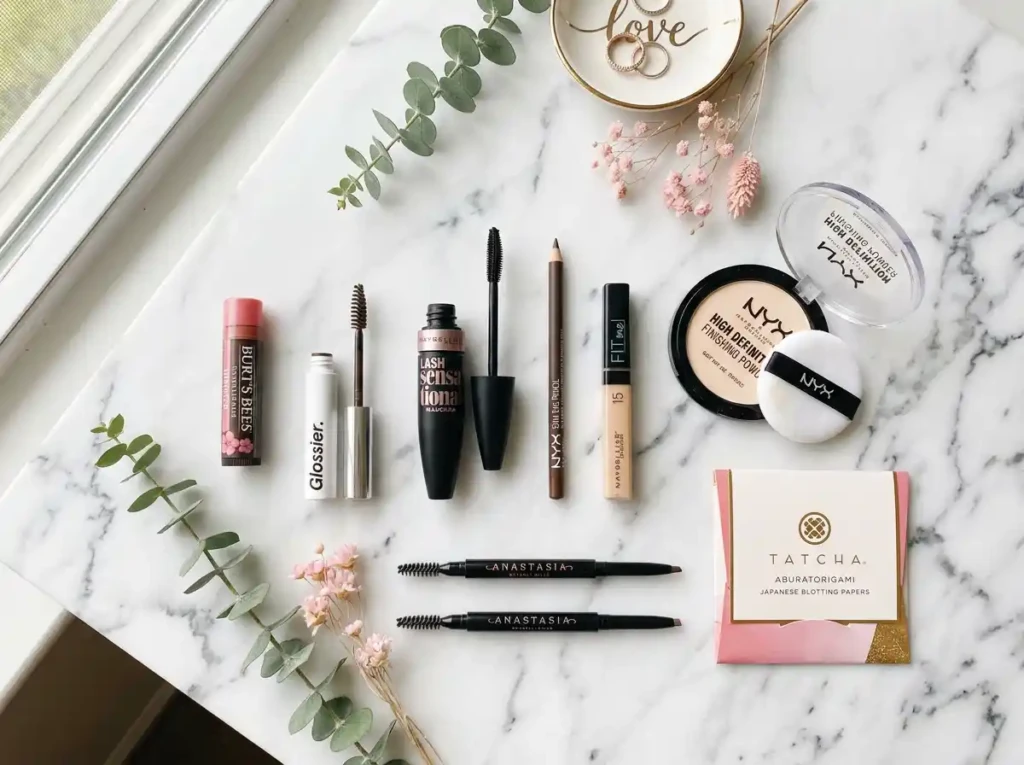
Honest advice for getting ready fast and actually staying that way
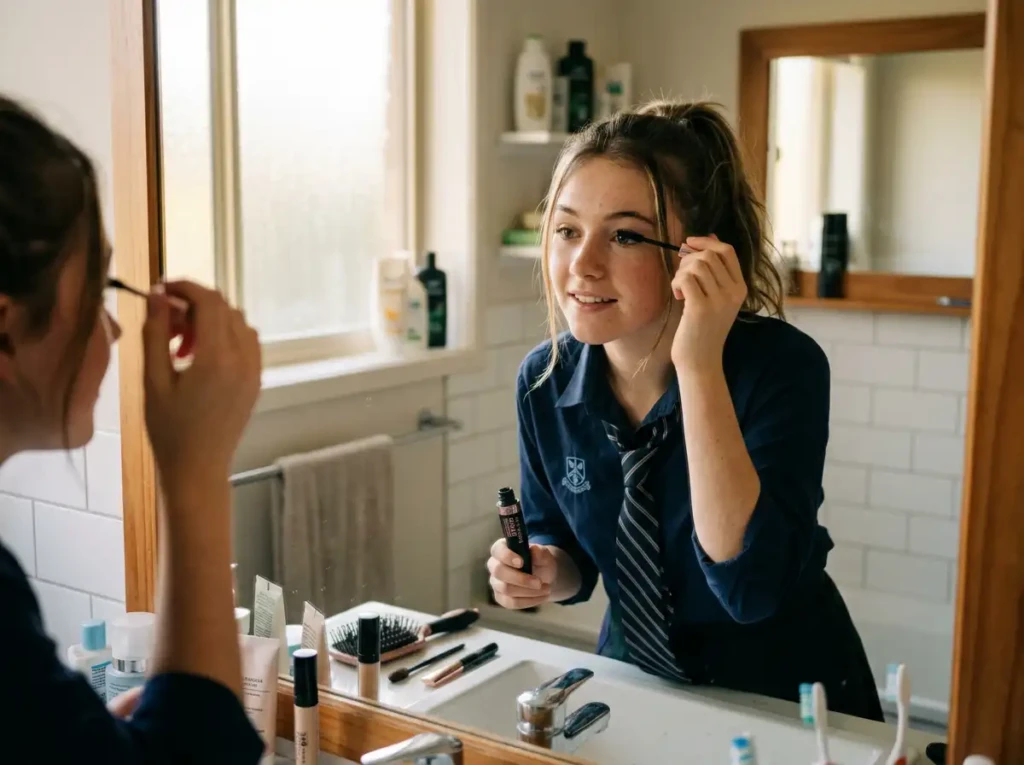
Let me paint you a picture. It’s 7:14am. Your alarm went off at 6:45 and you somehow lost twenty minutes. You’ve got maybe eight minutes before you need to leave, the bathroom light makes you look vaguely unwell, and you’re staring at your makeup bag trying to decide what’s worth it.
That’s the actual reality of school makeup. Not a relaxed ten-step routine with good lighting and a YouTube tutorial playing in the background. Eight minutes. Bathroom mirror. Go.
I’ve seen a lot of advice for school makeup that basically tells you to do less of the same thing you already do. Use lighter foundation. Less eyeshadow. Whatever. That’s not really helpful. So this is going to be more specific than that — about what actually works when you’re tired and in a hurry, and what quietly falls apart by second period no matter how carefully you applied it.
None of this is gospel. Your skin is yours, your school is yours, and honestly what works for one person is sometimes useless for another. But these are things worth knowing.
Skin First. No, Really.
I know you’ve heard this before. But the number of times I’ve watched well-applied foundation turn into a crease-fest by 10am because someone skipped moisturiser is genuinely upsetting. Your skin is the surface you’re working on. If the surface is dry or flaky or just hasn’t been prepared at all, the makeup sitting on top of it is going to behave badly.
Wash your face. Use a moisturiser. Let it actually absorb — even just two minutes makes a difference; you can brush your teeth while you wait. That’s it. That’s the skin prep. It doesn’t need to be complicated.
If your skin gets oily by lunchtime, a mattifying moisturiser helps more than most people expect. And if you want your makeup to genuinely stay put, a basic drugstore primer — the e.l.f. one costs about four dollars, which is absurd value — applied just over your T-zone takes maybe thirty seconds and makes a real dent in how long things last.
You don’t need five products. You need a clean, slightly hydrated face. The makeup will do the rest.
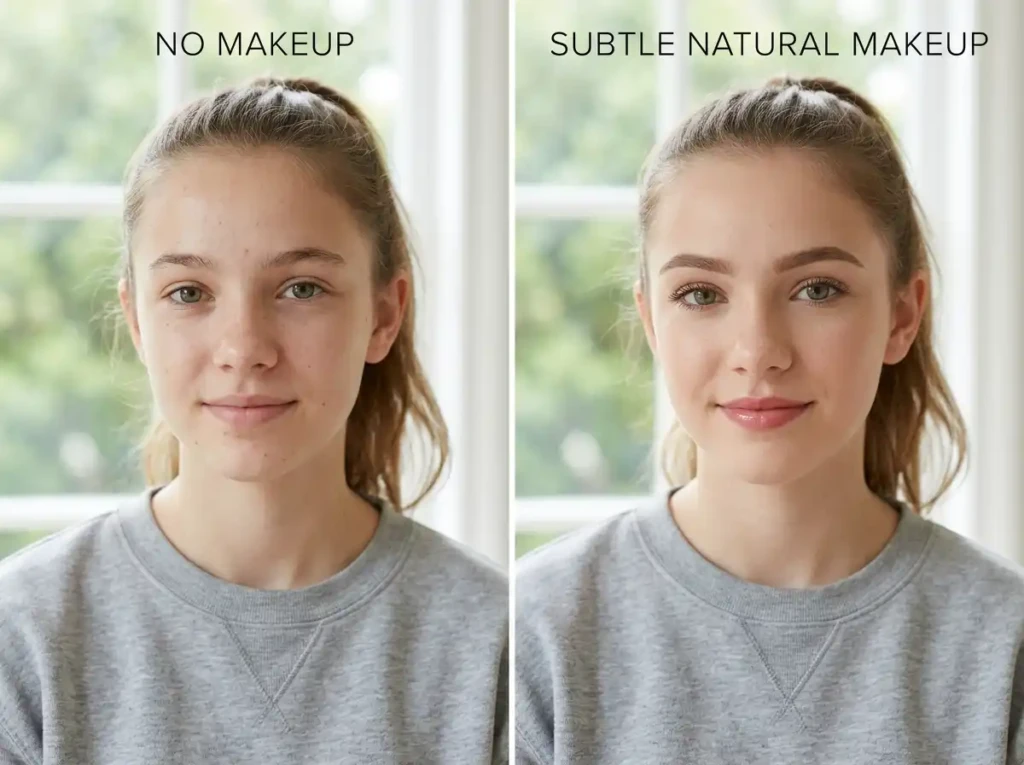
Stop Trying to Cover Everything
Full-coverage foundation at school is, in my opinion, almost always a mistake. I know that’s a strong stance. But hear me out.
Heavy foundation looks fine at 7:45am. By 11am it’s settled into your pores. By 1pm it’s doing something around your nose that nobody wants to think about. Classroom lighting is not kind to it. And the amount of work you have to do to keep it looking fresh through a full school day — touching up, blotting, re-setting — is just not worth it.
A tinted moisturiser or BB cream evens out your skin tone without the weight. It breathes. It moves with your face. And if you have specific spots you want to cover — a blemish, some redness, under-eye shadows — a small amount of concealer on those areas will do more for your overall look than foundation slathered everywhere.
Blend the concealer out with your ring finger. Warm it up a little, use light tapping motions, and don’t drag it around. Then set it with the smallest puff of translucent powder you can manage.
One more thing about base products that I feel strongly about: shade matching. Going one shade too light to look brighter is one of the most common mistakes, and it looks obvious to everyone except the person wearing it. Test on your jawline, outside, in actual daylight. Your neck is part of your face in this equation.
Setting spray is genuinely worth buying. One mist at the end locks everything in. It’s the closest thing to a magic fix that actually exists.
Eyes: Pick One Thing and Do It Well
Here’s something I’ve noticed: the most polished school makeup looks are always the ones where someone picked one feature and went slightly harder on that, rather than doing a little of everything. Eyes and lips fighting each other at 8am for a maths class is just too much going on.
If you’re doing eye makeup, keep it to two things max. Mascara plus a simple liner. Or a neutral shadow plus brows. Trying to do full shadow, liner, mascara, and brows all before school is how you end up running late and still feeling like something’s off.
For liner: brown reads softer than black for daytime, and it looks intentional rather than like you got ready in the dark. A thin line close to the lash line is enough. You don’t need a wing. Wings are great but they take practice and if one goes slightly wrong when you’re half asleep, fixing it usually makes things worse.
Mascara: two coats, let the first one dry before the second. Wiggle the wand at the base of your lashes, then pull upward. That’s genuinely the whole technique. More coats don’t give you more lashes, they give you clumps.
Brows, though — brows are the thing people skip that make the biggest difference. Filling in your brows with light feathery strokes using a brow pencil takes maybe ninety seconds and changes your whole face. If you’re going to spend time on one thing, it’s honestly this.
Lips: Manage Your Expectations
Lipstick at school. Okay. I get it — lipstick is fun, it’s expressive, and some people wear it beautifully. But there’s a practical reality here: you eat lunch. You drink from a water bottle seventeen times. You rest your chin on your hand without thinking about it. By period three, a full lip is usually half a lip with some migration.
Tinted balms are the smarter school choice. They give you colour, they’re forgiving, and reapplying takes two seconds without a mirror. Something like the Burt’s Bees tinted balms or the Maybelline Lifter Gloss gives you a real effect without the maintenance.
If you insist on lipstick — and sometimes you just want to, and that’s fair — line your lips first with a matching pencil and fill in the whole lip with liner before applying colour over it. Blot with tissue. Apply a second coat. Blot again. This genuinely extends wear by hours. It’s annoying that it takes that many steps but it works.
Matte formulas last longer than glossy ones, by the way. The tradeoff is they’re drier and can look a bit flat if your lips aren’t exfoliated. A cheap lip scrub once a week makes a difference if you’re going matte regularly.
Things That Go Wrong and How to Fix Them Fast
Some makeup problems happen to nearly everyone and there are actual solutions for them. Not ‘be more careful’ solutions. Real ones.
- Mascara under your eyes by lunchtime: Dust a tiny amount of translucent powder under your eyes before applying mascara. Sounds counterintuitive but it absorbs the oils that cause transfer throughout the day. Keep a cotton bud in your bag — a little micellar water on the tip removes smudges cleanly without dragging everything else with it.
- Face looking shiny by period two: Blotting papers. Not powder on top of powder, which builds up into a weird pasty texture. Press a blotting paper, don’t rub. They’re cheap, they’re flat, they fit in any pocket. This is one of those products that sounds unnecessary until you try it.
- Concealer creasing under your eyes: You’re using too much. I know that’s not what you want to hear but it’s almost always the answer. Use less, blend it out further, and set with powder. The crease happens when product sits too thick in the fine lines under your eyes.
- Eyeliner that won’t stay put: Pencil liner smudges more than gel or liquid — that’s just the nature of it. If you love pencil, a light dusting of translucent powder over the line after it dries helps set it. If you’re switching to gel or liquid, there’s a learning curve but they genuinely stay put better.
- Absolutely no time: Moisturiser with SPF, concealer on anything that bothers you, one coat of mascara. Done. That takes four minutes and looks put-together. Everything else is optional.
What You Actually Need (It’s Not Much)
There’s a version of a school makeup bag that has thirty products in it. I understand the appeal. I also know that most of those products are there for the comfort of ownership rather than daily use. The things that earn their place in the bag are the ones you reach for every morning without thinking.
The actual essentials:
- Tinted moisturiser or BB cream (your shade)
- Creamy concealer in one shade close to your skin
- Translucent setting powder and a small brush or puff
- Eyeliner (brown pencil is a solid starting point)
- Mascara
- A brow pencil in your hair colour (this is underrated)
- Tinted lip balm
- Blotting papers for midday touch-ups
- Setting spray if you want your base to actually last
Last Things
Check your school’s rules, genuinely. Some have specific policies on eyeliner, lip colour, or unnatural hair dye. It’s annoying to get called out for something you spent time on in the morning. Knowing the rules means you can work around them rather than run into them.
Skincare is, in the long run, more important than any product you put on top of it. I know that’s not exciting to hear when you want to talk about makeup. But clear, hydrated, healthy skin takes less to look good. Removing your makeup at night — properly, not with a half-hearted face wipe — and moisturising consistently makes a bigger difference over six months than switching to a better foundation would.
And honestly? The stuff that works is going to be slightly different for you than it is for anyone else. You might find that tinted balm is perfect and you never think about lipstick again. You might discover that brow gel changes everything. Or that your skin does fine without primer and you wasted a month buying it. That’s fine. These are starting points, not rules.
School days are long. The goal is makeup that gets you out the door quickly and doesn’t need to be thought about again until you get home. Once you find what does that for you, you won’t need to read another one of these guides.