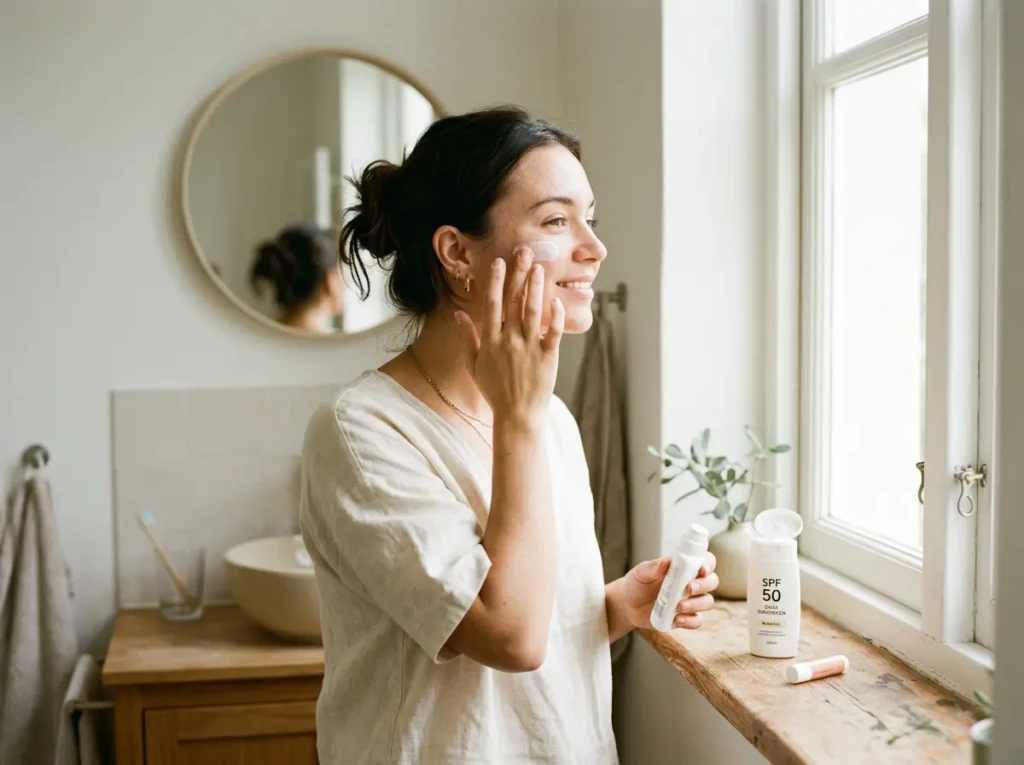
Three products. Ten minutes a day. That’s actually it.
Okay so I spent about three years buying products I didn’t need because the internet told me I needed them. A toner. Then a second toner because apparently the first one was wrong. An eye cream. A brightening serum. A separate moisturizer for day and a different one for night. My bathroom shelf looked like a Sephora stockroom and my skin looked exactly the same as before, maybe worse.
Here’s what nobody tells you when you’re starting out: skincare is not complicated. The industry makes it complicated on purpose, because a confused person is a person who keeps buying things. The truth is your skin needs maybe four things done consistently. Not twelve. Not a fridge full of glass bottles. Four things.
I’m going to walk you through a real beginner routine. Not the aspirational ten-step version you see on YouTube from people with ring lights and PR packages. The version that actually works, costs almost nothing compared to what’s out there, and takes less time than making toast.
Step 1: Cleanser — You’re Probably Doing This Wrong
Most people either don’t cleanse at all or they use something so harsh it strips their face raw and they walk around with that tight, squeaky feeling thinking that means clean. It doesn’t mean clean. It means your skin barrier just got obliterated.
Your skin has a protective layer made of natural oils and proteins. That layer keeps moisture in and bacteria out. When you use a harsh cleanser twice a day, you destroy it. Your skin then panics and either pumps out oil to compensate — so now you’re oilier than before — or it goes dry and red and starts to feel like paper. Neither is what you were going for.
The squeaky-clean feeling is not your friend. A good cleanser should feel like nothing happened. You rinse, you pat dry, and your face just feels… like your face. Not tight, not greasy, just normal.
Do you actually need to cleanse in the morning?
Genuinely controversial opinion coming: probably not. At night your face has been on a pillow for eight hours. It hasn’t touched pollution or sunscreen or the world. A splash of lukewarm water is usually enough. If you feel like you need more, use the mildest cleanser you own and don’t work it in for longer than thirty seconds.
At night though? Non-negotiable. You have to actually remove the day. Sunscreen, makeup, pollution, whatever your skin collected from existing in the world — it all needs to come off. A gentle cleanser does this without destroying everything in the process.
What to actually buy
Look for fragrance-free. That’s the first filter. Fragrance is one of the leading causes of skin irritation and when you’re just starting out, you have no idea what your skin reacts to. Don’t add unnecessary variables. After that, look for words like ‘gentle’, ‘hydrating’, or ‘sensitive skin’ on the front. Avoid anything that says ‘deep cleansing’, ‘pore purifying’, or ‘oil control’ — those are almost always code for ‘this will dry you out.’
Gel cleansers work better for oily skin. Cream or milk cleansers are kinder to dry or sensitive skin. If you want to start somewhere and not think about it, micellar water is genuinely hard to mess up — it works without rinsing, it’s gentle, and it costs nothing.
Wash with lukewarm water. Hot feels good but it strips oil and dilates blood vessels. Cold doesn’t ‘close pores’ — that’s a myth that refuses to die. Lukewarm. Every time.

Step 2: Moisturizer — Yes, Even You
If you have oily skin and you just rolled your eyes, stay with me for a second.
Skipping moisturizer because your skin is oily is one of the most common mistakes people make and it actively makes the problem worse. Here’s what happens: you strip your skin dry with a harsh cleanser or skip moisturizer because you think you don’t need it. Your skin, which is smarter than you, notices it’s dehydrated. It responds by producing more oil to compensate. You get oilier. You skip moisturizer again. The cycle continues. You blame your skin type when the real problem is what you’re doing to it.
Oily skin still needs moisture. Dry skin obviously needs moisture. Combination, sensitive, acne-prone — all of it needs moisture. The only difference is the texture you use.
How to pick one
Texture is everything here and brand name is almost irrelevant. If your skin runs oily, a gel or fluid moisturizer absorbs fast and doesn’t sit heavy. If your skin is dry, you need a proper cream — something thick enough that you feel it when you apply it. If you’re not sure, start with a medium-weight lotion and pay attention to how your skin feels two hours later.
At the beginner stage, don’t worry too much about the ingredient list beyond avoiding fragrance and high-up-the-list alcohol. Both are drying. Both are irritating. Everything else — the hyaluronic acid, the ceramides, the peptides — they’re real and they do things, but you don’t need to think about them yet. Just get something that doesn’t break you out and feels good on your face.
Apply it while your skin is still slightly damp
This matters more than people realise. After cleansing, pat your face dry but leave a little moisture on your skin. Then apply your moisturizer. The humectants in the formula, the ingredients that attract water, have something to work with. They pull that surface moisture into the skin instead of trying to pull humidity out of the air. In a dry climate especially, this makes a noticeable difference.
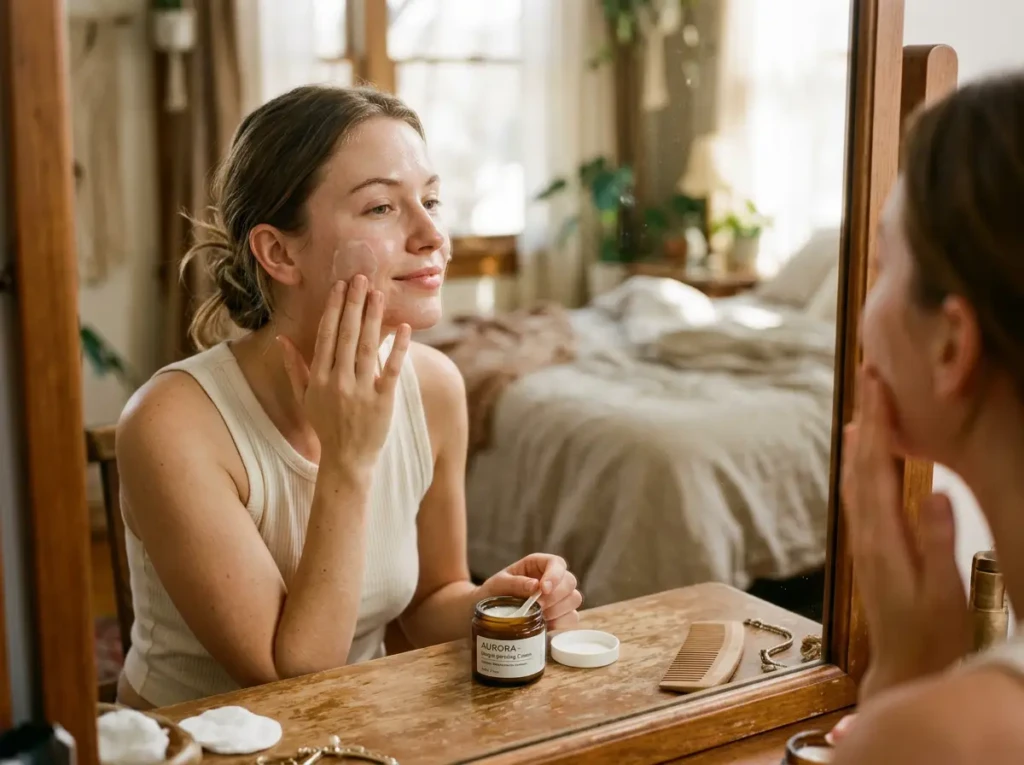
Step 3: SPF — The One You Keep Skipping
I’m not going to lecture you. But I am going to tell you this one time: if you skip every other part of this routine, wear sunscreen. It is the single most effective anti-aging product that exists, it costs five dollars, and almost nobody uses it consistently. The fine lines, the dark spots, the uneven texture that people spend hundreds on trying to fix in their thirties — most of it is sun damage that accumulated quietly over years.
UVA rays — the ones that cause aging and skin damage — go through glass. They’re there on cloudy days. They’re weaker in winter but they’re present. You drive to work and get twenty minutes of UVA through your car window and don’t think about it once. It adds up.
SPF 30 or 50?
SPF 30 blocks around 97% of UVB rays. SPF 50 blocks around 98%. The gap is small but it matters over years of daily exposure. For everyday life, SPF 30 is fine. If you’re outside for more than an hour, go to 50 and reapply every two hours. The number matters less than the habit of actually wearing it.
Finding one you won’t hate
Older sunscreens were thick and white and greasy and smelled like a swimming pool. That’s why people avoided them. Newer formulas are completely different — lightweight, invisible, no white cast, comfortable under makeup. You can find genuinely great sunscreens that feel like water on your skin.
Look for ‘broad spectrum’ on the label — that means it covers both UVA and UVB. SPF 30 or higher. Fragrance-free. Mineral formulas with zinc oxide are gentler for sensitive or reactive skin. Chemical formulas absorb invisibly and work well for most people but can occasionally irritate very sensitive skin. Try both if you need to. The best one is the one you’ll actually put on your face every morning.
Apply it last in your morning routine, after moisturizer. Give it sixty seconds to settle before you layer anything else on top.
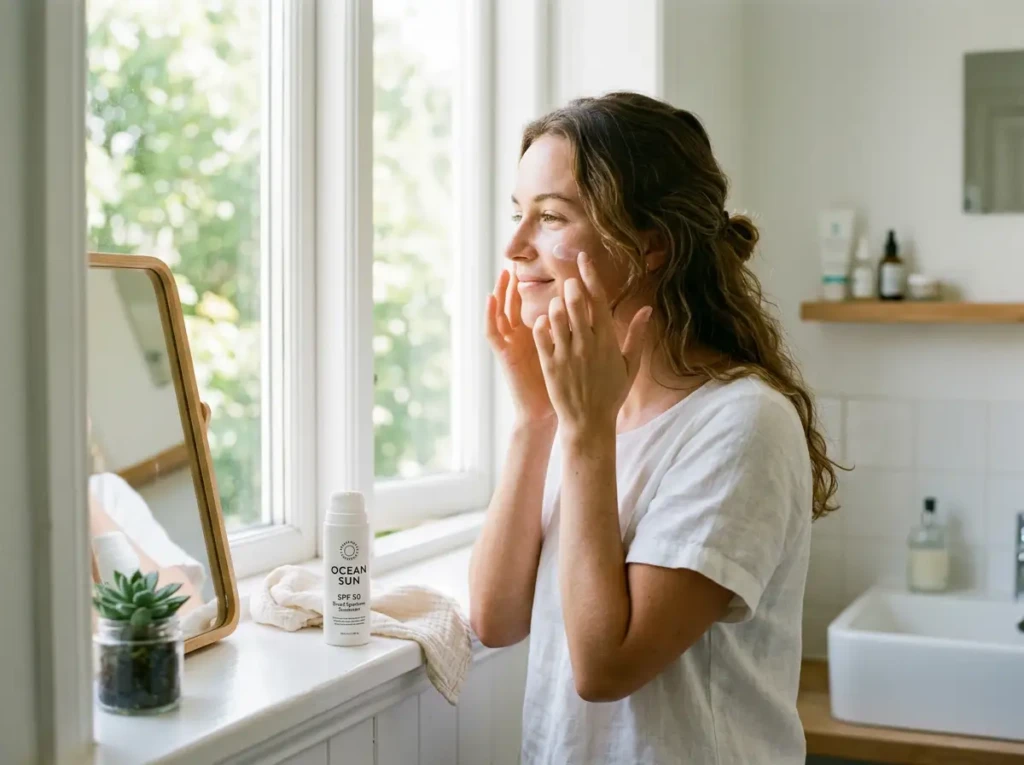
The Whole Routine, Written Out
Here it is. No fluff.
Morning
- Rinse with lukewarm water, or use a gentle cleanser if your skin needs it
- Moisturizer on slightly damp skin
- SPF as the very last step — sixty seconds, let it settle
Evening
- Cleanse properly — remove sunscreen, makeup, and the day
- Moisturizer while skin is still a little damp
- Nothing else — no SPF at night, your skin repairs itself in the dark
Three products. Five minutes in the morning, three at night. That is genuinely the whole thing for someone starting from scratch.
The Part Nobody Wants to Hear
Skincare is slow. Your skin cells take twenty-eight days to turn over, which means you won’t see the full effect of a new routine for at least a month. People quit in week two all the time. They think it’s not working. They switch to something new. They never give anything long enough to actually do anything.
And here’s the other thing: don’t introduce everything at once. Start with cleanser and moisturizer for two weeks. Add SPF. Sit with those three products for a month before you even think about adding anything else. When you stack three new things at once and your skin reacts, you have no idea which one caused it. One at a time gives you actual information about your skin.
If something stings or burns beyond a mild tingle, wash it off. Your skin shouldn’t hurt. That’s not ‘working’, that’s irritation.
The honest truth is that the boring routine wins every time. Cleanser, moisturizer, SPF, done consistently, will do more for your skin than rotating through every trending product on TikTok. It’s not exciting advice. It’s just the advice that’s actually true.
Now go buy the SPF. Seriously.
Good skin is built in boring moments, not expensive ones.