Nobody tells you how exhausting acne is. Not just the breakouts themselves, but the mental load that comes with them. You spend fifteen minutes in the morning staring at your face, cataloguing every new spot, wondering what you did wrong. Was it that chocolate you had on Thursday? The new face wash? Did you sleep funny and press your face against the pillow too long?
The truth, which is both comforting and annoying, is that it’s probably none of those things. Acne is a skin condition driven by hormones, bacteria, genetics, and inflammation. It is not a hygiene problem. It is not a sign you are doing something wrong. And it does not have a perfect fix.
What it does have is a set of consistent, boring steps that genuinely help most people. No miracle products. No ten-step routines you saw on a skincare video at midnight. Just real basics, done right, for long enough to actually work.
Wash your face, but not like you’re punishing it
The instinct when your skin breaks out is to scrub it. Hard. With something that smells clinical and strips everything off. The thinking goes: acne is caused by oil and bacteria, so the more aggressively you clean, the better.
This is wrong, and it makes things worse.
When you wreck your skin barrier with harsh cleansers, your skin panics and produces more oil to compensate. More oil feeds more bacteria. More bacteria means more spots. You end up in a loop where the harder you scrub, the worse your skin gets, and you blame your skin instead of the cleanser.
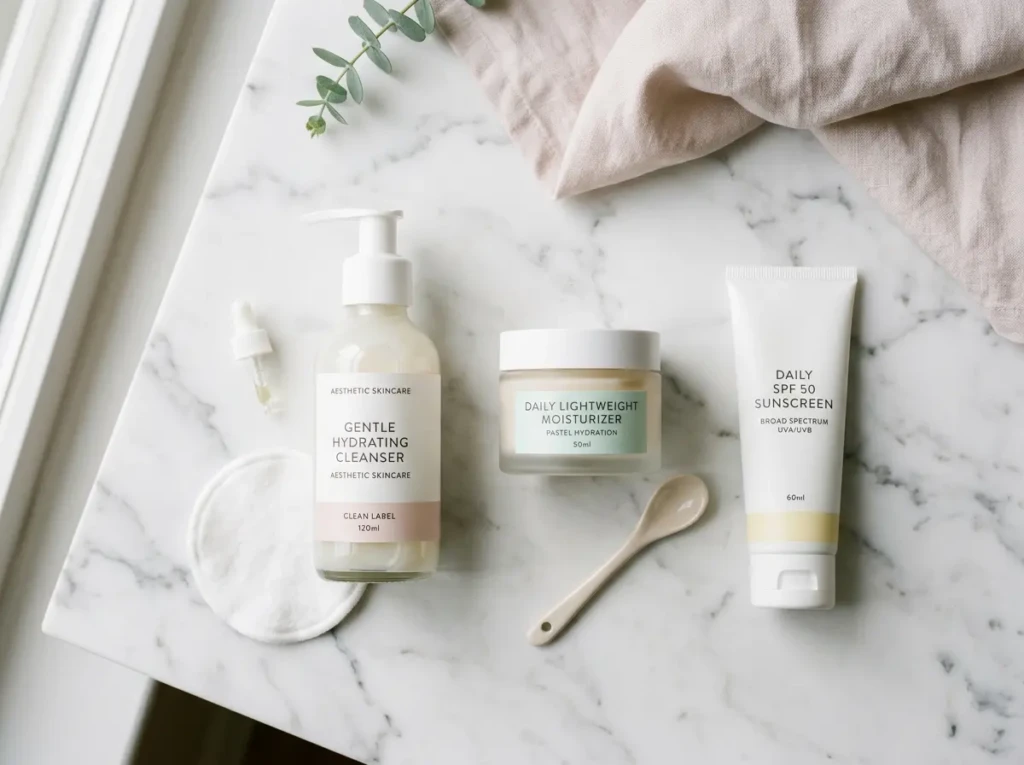
A gentle, fragrance-free gel or foam cleanser is genuinely all you need. Wash twice a day, morning and night, and after exercise. If you want something that does double duty, look for one with salicylic acid between 0.5% and 2% — it’s oil-soluble, which means it can actually get into pores and clear them out. But even a plain gentle cleanser beats a harsh one every time.
Moisturiser is not optional, even if your skin is oily
I know. It sounds backwards. But oily skin still needs moisture, and skipping it is one of the most common things people do that actually makes acne worse.
Here is what happens when you skip moisturiser: your skin’s barrier gets compromised, it gets irritated more easily, and it overproduces oil to try to protect itself. That oil sits on your skin, mixes with dead skin cells, and clogs your pores. Congratulations, you’ve made more acne by trying to have less of it.
The goal is a lightweight, non-comedogenic moisturiser — meaning it won’t clog pores. Gel formulas tend to work well for oily or combination skin. Look for niacinamide (helps calm redness and control oil), hyaluronic acid (draws in water without adding grease), and ceramides (help rebuild your barrier). These are not flashy ingredients. They don’t have a glow or a transformation attached to them. They just quietly work.
If you have never used moisturiser because you assumed your oily skin didn’t need it, try it every day for a month and see what happens. A lot of people are surprised.
Sunscreen every morning, no exceptions
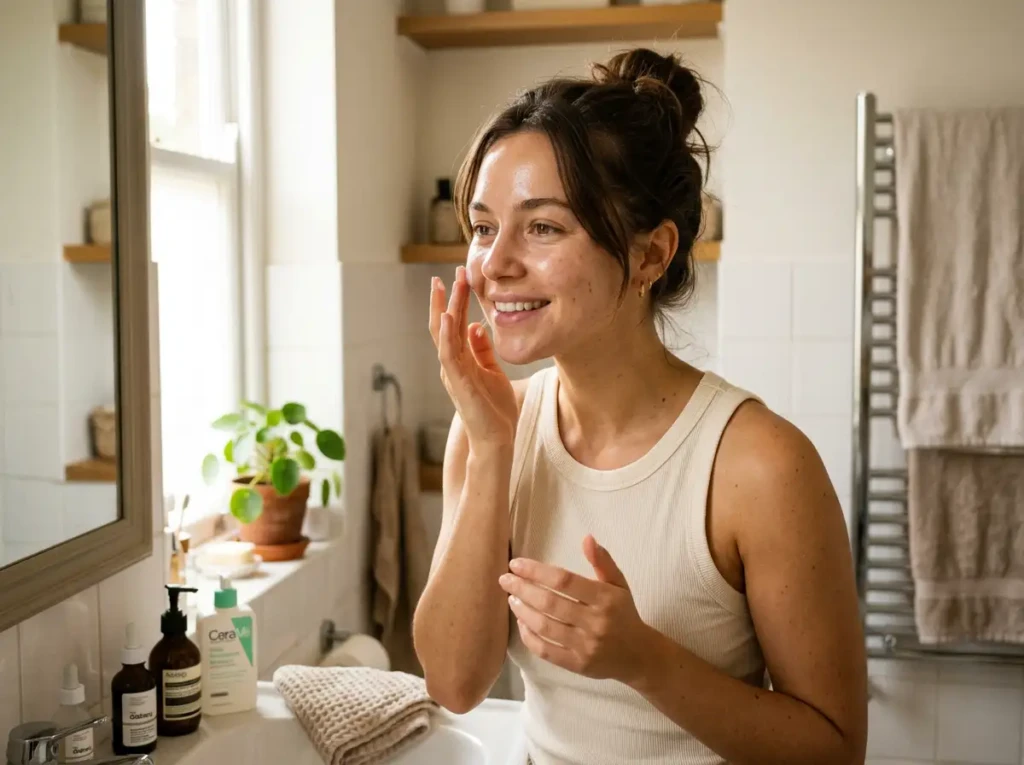
This is the one people skip most often, and it is genuinely the one that matters most if you’re dealing with post-acne marks.
Most acne treatments make your skin more sensitive to UV damage. Retinoids, benzoyl peroxide, AHAs — they all increase photosensitivity. Using any of these without sunscreen is actively undoing some of the work they’re doing. You’re clearing the skin with one hand and damaging it with the other.
More specifically for acne-prone skin: those flat, dark marks left behind after a pimple heals — post-inflammatory hyperpigmentation — get dramatically worse with sun exposure. SPF is one of the cheapest, most proven ways to help them fade faster.
For acne-prone skin, mineral sunscreens with zinc oxide tend to cause fewer reactions than chemical ones, though it varies by person. SPF 30 is the minimum. SPF 50 if you’re going to be outside. And yes, even when it’s overcast.
One new ingredient at a time — seriously
This is where a lot of skincare enthusiasm goes badly wrong. You read about retinol, salicylic acid, niacinamide, vitamin C, and azelaic acid, and you think: great, I’ll try all of them. You order five products, use them all in the same week, and within ten days your skin is red, peeling, and breaking out more than before.
Then you don’t know what caused it, so you stop everything, and you’re back to square one.
One new product. Wait two to three weeks. Then add another. It feels slow, but it’s the only way to actually know what your skin is responding to, good or bad.
Here is a rough guide to what the main acne-fighting ingredients actually do:
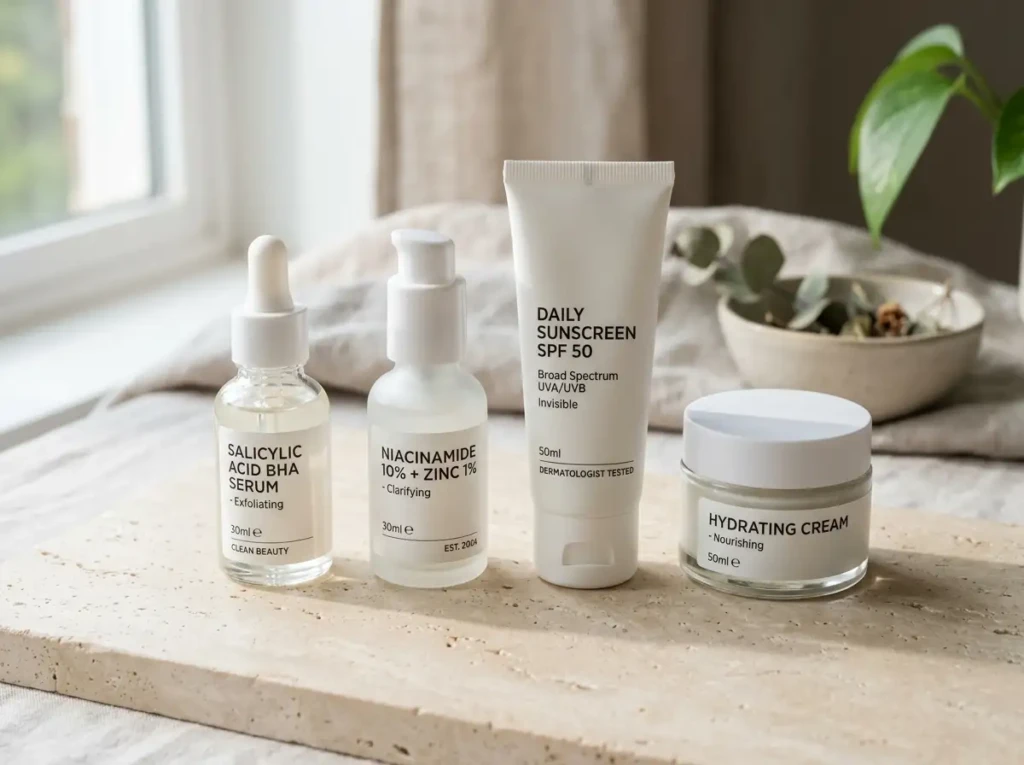
- Salicylic acid: goes into pores because it’s oil-soluble, breaks down the gunk that causes blackheads and whiteheads. Good for congested, bumpy skin.
- Benzoyl peroxide: kills acne bacteria directly. Best for inflamed, red pimples. Can bleach fabric, so be careful with towels and pillowcases.
- Niacinamide: calms redness, reduces oil production, fades post-acne marks over time. Gentle enough to use daily. Very hard to go wrong with.
- Retinoids: speed up how fast your skin turns over, which prevents pores from clogging and fades marks. They work. They also take months and often cause a purging phase first. Start once or twice a week at night and build up slowly.
- Azelaic acid: the gentler option. Reduces inflammation and hyperpigmentation, works on both acne and the marks it leaves behind. Also one of the few things that’s considered safe during pregnancy.
You do not need all of these. Pick one or two based on what your main issue is, and stick with them.
The boring stuff that actually matters
Nobody wants to write about pillowcases. But here we are.
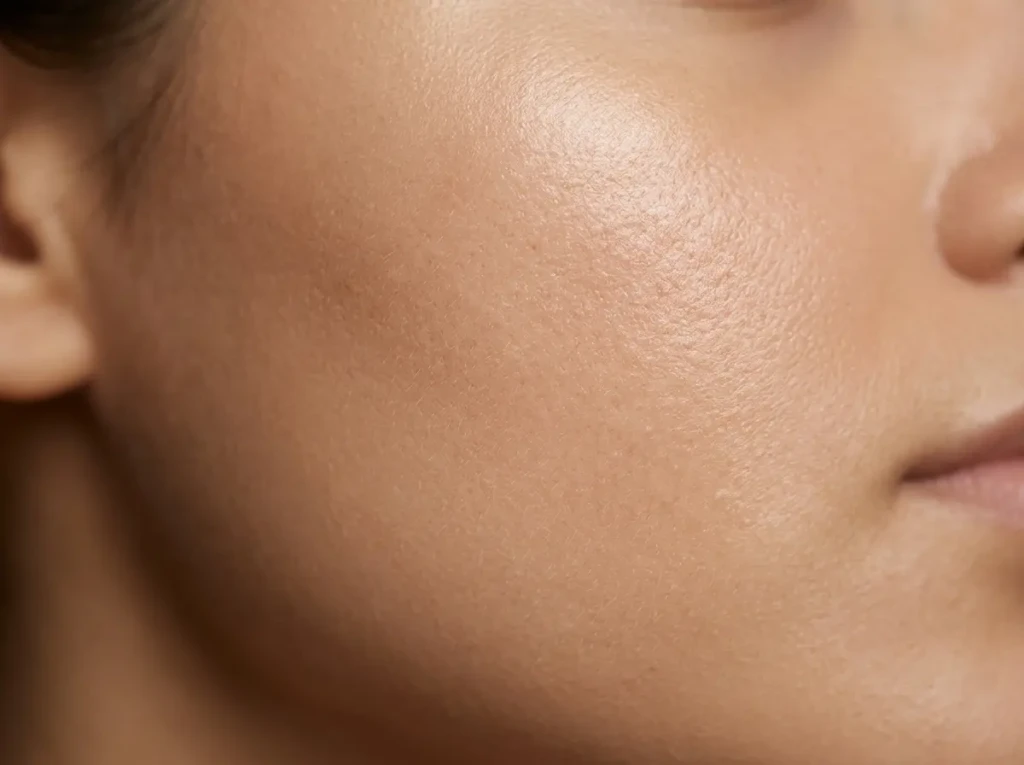
You sleep on your pillowcase for seven or eight hours a night. In that time, it collects dead skin cells, oil, hair product residue, and whatever your face had on it when you lay down. Then you press your face into it again the next night. Changing it twice a week costs almost nothing and makes a real difference for a lot of people with persistent breakouts.
Your phone screen is another one. If your breakouts cluster along your cheek or jaw on the side you hold your phone, that is almost certainly why. Bacteria from your hands, sweat, and whatever surfaces your phone has touched spend the whole call pressed against your skin. Wiping your screen with an antibacterial wipe once a day is annoying to remember and genuinely helps.
Touching your face. We all do it — resting your chin in your hand, picking at a spot, scratching an itch without thinking. Every time, you are transferring oil and bacteria from your fingers to your skin. Not every touch causes a breakout, but cutting down on it reduces the odds.
None of this is exciting. All of it works.
Give it time — more time than you think
Skincare is slow. This is the thing that makes it genuinely hard, especially when your skin is actively breaking out and you want it fixed now.
Most dermatologists say to give any routine at least eight to twelve weeks before deciding if it’s working. That is two to three months. For retinoids specifically, you might not see real results for four to six months.
There is also something called purging, which happens when you start using retinoids or exfoliating acids. The product speeds up cell turnover and pushes congestion to the surface all at once, which means you break out more before you break out less. It typically lasts four to six weeks. It is miserable and it is usually a sign the product is working.
The temptation is to quit when purging happens, or when the first month hasn’t transformed your skin. Most people who quit their routine during this window miss the results that were coming.
A simple routine done every single day beats a complicated one done occasionally. Cleanser, moisturiser, SPF in the morning. Cleanser, moisturiser, active at night if you’re using one. That’s it. Do it every day.
When over-the-counter stops being enough
There is a ceiling to what you can buy at a pharmacy. For mild to moderate acne, a good routine gets most people most of the way there. For cystic acne, deep nodular breakouts, or anything that’s leaving scars, you need a dermatologist.
Prescription retinoids like tretinoin are significantly stronger than anything over-the-counter. Topical antibiotics can clear bacterial infection that salicylic acid and benzoyl peroxide can’t touch. Spironolactone works for hormonal acne in women by blocking the androgen hormones that trigger oil production. Isotretinoin is the nuclear option — serious side effects, serious monitoring required, but it works when nothing else does.
If you’ve been consistent with a good routine for three months and you’re still dealing with painful, deep breakouts, go see someone. You’re not failing at skincare. You just need a different tool.
What actually matters
Acne-prone skin does not need more products. It needs fewer, better ones, used every day.
Gentle cleanser. Lightweight moisturiser. SPF every morning. One active ingredient, given real time to work. Clean pillowcases. Stop picking.
That is the whole thing. It is not complicated, but it is genuinely hard to do consistently for long enough to work. Most people give up somewhere in month two, right before things start to turn around.
Your skin is not broken. It just needs consistent, boring care and more patience than anyone wants to give it.