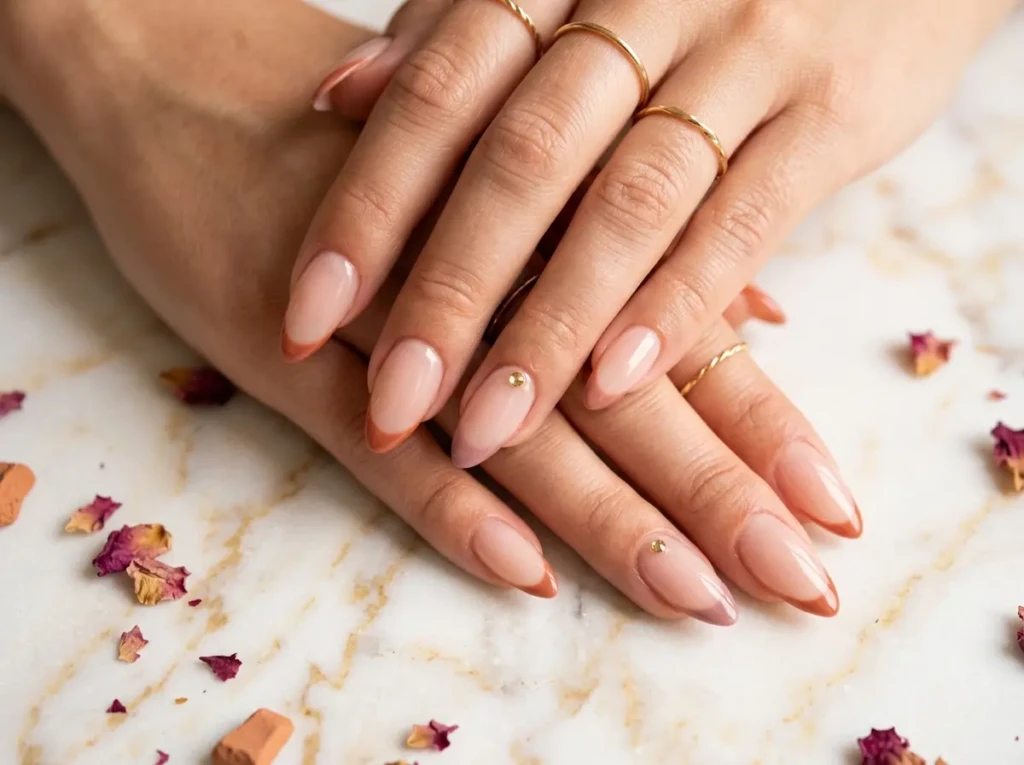
What actually works, what’s a waste of money, and why you keep breaking them right before they get good.
I have broken the same nail three times in the same spot. The left index finger, just past the tip, every single time I get it to a length I actually like. It’s like that nail has a personal vendetta. I know I’m not alone in this because nail growth is one of those things people ask about constantly, try everything for, and still feel like they’re not getting anywhere with.
Here’s what I’ve learned after years of trial, error, and one very regrettable stint with press-ons that took half my real nail with them when I removed them: growing your nails is less about finding the magic product and more about stopping the things that are quietly destroying them. The growth is already happening. The problem is usually that nails are breaking faster than they’re growing. Fix the breaking and the length takes care of itself.
That said, there are real things you can do to speed up growth and strengthen what’s coming in. Let’s go through them honestly.
Your Nails Grow About 3mm a Month — Work With That
The average nail grows roughly 3 to 3.5mm per month. That’s not fast. It means if you break a nail down to nothing, you’re looking at two to three months before it’s back to a length worth caring about. Knowing this matters because it sets realistic expectations and it reframes the whole project: you’re not trying to hack some dramatic growth spurt, you’re trying to protect what’s already coming in while keeping it healthy enough to not snap off.
Nails grow faster in summer than winter — something to do with circulation and vitamin D. They grow faster on your dominant hand. They grow faster when you’re younger. None of these things are in your control, but they explain why your nails seem to behave differently at different times of year or on different hands without any change in your routine.
What is in your control: what you eat, what you put on your nails, how you treat them day to day, and what you stop doing to them. That last one is the most important.
Stop Doing These Things First
Peeling off gel or shellac. I know. It’s satisfying in a horrible way and we’ve all done it. But gel polish doesn’t just sit on top of your nail — it bonds to the surface layer. When you peel it, you take that surface layer with it. What’s left is thin, white, bendy, and damaged. Every time you peel instead of soak off, you set your nail health back by weeks. Soak in acetone, use a proper gel removal kit, or go back to the salon. The ten minutes it takes is worth it.
Using your nails as tools. Opening cans, scraping stickers, prying things open, pushing keys on a keyboard at a weird angle. Nails are not designed for leverage. The side stress that comes from using them as tools causes stress fractures at the tip that you can’t see until the nail snaps — usually at the worst possible moment, usually the nail you’ve been babying the longest.
Skipping base coat. Nail polish without base coat stains your nails yellow over time. Yellow nails look thinner and more damaged than they are, and the staining makes you more likely to keep them painted constantly, which means less breathing time, which means weaker nails. Base coat takes thirty seconds. Use it.
Cutting cuticles. Pushing them back gently is fine. Cutting them creates tiny openings where bacteria can get in and cause infections that genuinely set back nail growth. Cuticles exist to protect the nail matrix — the part under the skin where new nail is formed. Damage the matrix, damage the nail. Use cuticle oil to keep them soft and a rubber-tipped pusher to gently move them back after a shower when they’re already soft.
Filing back and forth like a saw. This creates micro-tears at the edge of the nail that turn into splits and breaks. File in one direction only, from the outside edge toward the center. It takes slightly longer and feels less satisfying but the difference in how your nail edges hold up is real.
What You Eat Actually Matters
Nails are made of keratin, which is a protein. If you’re not eating enough protein, your body deprioritizes the stuff it considers non-essential — which includes nail and hair growth — and redirects protein to more critical functions. This is why nail growth often slows noticeably during periods of restrictive eating or high stress.
You don’t need to overhaul your entire diet. Getting adequate protein from whatever sources you already eat — eggs, meat, fish, legumes, dairy — is enough for most people. If your nails are thin, bendy, and slow-growing and you’ve eliminated other causes, look at your protein intake honestly. It’s a more common factor than most people realize.
Biotin gets mentioned constantly in nail growth conversations and it’s worth addressing directly. Biotin is a B vitamin involved in keratin production. Supplements do work for people who are actually biotin deficient — and deficiency is more common than you’d think, especially if you eat a lot of raw egg whites, which bind biotin and prevent absorption. For people who aren’t deficient, biotin supplements probably don’t do much. They won’t hurt you at normal doses, but the dramatic before-and-after results people post are usually from people who had a deficiency they didn’t know about.
Iron deficiency is another one worth knowing about. Low iron causes brittle, spoon-shaped nails — nails that curve upward at the edges instead of lying flat. If your nails are oddly shaped in addition to being brittle, get your iron levels checked before spending money on nail products. No topical treatment fixes a nutritional deficiency.
Hydration matters too, and it’s the easiest fix on this list. Dehydrated nails are brittle nails. Drink more water. It sounds reductive but it’s real — nails that are chronically dehydrated snap more easily, especially in winter when central heating pulls moisture out of everything. The improvement isn’t dramatic but it’s consistent.
The Products That Are Actually Worth It
Cuticle oil is the one I’d tell anyone to buy before anything else. I’ve said this before and I’ll keep saying it: daily cuticle oil is the single highest-return nail product that exists and almost nobody uses it as often as they should. Apply it to the base of each nail every day. Not once a week. Every day. The oil penetrates the nail plate and the surrounding skin, keeps the cuticle area healthy, and reduces the dry cracking that leads to hangnails and breaks. Solar Oil is the one most nail techs use. Jojoba oil works just as well. The specific product matters less than the habit.
A strengthening base coat is the next thing. Not a hardener — there’s a difference. Nail hardeners contain formaldehyde or similar compounds that make nails rigid in the short term but actually more brittle over time with extended use. A strengthening base coat adds flexible resilience rather than hardness. OPI Nail Envy is the one with the most consistent real-world results. Use it as a base under regular polish or wear it alone. Apply every other day, remove and reapply weekly.
A glass nail file is worth buying once and keeping for years. The difference between a glass file and a cheap emery board is significant — glass files seal the nail edge as they smooth it, rather than tearing at it. They also last forever if you don’t drop them. The initial cost is maybe eight to twelve dollars and you will never need to buy another nail file. That math works out.
Nail growth serums and treatments exist in every price range and most of them are fine. The ingredients to look for are peptides, which support keratin production, and panthenol, which moisturizes the nail plate. Products that make dramatic promises about doubling nail growth speed are exaggerating — nothing topical changes the rate your nail matrix produces new nail. What they can do is strengthen what’s already there so it survives long enough to become length.
Protect Them Like You Mean It
Wear gloves when you wash dishes or clean with products. Hot water and cleaning chemicals are two of the biggest causes of weak, peeling nails and almost nobody talks about it. Hot water expands the nail, then it contracts as it dries, and repeated cycles of this weaken the structure over time. Cleaning products strip the natural oils from both your nails and the surrounding skin. A cheap pair of rubber gloves under the sink is a boring solution that works better than most of the products marketed for nail strength.
Keep a nail file in your bag. A small snag left unaddressed will catch on fabric, hair, everything — and the nail tears from the snag rather than breaking clean. A ten-second file the moment you notice a rough edge prevents the full break ninety percent of the time. This is the simplest habit on this list and probably the most effective for people whose nails always seem to break right before they get long.
Moisturize your hands properly, not just your cuticles. Dry skin around the nail puts stress on the edges and the surrounding tissue. Any hand cream applied consistently is better than the most expensive targeted nail treatment used occasionally. Apply it every time you wash your hands. Keep a small tube at your desk and by every sink in your house. Again — boring solution, real results.
The Honest Timeline
If you start all of this today — daily cuticle oil, protective base coat, gloves for dishes, filing correctly, enough protein, enough water — you will notice a difference in about four weeks. Not dramatic length, but nails that are holding on instead of breaking, cuticles that look healthier, edges that aren’t splitting.
Real length takes three months minimum if you’re starting from short. That’s the honest answer. Anyone selling you a product that promises visible length in two weeks is either measuring from a different baseline or not being straight with you.
The thing that trips most people up is that they do everything right for two weeks, break one nail, get frustrated, and stop. Don’t stop. One broken nail doesn’t mean the routine isn’t working — it means nails are fragile and sometimes things happen. File it down so it matches the others, keep going, and in another six weeks you’ll have the nails you were trying for. The consistency is the whole thing.