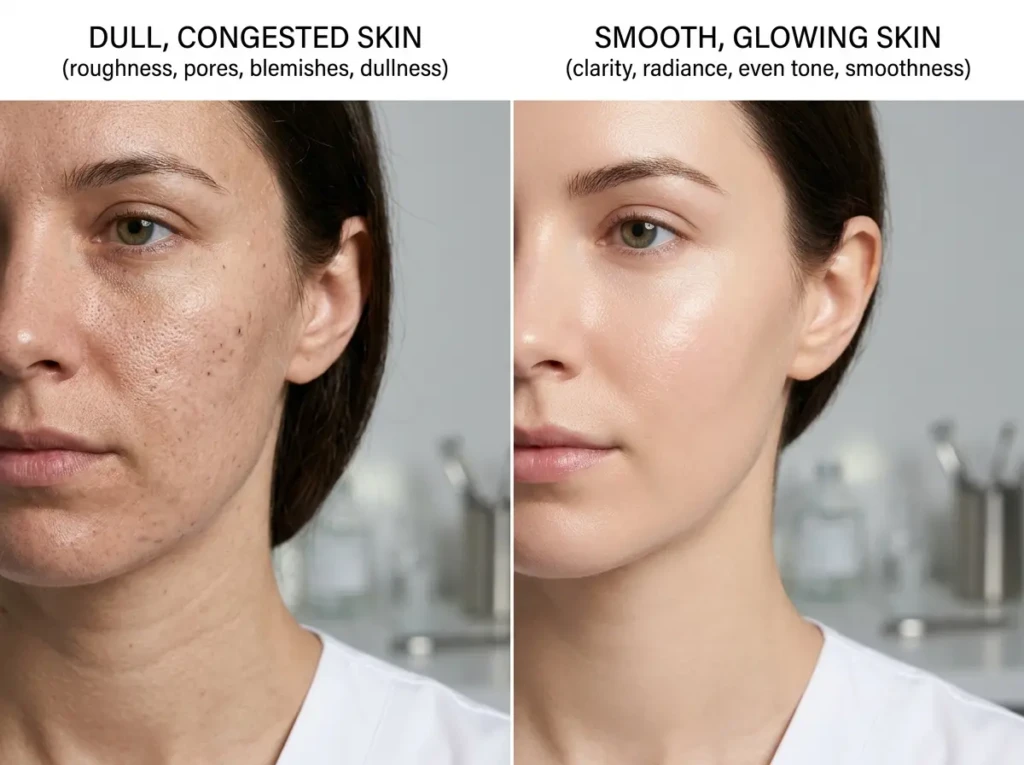
A step-by-step guide for people who’ve tried everything and are kind of over it
Let me guess. You’ve been washing your face twice a day, maybe more. You’ve tried the foaming cleanser, the gel cleanser, the one your friend swore by. By noon your forehead is shiny enough to reflect light. And somewhere online, someone told you to ‘just drink more water.’
Yeah. That advice isn’t going to cut it.
Oily skin is one of those things that gets worse the harder you fight it. Harsh products, over-washing, skipping moisturizer because ‘my face is already greasy’ — these feel logical but they trigger your skin to produce more oil to compensate. I know. It’s annoying.
This guide isn’t another list of products to buy. It’s a routine — morning and night — built around what actually works, explained in a way that makes sense. If you stick with it for six weeks, you’ll see a difference. Probably sooner.
The Thing Nobody Tells You About Oily Skin
Your skin produces oil (sebum) because it’s supposed to. Sebum protects your skin, keeps it flexible, and forms part of your barrier against the outside world. The problem isn’t that your skin makes oil — it’s that it makes too much of it.
Why does that happen? Genetics, mostly. Hormones, definitely. Humidity, sometimes. And — this is the part people don’t expect — damage to your skin barrier. When your barrier is compromised (from overwashing, alcohol-based products, scrubbing too hard), your skin panics and cranks up oil production to compensate.
So if you’ve been ‘fighting’ your oily skin with aggressive products and wondering why it keeps getting worse… that’s probably why. The fix isn’t to strip more oil. It’s to stop triggering the production in the first place.
The Morning Routine (4 Steps, ~5 Minutes)
You don’t need a 10-step morning routine. You need four things done consistently. Here’s what they are and why each one matters.
Step 1 Cleanser
Use a gentle foaming or gel cleanser — not a bar soap, not a ‘deep clean’ scrub, not whatever’s in the shower. You’re looking for something with salicylic acid (0.5–2%) or niacinamide, both of which help manage oil without destroying your barrier.
Wash with lukewarm water. Not cold (doesn’t clean properly), not hot (feels great, tells your skin to make more oil). About 30 seconds of massaging, then rinse until there’s no slippery residue left — leftover cleanser clogs pores.
→ If your skin feels totally fine in the morning and you didn’t sweat overnight, a water rinse is honestly enough. You don’t need to cleanse twice a day if you don’t need to.

Step 2 Toner (optional — but pick the right one)
Toner is the most overhyped step in skincare. You don’t have to use one. But if you want to, it can help with oil control and pore appearance.
The rule: alcohol-free only. Witch hazel, niacinamide, green tea, centella asiatica — all fine. Anything with denatured alcohol or isopropyl alcohol near the top of the ingredient list: skip it. That satisfying ‘tight’ feeling after applying it is your skin barrier being damaged, not cleaned.
Step 3 Moisturizer
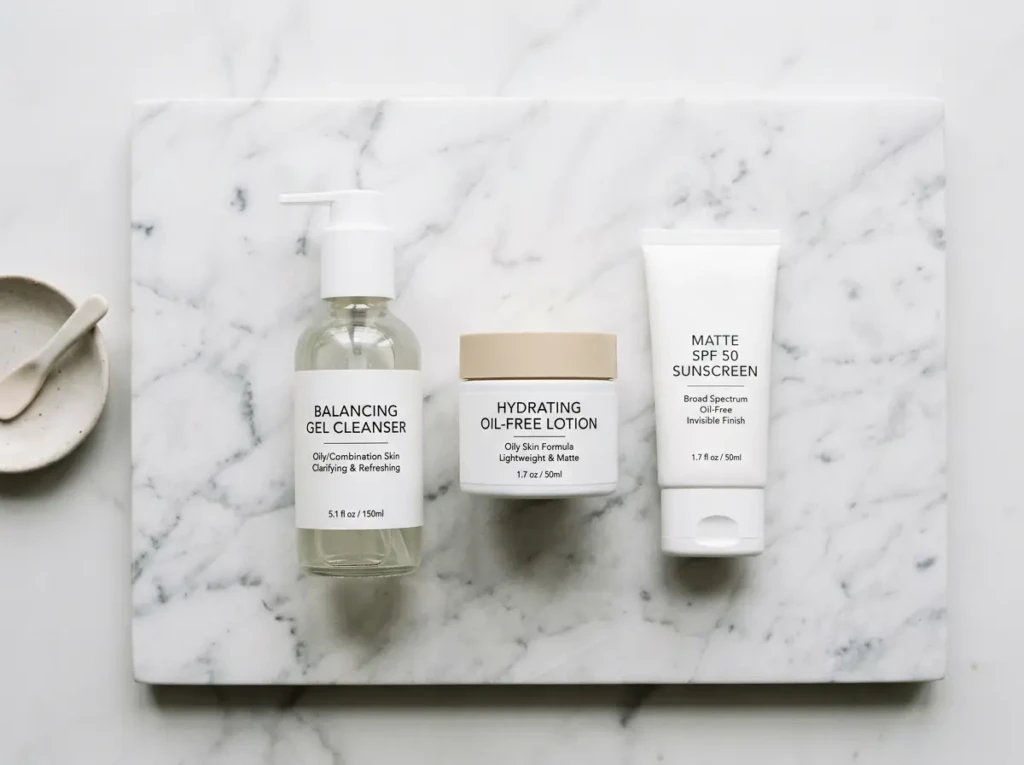
I know. Your face is already oily. Why would you add more moisture?
Because oily skin and dehydrated skin aren’t opposites. They happen at the same time all the time. When skin is dehydrated (lacking water, not oil), it produces more sebum to compensate. Moisturizer helps break that cycle.
For oily skin: gel moisturizers, water-based formulas, anything labeled ‘oil-free’ and ‘non-comedogenic.’ Hyaluronic acid and glycerin are your friends — they pull water into skin, not oil. Avoid coconut oil, lanolin, mineral oil, or anything that sounds heavy and rich.
→ Apply moisturizer when your skin is still slightly damp after cleansing. It locks in hydration better. Takes three seconds, makes a difference.
Step 4 Sunscreen
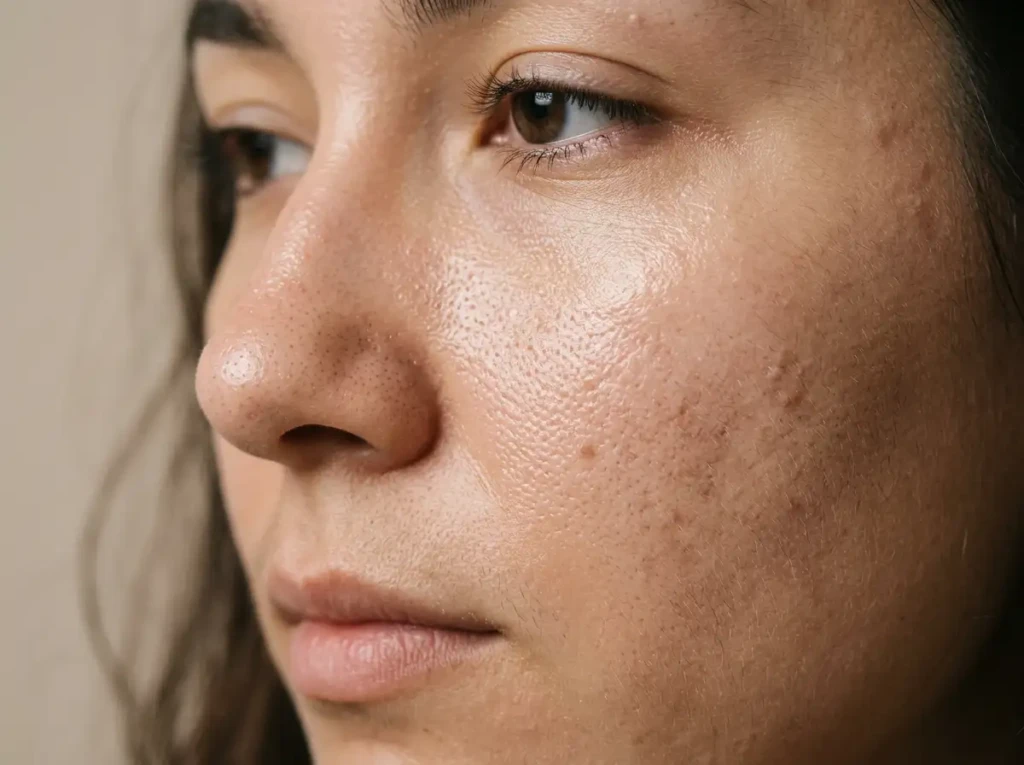
This is the one people skip and really shouldn’t. UV exposure worsens acne scars, triggers inflammation, and yes — contributes to excess oil production. SPF is also the cheapest anti-aging product that exists.
For oily skin, look for: SPF 30 minimum, non-comedogenic, gel or water-based. A lot of newer SPFs double as a lightweight moisturizer, so you can combine steps 3 and 4 if you find the right product. That’s fine.
→ If sunscreen feels heavy or pore-clogging, try a different formula — not a different habit. There’s a SPF out there that works for oily skin. Keep looking.

The Evening Routine (3 Steps, ~10 Minutes)
The night routine is where the real work happens. This is when you actually treat your skin — not just protect it. Give it the time it deserves.
Step 5 Double Cleanse (on days you wore sunscreen or makeup)
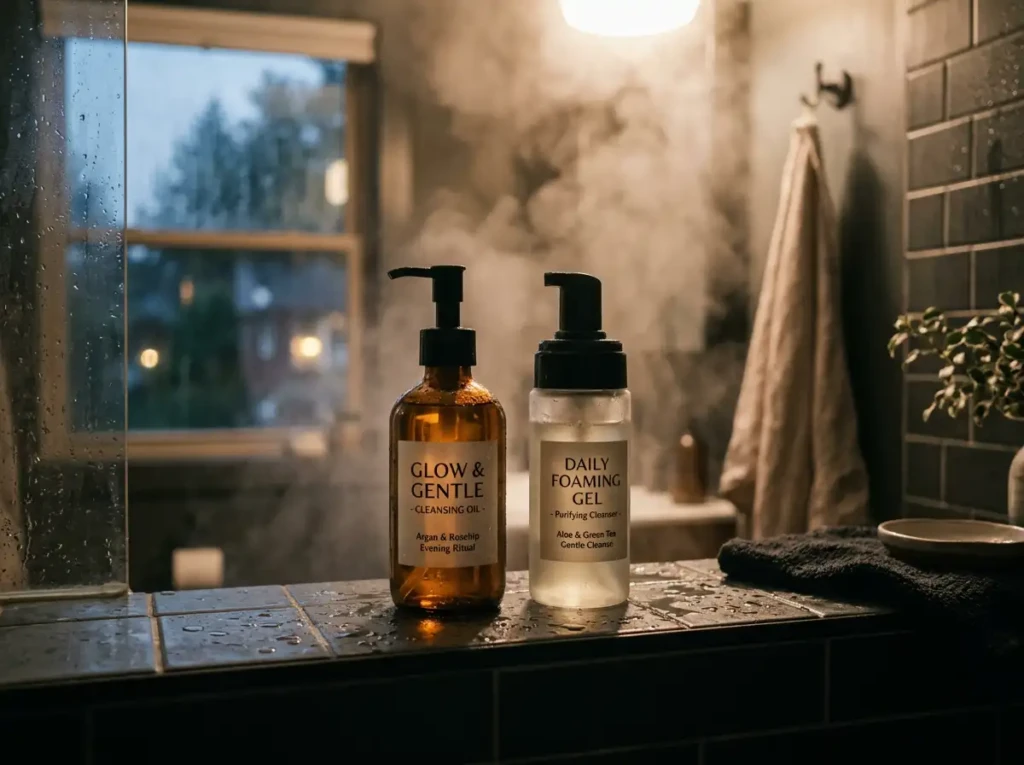
Sunscreen doesn’t wash off with water-based cleanser alone. Neither does most makeup. If you skip this step, you’re going to bed with a film of SPF and whatever else sitting in your pores.
Double cleansing: start with a cleansing oil or micellar water on dry skin, massage for about a minute to dissolve what’s on your face, then follow with your regular gel or foam cleanser as normal. Two passes. Done.
→ Didn’t wear SPF or makeup today? Skip the first cleanse entirely. One cleanser is enough. More is not better.
Step 6 Treatment (2–3 nights a week — not every night)
This is where you actually address oily skin and breakouts long-term. Two ingredients worth knowing about:
Retinoids (retinol or adapalene): These work at the cell level — increasing turnover, clearing congested pores, reducing sebum production over weeks. Adapalene 0.1% is available over the counter. Start once a week. Your skin will purge and peel for the first few weeks. That’s normal. Push through it slowly, don’t panic and stop.
Salicylic acid (BHA): A chemical exfoliant that gets inside pores and dissolves the gunk holding them together. Works well as a leave-on serum or exfoliant used 2–3 nights a week. Don’t use on the same nights as a retinoid — pick one or the other.
→ Start with one treatment ingredient, not both. Add the second after your skin has adjusted — usually 4–6 weeks in.
Step 7 Night Moisturizer
Same deal as the morning — you still need it, even at night. You can go slightly richer than your daytime formula if you want, but for oily skin, ‘lighter than you think you need’ is almost always the right answer.
Skip the facial oils and sleeping masks heavy with emollients. Those are great for dry skin. They’re not great for yours.
Once or Twice a Week: The Extras
These aren’t required, but they help. Don’t do all of them at once.
Clay mask (kaolin or bentonite): Absorbs oil and helps clear congested pores. Leave it on for 10–15 minutes — not until it cracks and dries out completely, that’s when it starts pulling at your skin. Rinse, then moisturize right away.
Weekly BHA exfoliant: If you’re not already using a leave-on salicylic acid treatment, a weekly BHA product does the same work in one application. Don’t stack multiple exfoliants in one night. That’s not more effective, it’s just more irritating.

The Small Stuff That Actually Matters
Change your pillowcase every 2–3 days. You sleep on it for 7–8 hours and it collects oil, dead skin, and whatever’s in your hair. This is unglamorous advice but it works.
Stop touching your face. I know you know this. Do it anyway.
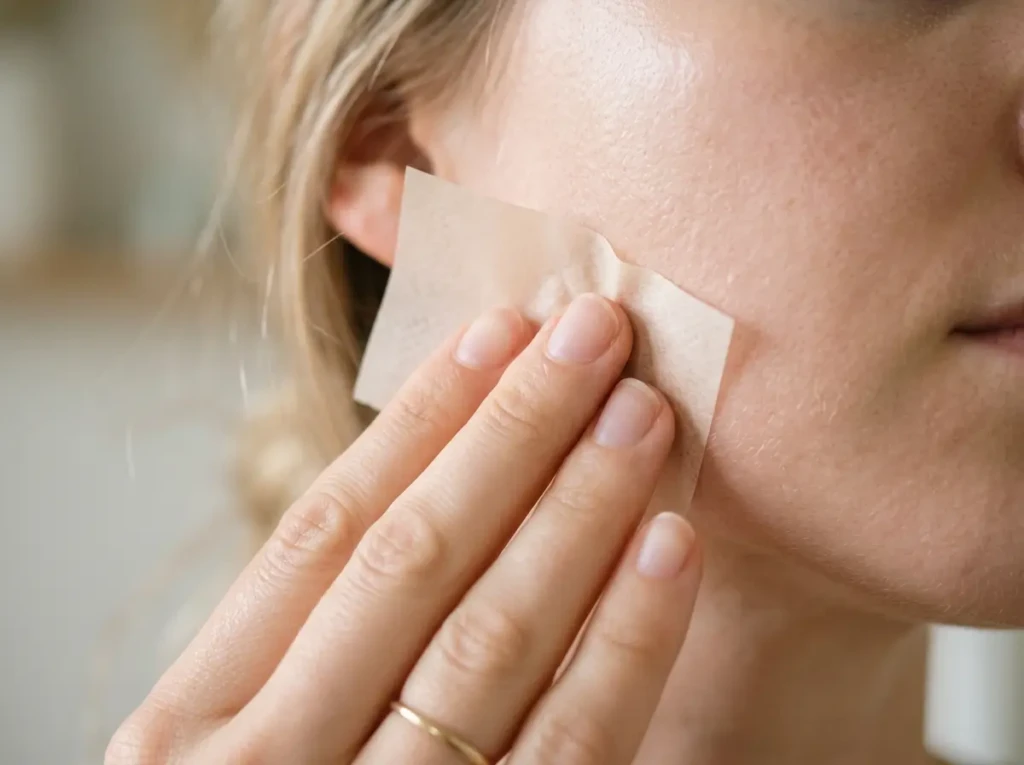
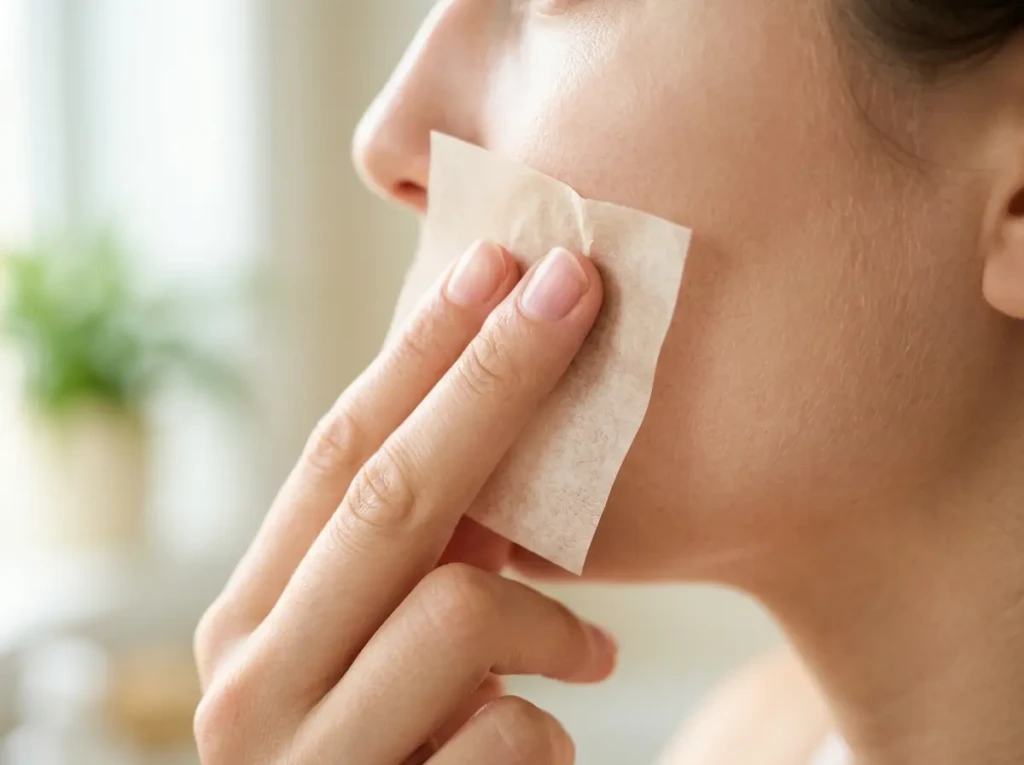
For mid-day shine: blotting papers, not powder. Powder layers up, clogs pores, and looks cakey by the end of the day. Blotting papers just remove what’s there.
Wipe down your phone. It’s touched more surfaces than you want to think about, and you press it against your face for minutes at a time.
When to Stop DIY-ing It
If you’ve done a consistent routine for 8–12 weeks and nothing has improved — or if you’re dealing with cystic acne, hormonal breakouts that track your cycle, or scarring that concerns you — see a dermatologist.
OTC products have real limits. Prescription tretinoin, spironolactone for hormonal acne, oral antibiotics for moderate-severe cases — these are not the same thing as drugstore retinol. They work differently and they work better for some people. There’s nothing wrong with needing one.
A good dermatologist will tell you quickly what category you’re in. It’s worth one appointment if you’ve been struggling for a long time.
The biggest mistake people make with oily skin is switching products every two weeks because they’re not seeing instant results. Skin takes time — six weeks minimum before you can fairly judge anything. Pick a simple routine, stick to it longer than feels reasonable, and then adjust.
Consistent and boring beats complicated and abandoned every time.