A guide from someone who has ruined their skin with “gentle” products more times than they’d like to admit
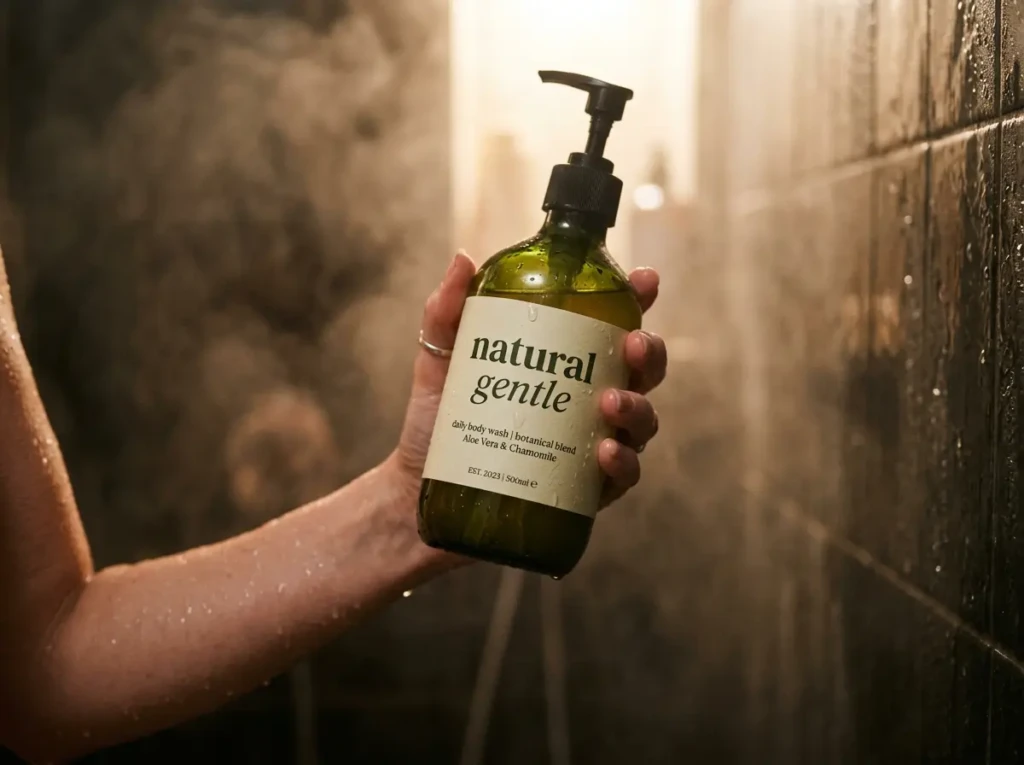
Let me paint you a picture. You’re in the shower, you’ve just bought a new body wash — the one with the soft green label that says “natural,” “gentle,” “for sensitive skin” — and forty minutes later you’re standing in your bathroom wondering why your whole back itches. Again.
I’ve been there. A lot. And the frustrating thing is that the products causing the problem are always the ones that look the most harmless. The fancy lavender one. The botanical body milk. The thing your friend with perfect skin swears by.
Here’s what I wish someone had told me earlier: sensitive skin doesn’t need better products. It needs fewer, simpler ones — and it needs you to stop trusting the label and start reading the ingredient list.
The label is lying to you
“Hypoallergenic.” “Dermatologist tested.” “Gentle formula.” None of these terms have a legal definition. Any brand can put them on any product. They mean nothing beyond we think this sounds reassuring.
The word that should send you running is “fragrance” — or its fancier cousin “parfum.” Fragrance is the number one cause of contact dermatitis from cosmetic products, and it hides everywhere: body washes, lotions, sunscreens, laundry detergents, fabric softeners. The European Scientific Committee on Consumer Safety has flagged over 80 individual fragrance chemicals as known allergens.
And here’s the part that always gets me: natural fragrance is just as bad. Lavender oil. Tea tree. Citrus extracts. These are among the most common skin irritants in the botanical world. Natural doesn’t mean your skin won’t react to it — it just means it came from a plant before it made you itch.
The second ingredient group worth knowing: preservatives. Methylisothiazolinone (MI) causes reactions in a significant chunk of people — enough that the EU restricted it in leave-on products. It’s usually buried near the bottom of the list and easy to miss. If you’re reacting to your lotion but not your body wash, check for MI. It shows up in both.

What your routine should actually look like
Short. Genuinely short. Not “simplified” — I mean two products, maybe three. The more things you put on your skin, the harder it is to figure out what’s causing a reaction. And with sensitive skin, something is always potentially causing a reaction.
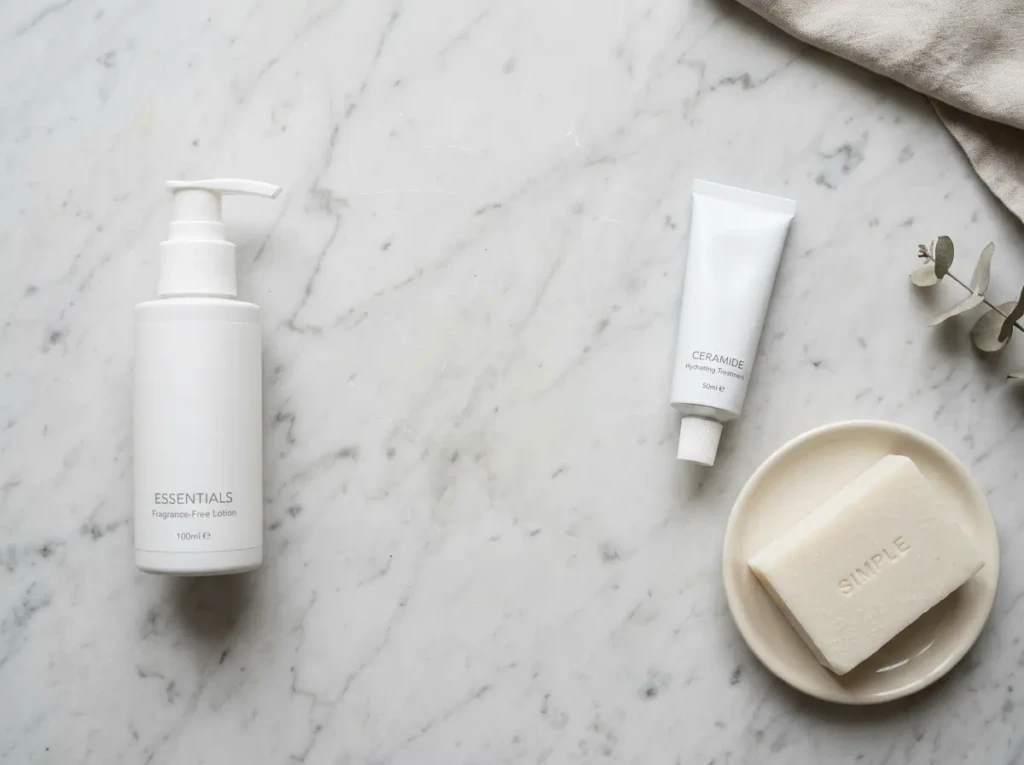
For cleansing: fragrance-free, dye-free, short ingredient list. Dove Sensitive Skin Unscented, Vanicream Gentle Body Wash, CeraVe Hydrating Body Wash. All three are cheap and genuinely well-tolerated by most reactive skin. I know the $4 drugstore option feels less exciting than the artisan charcoal bar with bergamot. But your skin doesn’t care about exciting. It cares about not itching.
Water temperature matters and costs nothing to change: hot showers strip your skin barrier. Lukewarm is better. I am not going to pretend I always follow my own advice here.
For moisturizing: apply it while your skin is still slightly damp, within a few minutes of getting out. Damp skin absorbs humectants like glycerin better, and sealing that moisture in while it’s there actually extends how long it lasts. Look for ceramides, glycerin, or colloidal oatmeal. Ceramides are already part of your skin barrier — applying them topically helps repair it. A 2018 study in the Journal of Drugs in Dermatology found ceramide moisturizers reduced eczema severity more than standard formulas over four weeks.
Colloidal oatmeal is the other ingredient worth knowing. FDA-approved as a skin protectant since 1982. It calms inflammation, forms a light barrier, reduces water loss. Boring? Yes. Does it work? Also yes.
The thing you’re probably not thinking about: your laundry
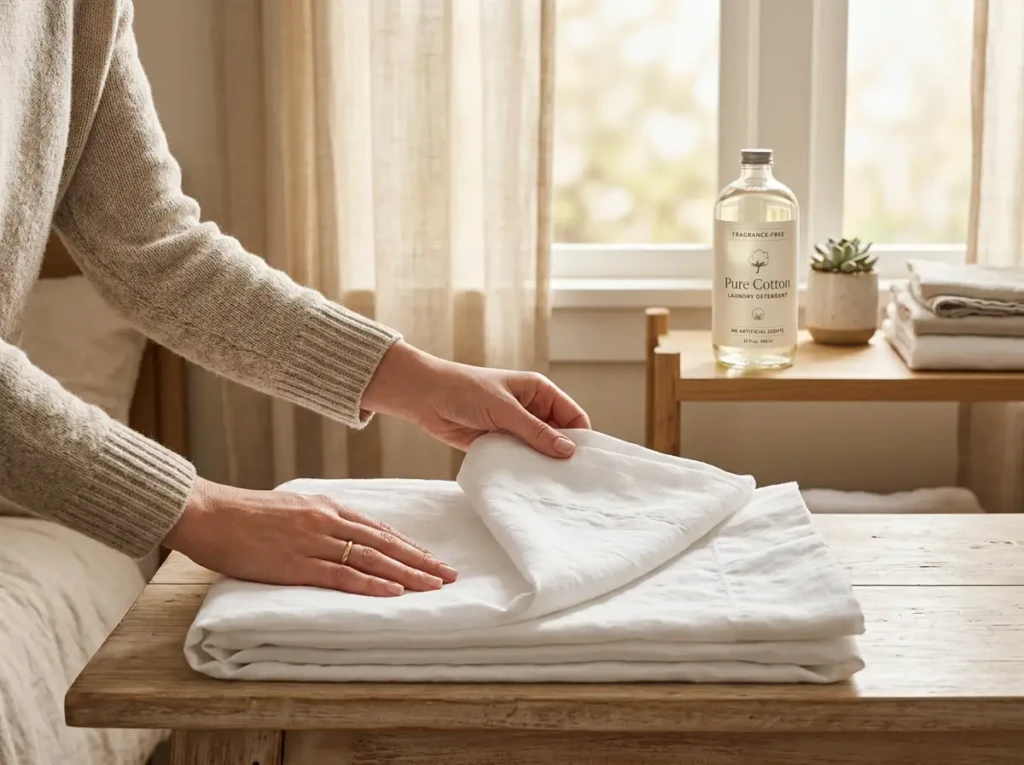
Your body lotion is on your skin for ten minutes. Your clothes are on your skin for twelve hours. Your sheets for eight more. If you’ve switched to fragrance-free body products and still can’t stop reacting, your laundry detergent is likely the problem.
Fragranced detergents and fabric softeners leave residue in fabric that stays against your skin all day. Switching to Tide Free & Gentle or All Free Clear makes a real difference for a lot of people. It’s one of those changes that feels too simple to work, and then you’re annoyed you didn’t try it sooner.
Fabric matters too. Wool and some synthetics are physically irritating to sensitive skin. Cotton and bamboo generally aren’t. If a specific item of clothing always bothers you regardless of what you’ve applied, the fabric is the problem — not your skincare routine.
Exfoliation: less than you think, gentler than you like
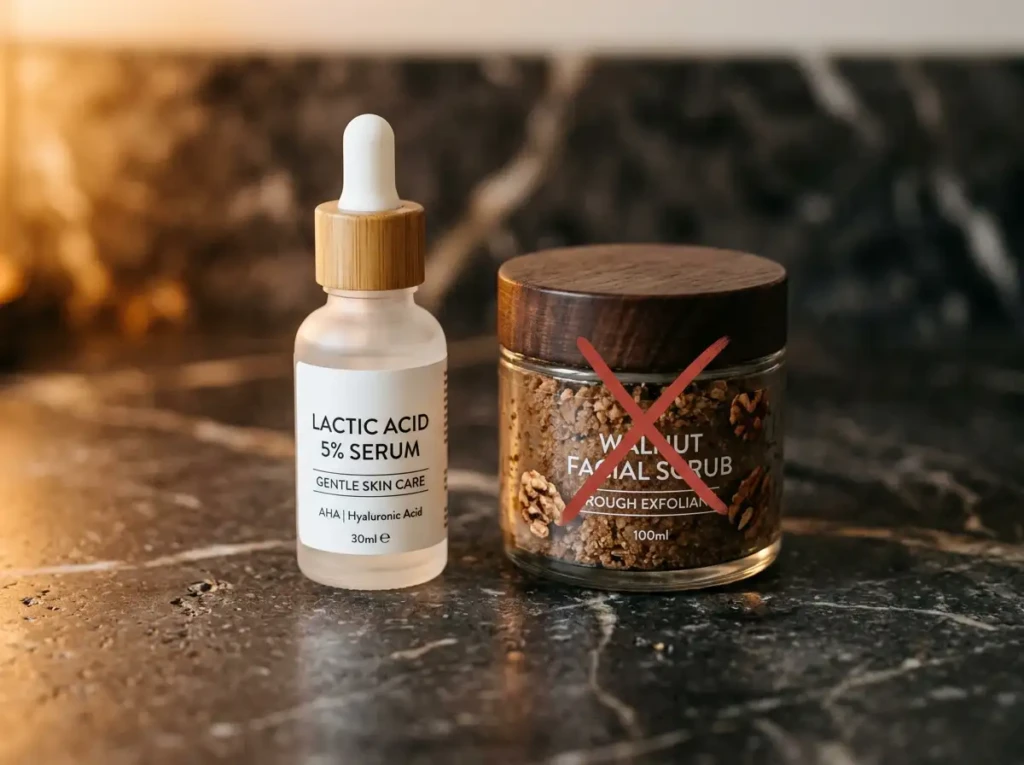
Physical scrubs with rough particles feel satisfying in a way that makes you feel like you’re doing something. You are doing something. You’re creating micro-tears in an already-reactive skin barrier. They make things worse, not better.
If you want to exfoliate, lactic acid is the most forgiving option for sensitive skin — it exfoliates and pulls moisture into the skin at the same time. Once a week is plenty. And if your skin is currently inflamed or actively reacting to something, skip it entirely until things calm down. This sounds obvious. I still forget it every single time.
When to stop guessing and see a dermatologist
Eczema, psoriasis, and contact dermatitis look similar and need different treatments. If you’ve cut fragrance, simplified your routine, changed your detergent, and you’re still getting reactions in the same spots after six to eight weeks — that pattern is telling you something a drugstore product can’t fix.
Patch testing is the only reliable way to identify contact allergies. A dermatologist applies small amounts of common allergens to your skin and reads the results after 48 and 96 hours. I put it off for two years because it sounded tedious. It is a bit tedious. It’s also the first thing that gave me an actual answer instead of another guess.
Some conditions need prescription treatment. No amount of ceramide lotion changes that. One professional opinion is worth more than another year of trial and error.

The actual short version
Cut the fragrance. Simplify to two or three products. Check your laundry detergent. Moisturize while still damp. Give it eight weeks before you judge anything.
Sensitive skin doesn’t need a more sophisticated routine. It needs a more boring one. The less you ask of it, the better it tends to behave. That’s genuinely annoying when you walk past a shelf of beautiful-smelling things in pretty packaging — but it’s consistently, stubbornly true.
Put the lavender body milk down.