Because your skin deserves better than another overpriced scrub in a plastic tub
Here is something nobody tells you: the reason your skin looks tired and dull most of the time is not your diet or your sleep or whether Mercury is in retrograde. It is dead skin cells. A thin layer of them sits on top of your actual skin, blocking moisture, making everything look flat, and clinging to whatever you try to put on afterward. Exfoliation removes them. That is basically it.
You do not need a $45 product from a wellness brand to do this. A bowl of sugar and some olive oil from your kitchen gets the same job done. So does a handful of used coffee grounds, a cheap natural-bristle brush, or a ripe papaya. I have tried most of these at various points and the honest answer is: they all work, they just work differently, and the right one depends on what your skin can actually handle.
There are two ways exfoliation works. Physical: something textured that manually scrubs the dead cells off. Chemical: an acid or enzyme that dissolves the glue holding those cells to your skin, so they fall away on their own. Both approaches are represented below. Start with whatever sounds least intense — you can always go harder later, but you cannot undo an irritated, overscrubbed mess.
1. Sugar Scrubs — Start Here If You Are Not Sure
If you have never exfoliated regularly and you are not sure where to start, sugar is the answer. The crystals are small, they dissolve as you scrub, and it is genuinely difficult to damage yourself with them. It is the most forgiving option on this list.
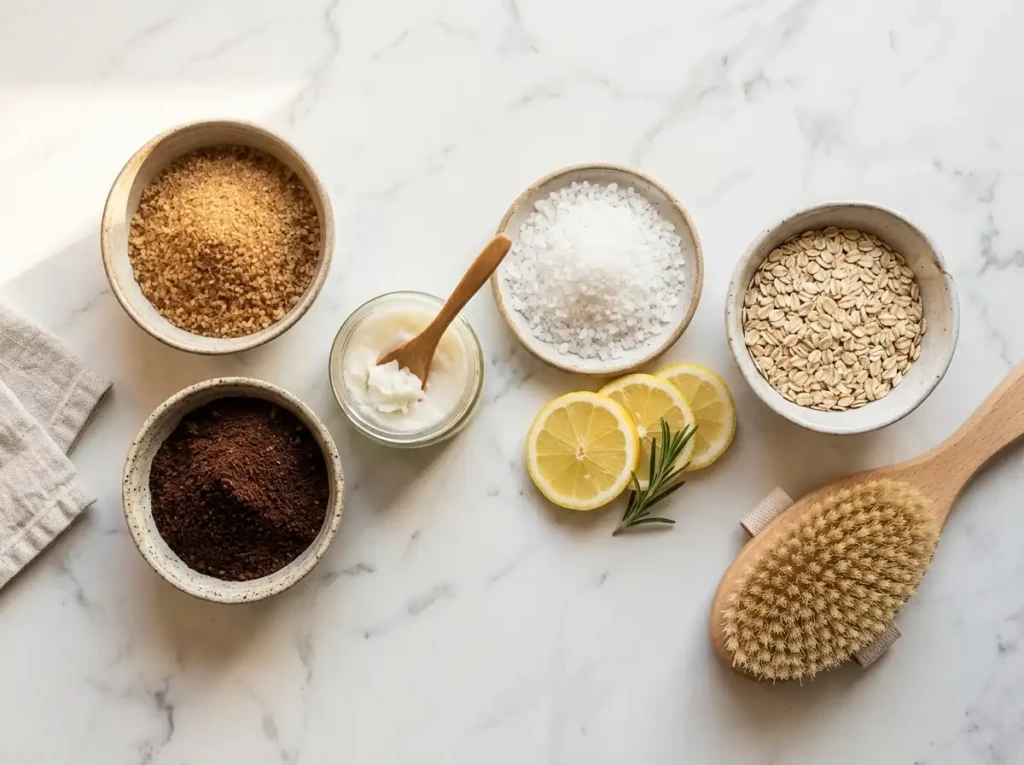
The recipe is embarrassingly simple. Two tablespoons of sugar — white if your skin is on the sensitive side, brown if you want something slightly coarser — mixed with one tablespoon of oil. Coconut oil works. Olive oil works. Whatever you have in the kitchen, honestly. Apply it to damp skin, rub in circles for about 30 seconds per area, rinse off. The oil leaves a light layer of moisture behind, which is a nice bonus.
Two or three times a week is plenty. If you have body acne, drop it to once a week — overscrubbing makes breakouts worse, not better, which is a lesson most people learn the hard way.

2. Coffee Grounds — For Rougher Patches and Satisfying Texture
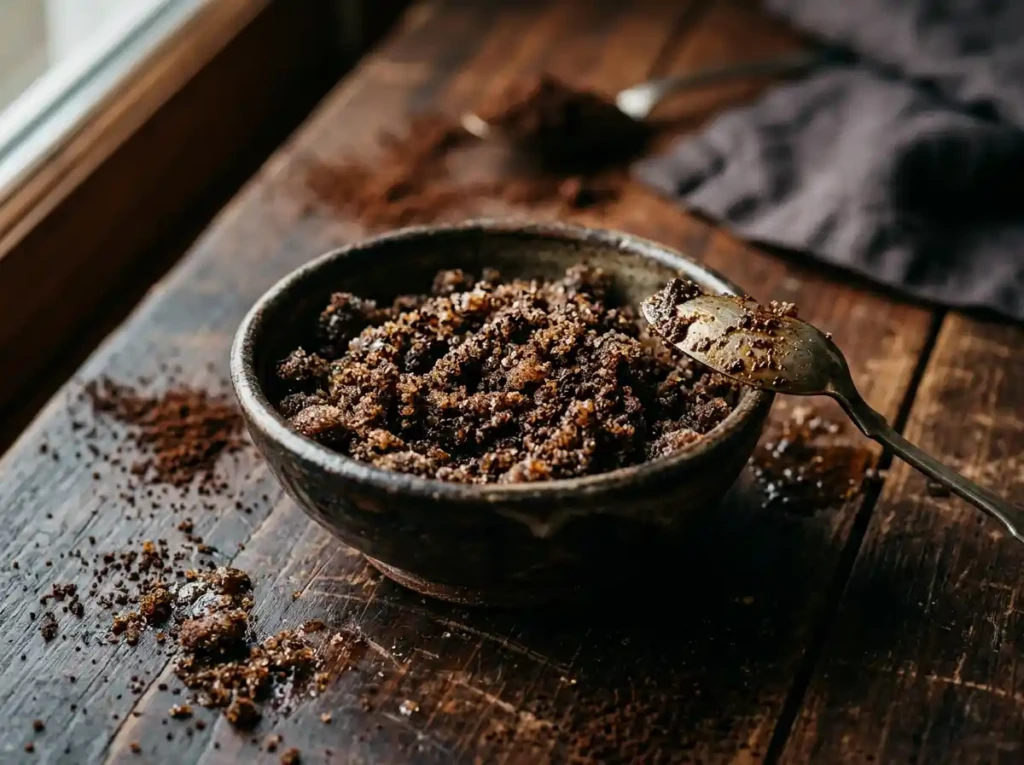
Coffee grounds are what I reach for when sugar feels too gentle — rough elbows, thighs, anywhere that has developed that thick, uneven texture. The particles are coarser and more irregular, so they scrub harder. There is also some evidence that the caffeine temporarily reduces the look of cellulite by constricting blood vessels, though that effect lasts a few hours at best. Manage expectations, but it is not nothing.
Do not buy anything. Just save the grounds from your morning coffee, let them cool, mix with a bit of coconut oil or even plain yogurt. Apply wherever you want, scrub, rinse thoroughly. The rinsing part requires patience — grounds stick to skin and to your shower floor, so give everything a proper wash-down afterward.
One thing worth saying plainly: keep coffee grounds off your face. The particles are too irregular and too harsh. They are a body-only situation.
3. Oatmeal — For Skin That Gets Irritated by Everything
Oatmeal is in a different category from the others. It is not aggressive. It will not leave you feeling like you sanded yourself. What it does is exfoliate gently while also calming any irritation that is already there — the compounds responsible for that (avenanthramides, if you want the word) are the same reason oat-based products get recommended for eczema and post-sun skin.
Grind plain rolled oats in a blender until they turn into a fine powder. Mix with warm water into a paste, or add the powder to a lukewarm bath and soak. For more scrubbing action, combine the ground oats with honey and a small splash of milk — milk has lactic acid, which is a chemical exfoliant, so you get both mechanisms at once.
This is the one I would recommend to anyone who has tried a scrub before and found it left their skin red or tight. It is forgiving in a way that coffee and salt are not.
4. Dry Brushing — The One That Takes the Most Getting Used To
Dry brushing is exactly what it sounds like: a stiff brush, dry skin, before the shower. You start at your feet and work upward in long strokes toward your heart. It removes dead skin cells, gets the circulation moving, and after a few consistent weeks, makes a noticeable difference in skin texture.
The brush is important. Get one with natural bristles — sisal or boar hair — and a long handle so you can reach your back. Synthetic bristles tend to be either useless (too soft) or scratchy in a way that does not feel good. The pressure should feel firm, like a brisk massage. If it leaves red marks that are still visible 10 minutes later, you are pressing too hard.
The first few times feel strange. The skin is a bit tender afterward. Most people either get used to it and become devoted to it, or they try it twice and abandon the brush in a drawer somewhere. Both outcomes are valid. Start with twice a week, moisturize right after the shower, and do not brush over any skin that is inflamed, sunburned, or broken.
5. Lemon Juice and Apple Cider Vinegar — Chemical Exfoliation on a Budget
These are the cheap and accessible version of a chemical exfoliant. Lemon juice brings citric acid. Apple cider vinegar brings acetic acid. Both loosen the bonds between dead skin cells rather than scrubbing them off, which means they can reach areas that a physical scrub misses and leave a more even result.
They also require some restraint. Using either one undiluted is a bad idea — they are acidic enough to irritate skin, especially fair or sensitive skin, and lemon juice makes skin significantly more sensitive to sun. Always dilute: one part acid, two or three parts water. Cotton pad, five minutes maximum, rinse off. Do not use either of these right before going outside.
I think of these as occasional treatments rather than weekly scrubs — once or twice a month is reasonable. If you feel stinging beyond a mild tingle, rinse immediately and add more water next time. Or skip it. Some skin just does not get along with acids, and that is fine.
6. Papaya and Pineapple — The Gentle Ones With a Fancy Mechanism
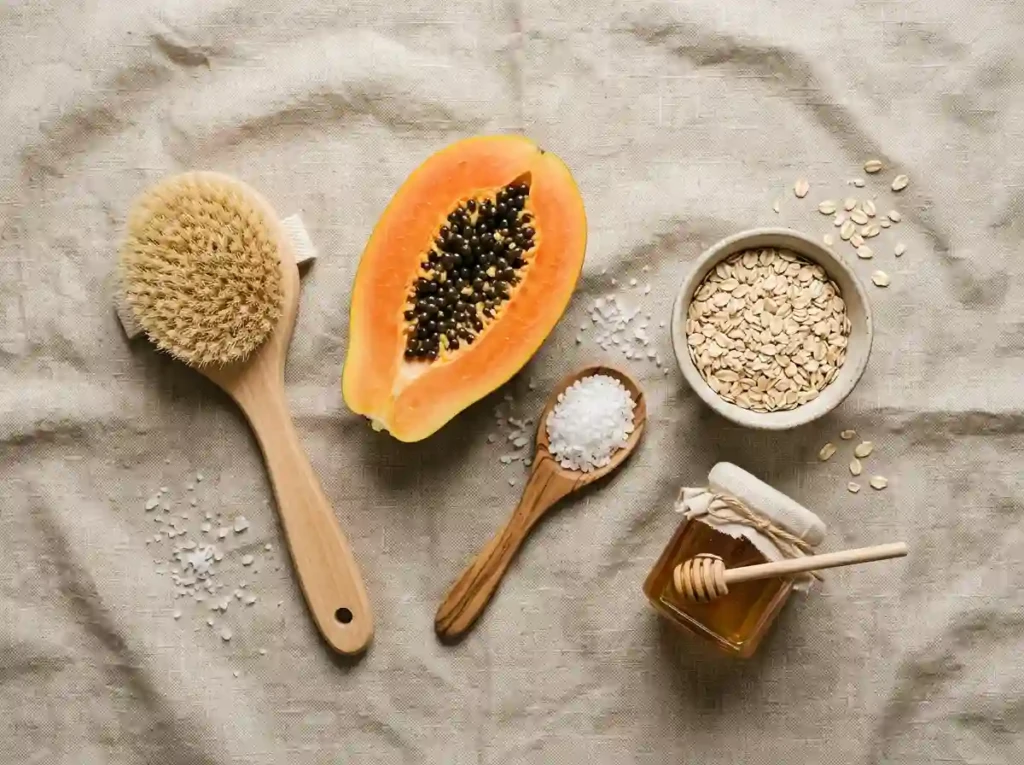
Papaya has an enzyme called papain. Pineapple has bromelain. Both break down dead skin proteins without any physical scrubbing at all, which makes them the softest option on this list. If friction of any kind bothers your skin — if a sugar scrub feels like too much — this is where to go.
Mash ripe papaya or blend fresh pineapple. Apply to skin, wait 10 to 15 minutes, rinse with cool water. The effect is subtle — do not expect to feel the immediate smoothness you get from a good sugar scrub. But the skin afterward is genuinely soft, and there is no raw or irritated feeling. Once a week is enough. One note: if you have a latex allergy, be careful with papaya — there is a documented cross-reactivity.
7. Sea Salt — For When Nothing Else Has Made a Dent
Sea salt is the most aggressive thing on this list. Larger crystals, harder than sugar, and it does not dissolve as fast. For truly rough skin — heels that could sand a table, elbows that have been neglected for six months, shins that feel like tree bark — sea salt gets the job done when sugar has not.
Mix coarse sea salt with olive oil. Add a few drops of eucalyptus or peppermint oil if you want the scrub to smell good. Apply with firm pressure on the rough patches, much lighter everywhere else. Rinse well. The oil prevents the salt from stripping all the moisture out of your skin as it dissolves.
What sea salt should never touch: your face, freshly shaved skin, any broken skin, anywhere inflamed. It stings on broken skin in a way that is not helpful. Use it deliberately, in the right spots, and it works extremely well.
A Few Things Worth Knowing Before You Start
None of this requires much time or money, but it does require a little consistency. A few things that actually matter:
- Damp skin, not dripping wet. Water reduces the friction you need for physical scrubs to do anything useful. Step out of the spray, scrub, then rinse.
- Moisturize immediately after. This is the one tip I would underline twice. Freshly exfoliated skin absorbs moisturizer far better than skin covered in dead cells. Apply it while your skin is still slightly warm.
- Two or three times a week is enough. More than that and you start working against yourself — skin gets irritated, oil production increases, things get worse rather than better.
- Keep body scrubs off your face. Facial skin is thinner and more reactive. It needs its own, gentler treatment.
- If your skin looks angrier after exfoliating than before, ease off. Redness that lingers, increased breakouts, that tight burning feeling — those are signs you are overdoing it.
Pick one method, try it for a few weeks, and pay attention to how your skin responds. That is all there is to it. You do not need seven products or a ten-step process. You need something slightly rough, a few minutes, and some consistency. Your skin will do the rest.