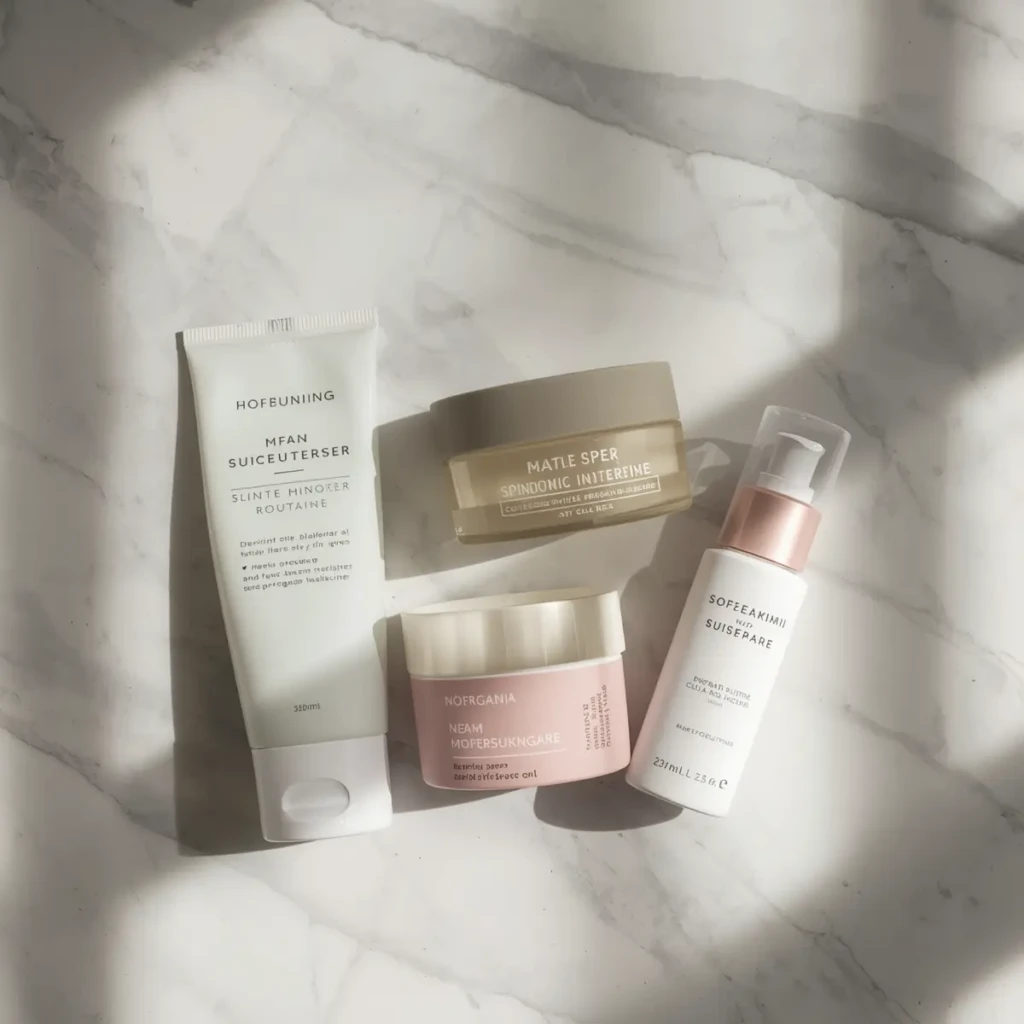
I spent way too much money learning this the hard way. You don’t have to.
I used to think good skin was something you either had or you didn’t. Then I fell down a skincare rabbit hole at 25, started buying serums I couldn’t pronounce, and spent four months with the most irritated, unhappy skin of my life. Turns out I’d been layering actives that cancelled each other out, over-cleansing twice a day with something way too harsh, and skipping moisturiser because I thought my oily skin didn’t need it.
All wrong. Here’s what actually works.
Start here: the only three things you need
A cleanser. A moisturiser. Sunscreen. That’s a complete skincare routine. I mean that seriously — if you do those three things every single day, you’re already doing more for your skin than most people.
Cleanser goes first, morning and night. Pick something gentle — if your face feels tight or squeaky after washing, the cleanser is too harsh. Foaming or gel formulas work well for oily skin. Cream or milk cleansers are kinder to dry or sensitive types.
Moisturiser goes on after. Yes, even if you’re oily. Oily skin can still be dehydrated, and when it is, it produces more oil to compensate. A lightweight gel moisturiser won’t make you greasy — it might actually calm things down.
Sunscreen is the last step, mornings only. I know it’s annoying. I know it leaves a white cast if you pick the wrong one. But UV damage is the main driver of wrinkles, dark spots, and uneven texture — the stuff people spend hundreds trying to reverse later. An SPF 30+ every morning costs almost nothing by comparison. Mineral formulas have improved a lot; there are options now that don’t look like you’ve rubbed chalk on your face.
A basic routine done every day beats an elaborate one done twice a week. Consistency is the whole thing.
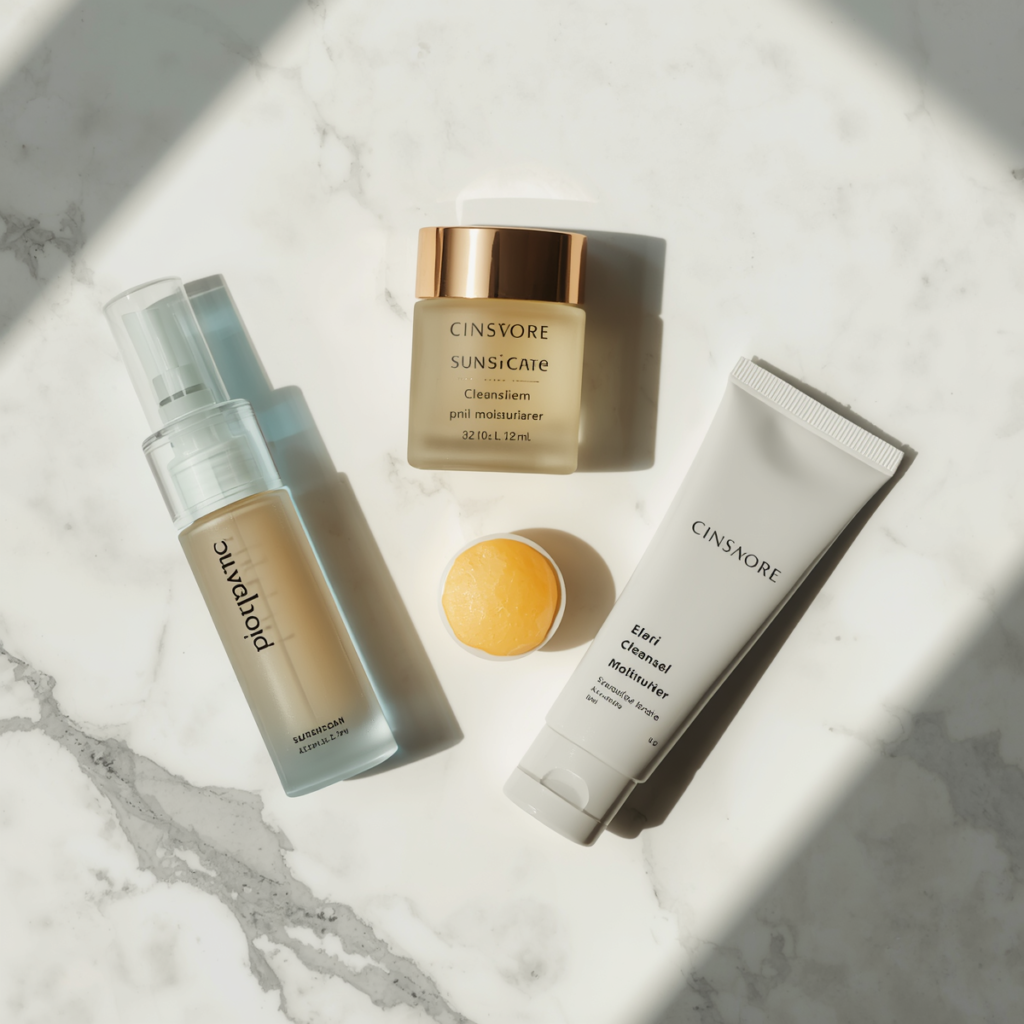
Figure out your skin type — roughly
Wash your face, pat it dry, and wait 30 minutes without putting anything on it. If it feels tight or looks flaky, you’re on the dry side. If your forehead and nose are shiny, oily. If it’s shiny in some spots and fine in others, combination. And if products regularly make your skin sting, go red, or break out — you’ve got sensitive skin, and you need to introduce new things slowly.
This isn’t a permanent label. Skin changes with the seasons, with stress, with hormones, with age. Think of it as a starting point for choosing textures, not a life sentence.
A few ingredients worth knowing
You’ll see these names everywhere. Here’s what they actually do:
- Hyaluronic acid: Draws water into the skin. Very gentle, works on any skin type. Apply it to slightly damp skin and seal it in with moisturiser.
- Niacinamide: Calms redness, reduces the look of pores, helps with uneven tone. One of the most beginner-friendly ingredients out there — hard to mess up.
- Ceramides: Your skin barrier is partly made of these. Products with ceramides help repair it, which is useful if your skin tends to react to everything.
- Retinol: Genuinely effective for acne and signs of aging. But it causes a purging phase where skin gets worse before it gets better. Don’t start here. Get your basic routine working first.
- Vitamin C: Good for brightening and protection. Check the colour of the serum before buying — orange or brown means it’s oxidised and won’t do much.
The mistakes I see beginners make most
Over-cleansing. Washing your face three or four times a day because it feels oily strips the barrier and — you guessed it — makes the oiliness worse. Twice a day is enough. Once, if your skin is dry or sensitive.
Switching products too fast. Skin takes time to adjust. Most things need four to six weeks before you can honestly say whether they’re working. If you’re swapping products every two weeks because you haven’t seen a difference, you’re just spinning your wheels.
Skipping the patch test. I skipped it for years, figured it probably wouldn’t matter. Then I tried a new exfoliant and woke up with a rash across my cheek that took two weeks to fade. Now I test everything on my inner arm for 24 hours first. Takes 10 seconds.
Piling on too many actives. Retinol plus an acid plus vitamin C in the same routine is a recipe for irritation, especially at the start. One new product at a time. Give it time. Add the next one once your skin has settled.
When will you actually see results?
Longer than you want. Skin cell turnover is roughly 28 days when you’re young; it slows to around 6–8 weeks as you get older. For most products, give it six weeks of daily use before making a call.
The unglamorous truth is that skincare is mostly about maintenance. You’re not trying to transform your skin overnight — you’re keeping it healthy, protecting it from damage, and maybe addressing a specific concern over time. That’s it.
Start with three products. Use them every day. When that’s a habit, then think about adding something else. You don’t need the routine of a beauty editor. You need a simple one you’ll actually stick to.
For specific skin conditions like acne, rosacea, or eczema, a dermatologist will give you better guidance than any article can.