
Dry skin is not a personality flaw or a hydration problem you can fix by drinking more water. Dermatologists are clear on this: dry skin is a barrier issue. The outermost layer of your skin — the stratum corneum — is not holding onto moisture the way it should, either because it lacks the right lipids, because something is stripping them away, or both. Most “dry skin routines” online treat it as a product problem. Buy this serum. Layer that cream. The answer is usually simpler and cheaper: stop doing the things that are making it worse, then add two or three products that actually address the barrier. Here is how to do that.
STEP 01 Wash Your Face With Less
The most common dry skin mistake happens before you even reach for moisturizer
Most people with dry skin are over-cleansing. Foaming cleansers — especially anything that leaves your skin feeling “squeaky clean” — strip the natural oils your barrier depends on. That tight feeling after washing is not freshness. It is damage.
Switch to a cream or oil cleanser. Cetaphil Gentle Skin Cleanser has been a dermatologist recommendation since the 1940s for a reason: it removes dirt without touching your lipid layer. La Roche-Posay Toleriane Hydrating Gentle Cleanser is another solid option and costs around $15. Neither of them foam. That is not a flaw.
Wash once a day — at night. In the morning, rinse with lukewarm water and move on. Morning cleansing is a habit the beauty industry encouraged because it sells more cleanser. If you slept in a clean bed, your face does not need soap.
One more thing: water temperature. Hot water dissolves oils. Use lukewarm, pat dry with a soft cloth, and apply your moisturizer while your skin is still slightly damp. That window matters.

STEP 02 Skip the Toner (Unless It’s the Right One)
Most toners were designed for oily skin. They have no business near a dry face
Traditional toners contain alcohol. Alcohol evaporates quickly, which feels refreshing and gives the illusion of pore-tightening — but it also pulls moisture out of skin that is already struggling to retain it. If your toner tingles or smells like a pharmacy, put it down.
If you want to use a toner — and you do not have to — look for one built around humectants. Hada Labo Gokujyun Lotion is water and hyaluronic acid, nothing else interesting, and it works well as a first hydration layer before moisturizer. Apply it with your hands, not a cotton pad. Cotton pads absorb product. Your face should get it, not the pad.
That said, if you find skipping toner entirely simplifies your routine without any downside, skip it. Fewer steps done consistently beats a seven-step routine you abandon by Wednesday.

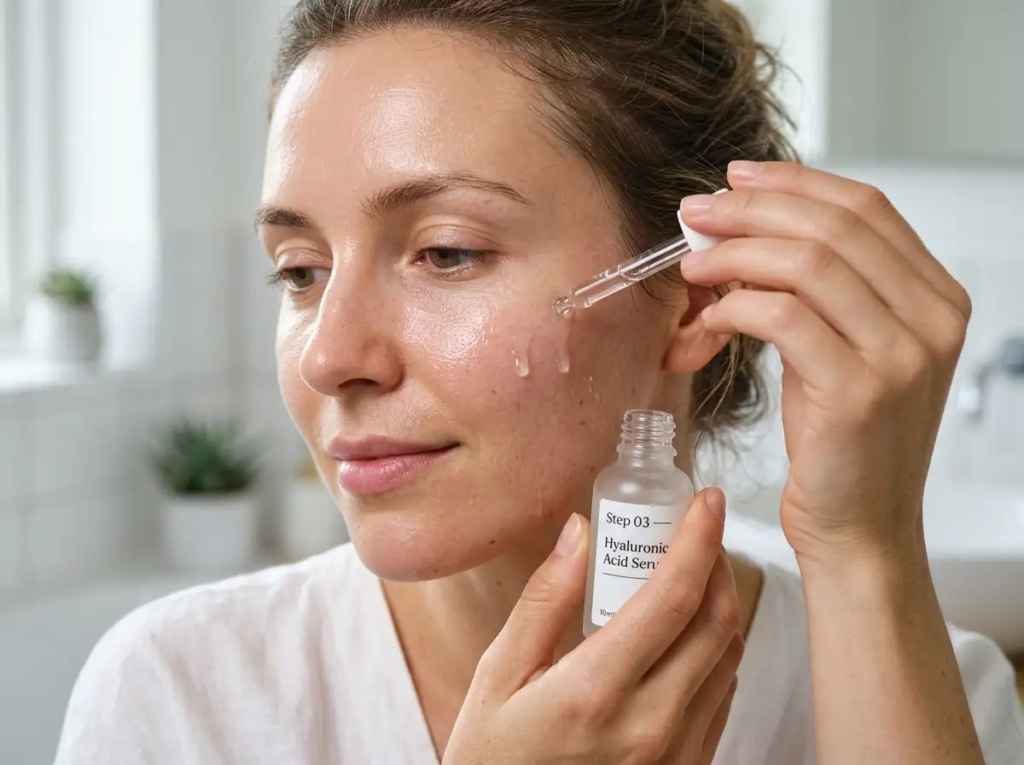
STEP 03 Use a Serum With Hyaluronic Acid — But Do It Right
Hyaluronic acid is good. Applying it wrong makes dry skin worse
Hyaluronic acid is a humectant, which means it pulls moisture toward itself. Applied to damp skin, it pulls moisture from the air and holds it in your skin. Applied to dry skin in a dry room, it pulls moisture from the deeper layers of your skin upward and then lets it evaporate. The result is skin that feels tighter than before you used it.
The fix is simple: apply hyaluronic acid serum to damp skin, immediately after cleansing, then seal it with moisturizer before it dries. The serum needs something on top of it. On its own, it is not enough.
The Ordinary Hyaluronic Acid 2% + B5 costs around $8 and works as well as serums ten times the price for this specific purpose. Neutrogena Hydro Boost Water Gel does both serum and moisturizer in one step if you want to simplify further. For very dry skin, it may not be rich enough on its own — layer it under something heavier.
STEP 04 Moisturize Like You Mean It
Dry skin needs occlusives, not just humectants — and most moisturizers are mostly water
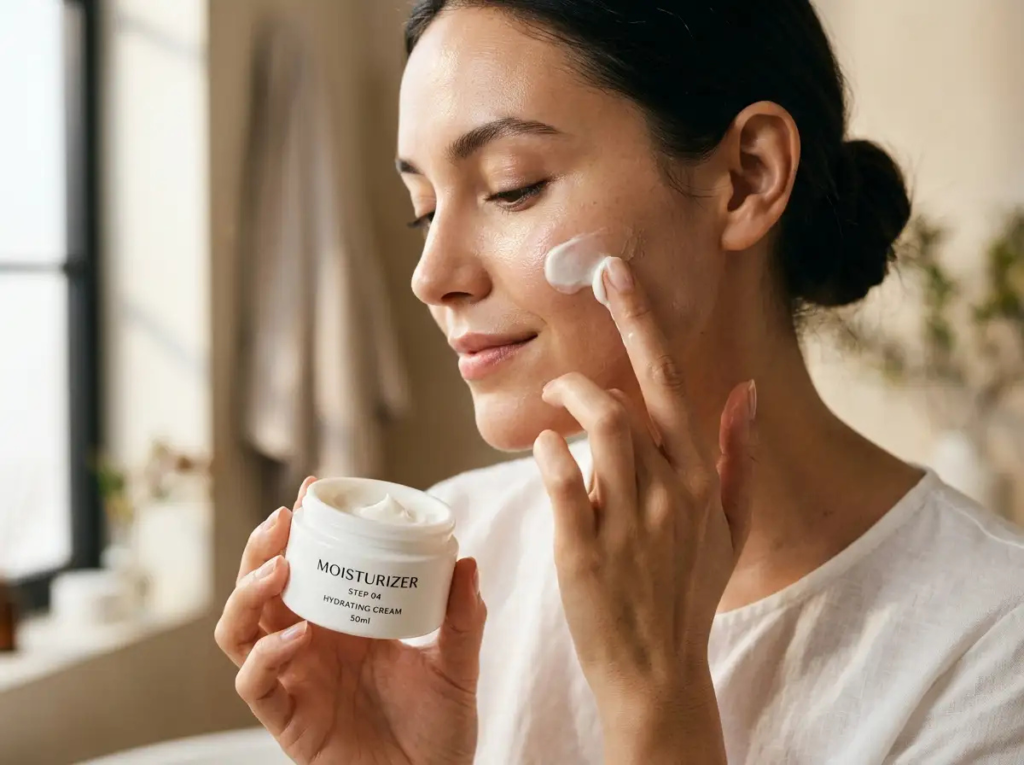
There are three types of moisturizing ingredients: humectants (draw water in), emollients (soften the surface), and occlusives (seal everything in place). Dry skin needs all three, but occlusives are the most important and the most often missing from lightweight moisturizers.
Common occlusives include petrolatum (Vaseline), shea butter, dimethicone, and squalane. If your moisturizer is mostly water and glycerin, it is doing humectant work only — it hydrates but does not seal. Fine for oily skin. Not enough for dry.
CeraVe Moisturizing Cream (the tub, not the lotion) contains ceramides, hyaluronic acid, and petrolatum. It covers all three categories and costs around $18 for a tub that lasts months. Vanicream Moisturizing Skin Cream is another option, particularly good if your skin is reactive to fragrance or dye. Both are available at any pharmacy.
Apply while skin is still damp. Night is when your skin repairs itself, so night moisturizer matters more than morning. If you want to go further, apply a thin layer of pure Vaseline on top of your moisturizer at night — this is called slugging and it sounds unpleasant but works well for skin that is cracking or flaking badly.
STEP 05 Add SPF Every Morning — The Right Way
Sun damage makes dry skin worse. SPF is not optional
UV exposure degrades collagen and damages the skin barrier over time. Dry skin already has a compromised barrier — sun exposure compounds the problem every day you skip protection. This is not a future-you problem. It is an accumulating daily one.
The reason most people skip SPF is texture. Chemical sunscreens can sting dry or sensitive skin. Heavy physical sunscreens leave a white cast. The solution is to find one that works for your skin rather than accepting that SPF is uncomfortable.
EltaMD UV Clear Broad-Spectrum SPF 46 is a consistent dermatologist recommendation for dry and sensitive skin — lightweight, no white cast, and it contains niacinamide. La Roche-Posay Anthelios Melt-in Milk SPF 100 is a budget option that layers well under makeup. Apply it as the last step before makeup, after moisturizer has absorbed.
Reapply every two hours if you are outside. A small SPF stick for touch-ups over makeup is easier than a full reapplication — Supergoop Invincible Setting Powder SPF 45 works well for this.

One Thing to Cut Immediately
Exfoliation. Not forever — but if your skin is dry and flaking right now, scrubbing it is making the problem worse. Physical exfoliants (scrubs, brushes) and strong chemical exfoliants (high-percentage AHAs or BHAs) further weaken a barrier that is already not working. Dermatologist Hadley King has said repeatedly that over-exfoliation is one of the top causes of chronic dry skin she sees in practice.
Once your skin is stable and hydrated — meaning no tight feeling, no visible flaking, no redness — you can reintroduce a gentle exfoliant like lactic acid once a week. But start there, not with a daily glycolic toner.
A complete dry skin routine does not require ten products. It requires the right three or four, used consistently, in the right order. A gentle cleanser, a humectant serum applied to damp skin, a barrier-supporting moisturizer, and SPF in the morning. That is it. Everything else is optional — and most of it can wait until the basics are working.