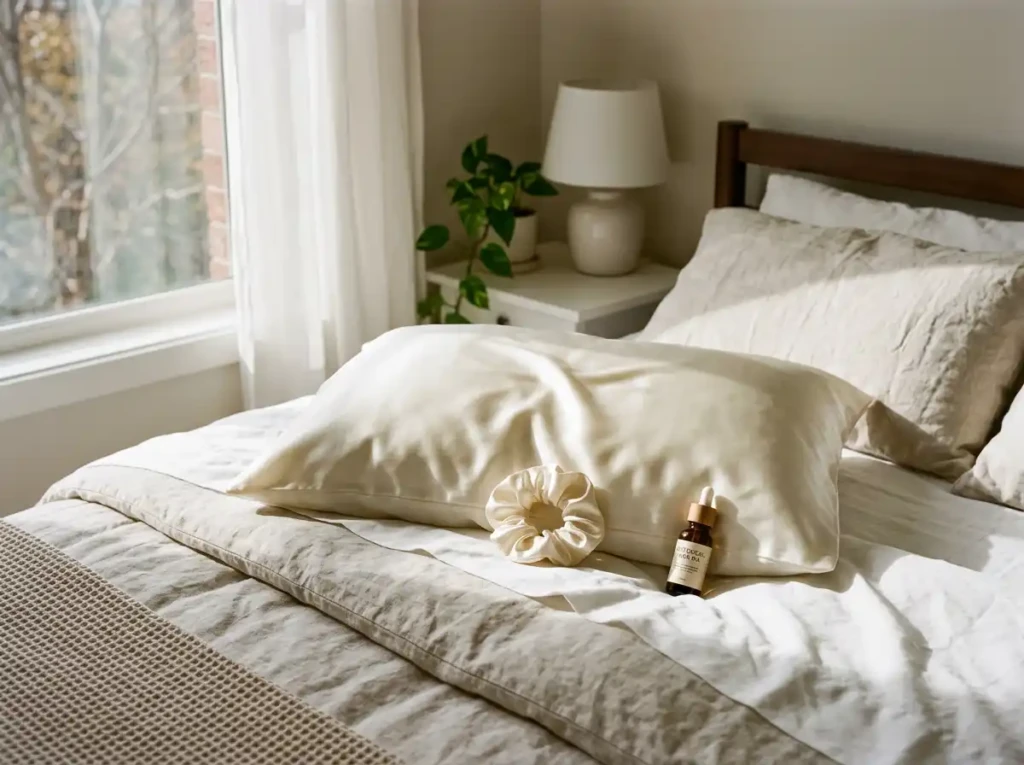
No spa budget needed. Just a few minutes and things you probably already own.
I used to think good beauty routines were expensive by definition. That the women with great skin and shiny hair and even complexions had either won the genetic lottery or were spending money I didn’t have at salons and spas every month. And honestly? Some of them were. But most of them weren’t.
The longer I’ve paid attention to this stuff, the more I’ve noticed that the most effective things are almost always the simplest. The ones you can do in your kitchen, in your bathroom, while watching something on TV. Not because DIY beauty is some kind of trend, but because a lot of what your skin and hair actually need doesn’t require a professional or a premium price tag.
These are five things I do regularly that have made a real, visible difference. None of them are complicated. A couple of them will feel almost too obvious. Do them anyway.
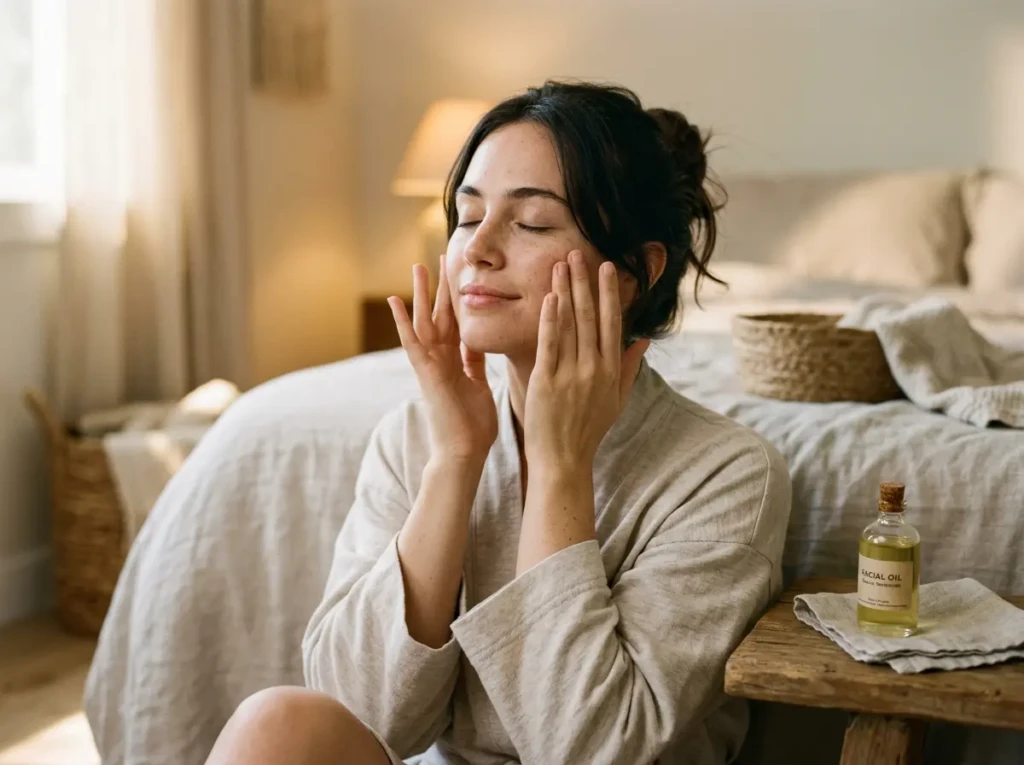
Tip 1: Facial Massage — Free, and Most People Skip It Completely
This is the one that surprised me the most. I’d always thought of facial massage as something that happened in spas, with hot stones and ambient music, not something you could just do yourself in two minutes before bed. I was wrong.
Your face has over forty muscles in it. Most of them hold tension all day — from squinting at screens, from clenching your jaw, from every expression you make without noticing. That tension contributes to puffiness, to dull circulation, and over time to the kind of facial fatigue that makes you look tired even when you aren’t.
A two-minute massage before applying your moisturizer at night drains lymphatic fluid that pools under the skin (this is what causes morning puffiness), stimulates circulation so your skin actually looks warmer and brighter, and helps whatever product you’re applying absorb better. The difference the next morning is real enough that it became non-negotiable for me pretty fast.
How to actually do it
Clean hands, freshly cleansed face with a drop of facial oil or your moisturizer for slip. Start at your neck and work upward — always upward, always outward. Gentle pressure on your forehead from center to temples. Knuckles along your jaw if you carry tension there (most people do and don’t realize it). Index fingers under your brow bone pressing slightly upward. Two fingers on each cheekbone pressing gently outward toward your ears.
The whole thing takes about two minutes. You don’t need a gua sha stone or a jade roller, though they do make it easier and more consistent. Your hands work fine. Just do it every night for two weeks and see whether you want to stop.
Tip 2: A Weekly Hair Mask — But Not the Way Most People Do It
Most people apply a hair mask, leave it on for five minutes while they finish showering, rinse it out, and wonder why it didn’t do much. The five minutes is the problem. Almost no ingredient can meaningfully penetrate the hair shaft in five minutes.
Hair masks need time. And heat. Those two things together are what turn a hair mask from something you do because the packaging told you to into something that actually changes the texture and strength of your hair.
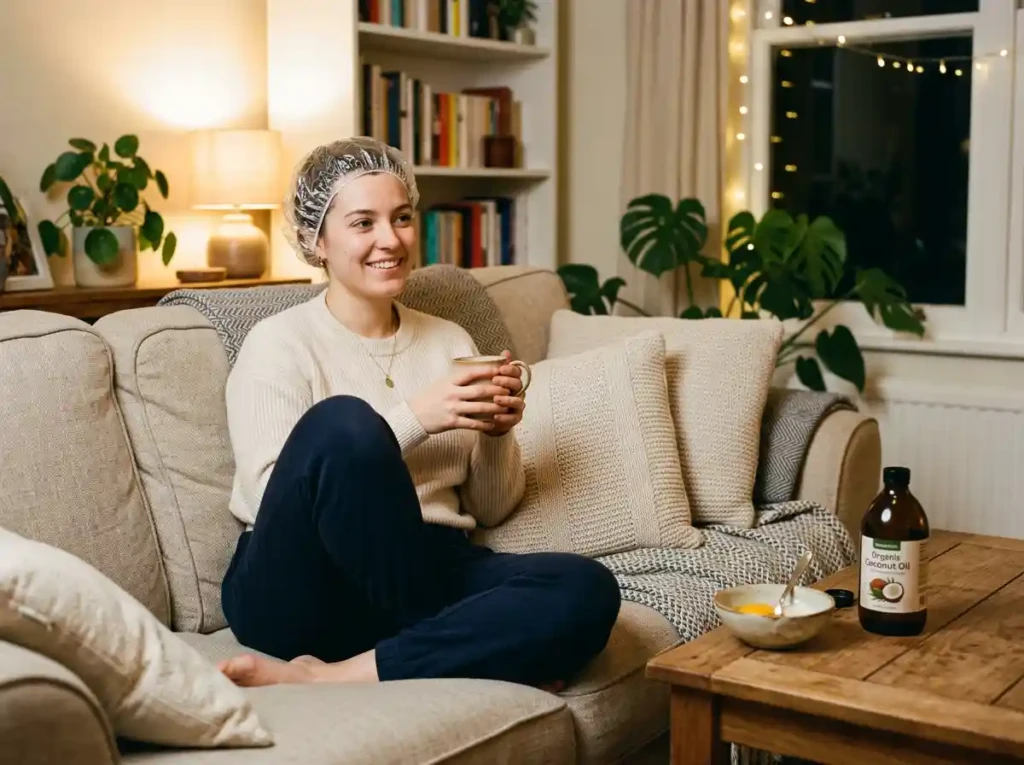
The simplest effective mask you can make at home: two tablespoons of coconut oil, one egg yolk, one teaspoon of honey. Mix it. Apply it to dry hair from mid-shaft to ends — not the scalp, which doesn’t need it and will just get greasy. Cover with a shower cap or cling wrap. Then either wrap a warm towel around your head or sit somewhere warm for thirty minutes minimum. An hour is better.
The coconut oil penetrates the hair shaft and reduces protein loss. The egg yolk brings protein and fatty acids that strengthen the strand. The honey is a humectant — it pulls moisture in and holds it there. Together they do more in one treatment than most expensive masks do in a month of weekly use.
What if you hate the egg smell?
Rinse with cool water first, not hot. Hot water cooks the egg and makes the smell worse and the texture harder to remove. Cool water rinse first, then shampoo twice if you need to. The smell doesn’t linger once it’s properly rinsed.
If eggs are genuinely not an option for you, a pure coconut oil mask on its own with heat for thirty minutes still does meaningful work. It’s not as comprehensive but it’s far better than nothing.
Tip 3: Ice Cubes on Your Face — Sounds Ridiculous, Works Anyway
I put this off for a long time because it sounded like the kind of thing people say works when they have no idea whether it works. Then I tried it on a morning when my face was particularly puffy after a bad night’s sleep, and I’ve been doing it ever since.
Cold constricts blood vessels. When you apply ice to your face, the blood vessels tighten, puffiness reduces, redness calms down, and your skin temporarily firms up. The results last a few hours, not forever, but a few hours is enough to matter on a morning when you have somewhere to be.
Beyond the immediate effect, regular cold exposure improves circulation over time. The vessels constrict and then dilate when you stop, which is essentially a workout for the capillaries. Better circulation means better color, better oxygen delivery to cells, and skin that looks less flat.
How to do it without making yourself miserable
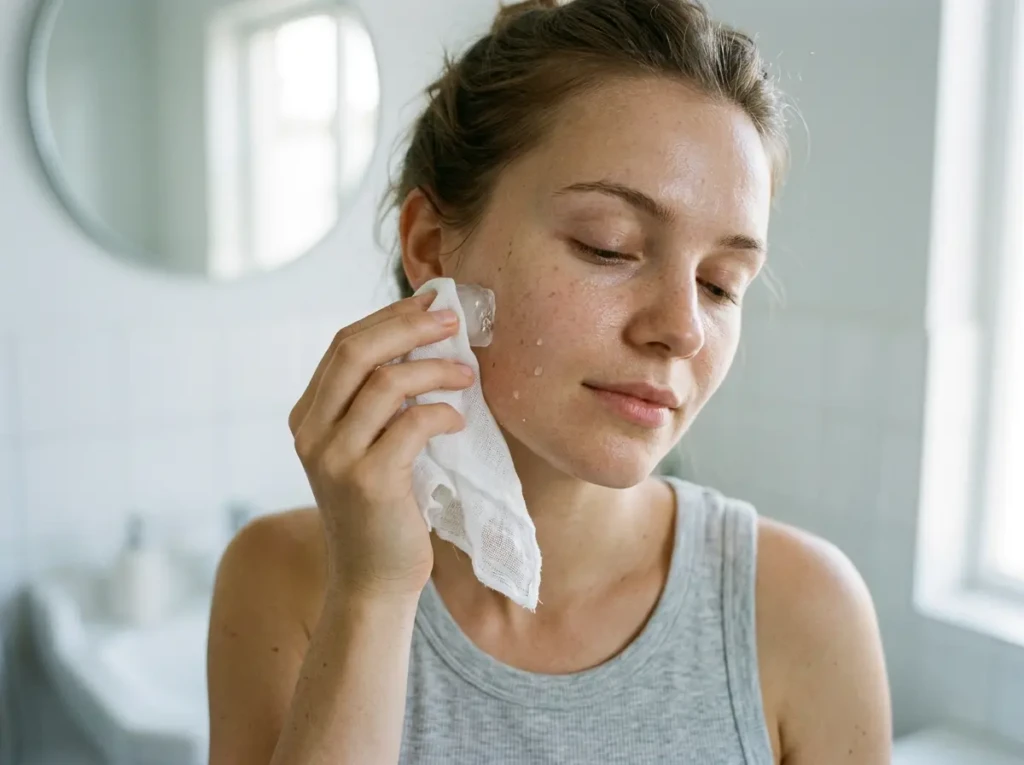
Wrap the ice cube in a thin cloth — a piece of muslin, a corner of a clean face cloth, anything thin enough to still conduct the cold. Don’t put bare ice directly on your skin for more than a few seconds; it can cause broken capillaries.
Move it continuously. Don’t hold it in one place. Work it around your face in slow circles for about sixty to ninety seconds. Focus on the undereye area if puffiness is your main concern, the jaw if you’re dealing with tension or swelling there, the forehead if you woke up looking like you barely slept.
Do it before you apply anything else in the morning. Cleanse, then ice, then the rest of your routine. Some people love doing it last, after moisturizer, to seal everything in. Try both and see what your skin prefers.
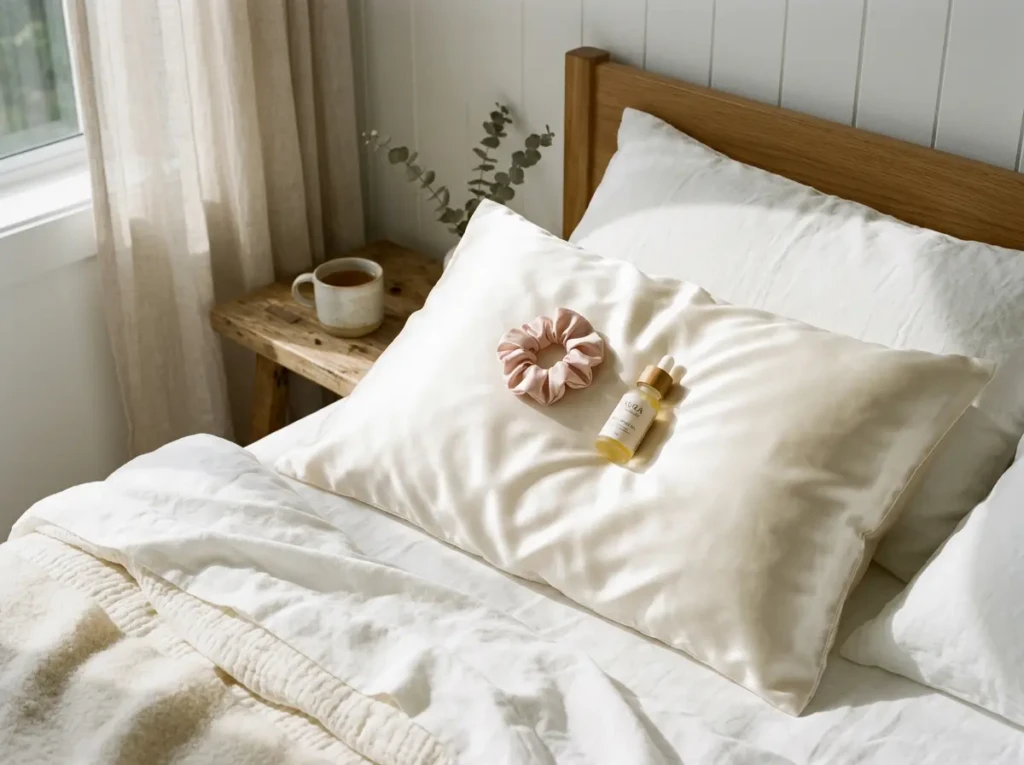
Tip 4: Sleep on Silk — The Lazy Beauty Secret That Actually Works
I know we talked about this in the hair care context. I’m bringing it up again here because it applies just as much to your skin, and because it’s genuinely one of the easiest changes with one of the most disproportionate payoffs.
Cotton pillowcases create friction. Every time you move in your sleep — and you move a lot, most people change position between ten and forty times a night — your face is rubbing against fabric that grips rather than glides. That friction tugs at the skin, contributes to sleep creases that over time become actual lines, and pulls moisture out of both your skin and your hair.
Silk or satin glides. Your face moves across the surface without being dragged. The moisture in your skin and hair stays where you put it. And the products you applied before bed — your moisturizer, your facial oil, whatever you use — stay on your face rather than being absorbed by the pillowcase.
Silk versus satin
Real silk is more breathable and more temperature-regulating, which matters if you run hot at night. It’s also more expensive and requires more careful washing. Satin — usually polyester satin — is cheaper, easy to wash, and still provides most of the friction-reducing benefit. For the purposes of what it does to your skin and hair, either works. Start with satin if you’re not sure you’ll stick with it.
A silk scrunchie for your hair and a silk pillowcase together are probably the simplest two-item upgrade you can make to your nighttime routine without changing a single product.
Tip 5: Drink the Water — I Know, I Know, Just Read It
Everyone has heard this. Everyone rolls their eyes at it. It’s on this list because it’s on this list because the eye-rolling doesn’t change the fact that it works and most people are still not doing it.
Your skin is an organ. It’s actually the largest organ you have. And like every other organ, it functions better when it’s hydrated. When you’re consistently dehydrated — not dramatically, just the low-grade kind of dehydrated that most people walk around with — your skin looks dull, feels tight, shows fine lines more clearly, and takes longer to bounce back from anything.
The research on this is actually more nuanced than ‘drink eight glasses a day and glow.’ Overhydration doesn’t do much extra for your skin once you’re at a normal level. But most people are below normal, and getting to normal makes a visible difference. The kind of difference where people start asking if you’ve changed something.
Making it easier to actually do
The reason most people don’t drink enough water isn’t laziness. It’s that water is boring and they forget. A few things that help: keep a large bottle somewhere visible, not tucked in a bag or a cabinet. Add something to it — cucumber slices, lemon, mint, whatever makes you want to drink it. Have a glass before coffee in the morning when your body is most dehydrated after sleeping.
Herbal teas count. So does water in food — cucumber, watermelon, celery, most fruits and vegetables have high water content. You don’t have to hit some arbitrary number. You just have to be more hydrated than you currently are, and pay attention to whether your skin responds.
It’s the most boring tip on this list. It’s also the one that, done consistently, might make the most difference of all.

The Part That Ties All Five Together
None of these are dramatic. No tip on this list is going to transform your appearance overnight or make up for a decade of not sleeping enough or living on coffee and stress. That’s not what this is about.
What they are is sustainable. Two minutes of facial massage, a weekly hair mask, thirty seconds of ice, a different pillowcase, more water. These are things you can do indefinitely without spending much money or reorganizing your life around them.
The beauty industry survives on convincing you that more is more. More products, more steps, more expense. The truth — and it really is this simple — is that consistency with a few well-chosen things beats a complicated expensive routine abandoned after three weeks every single time.
Pick two of these. Do them for a month. Then decide whether you want the other three.
The best beauty routine is the one you’ll still be doing six months from now.